

Audio By Carbonatix
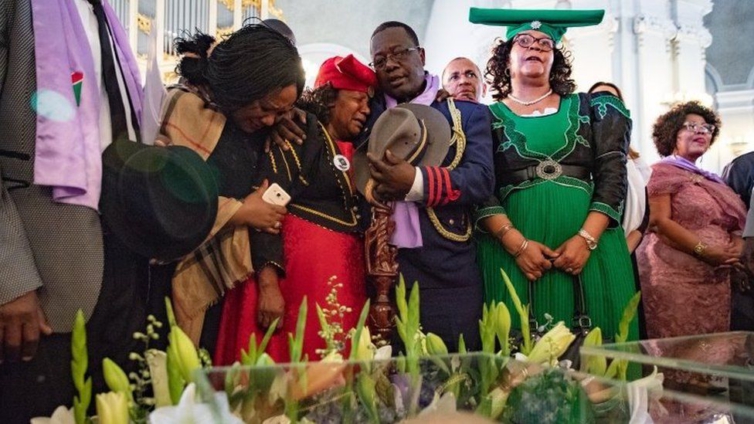
Germany has officially acknowledged that it committed genocide during its colonial-era occupation of Namibia and announced a financial support gesture.
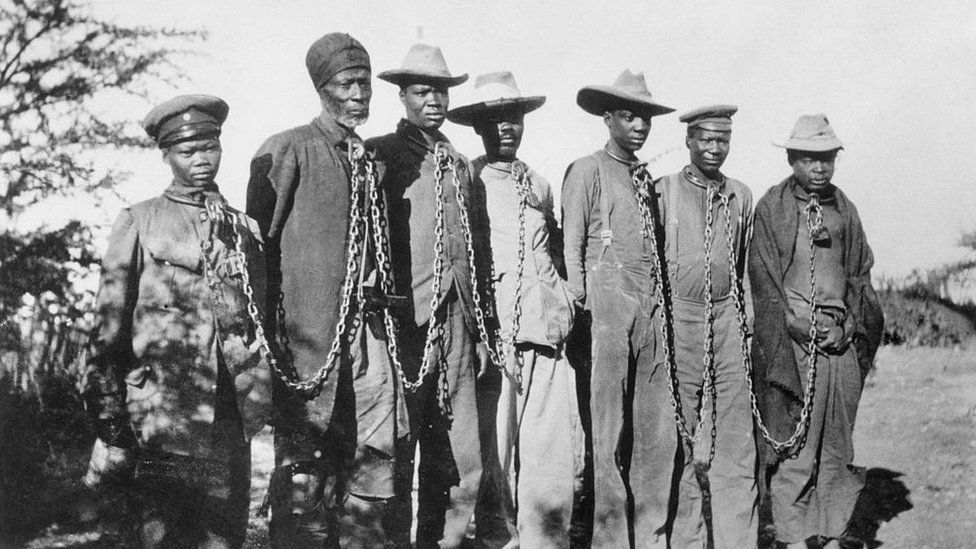
German colonisers killed tens of thousands of Herero and Nama people there in early 20th century massacres.
Foreign Minister Heiko Maas on Friday acknowledged the killings as genocide.
"In light of Germany's historical and moral responsibility, we will ask Namibia and the descendants of the victims for forgiveness," he said.
Mr Maas added that Germany would, in a "gesture to recognise the immense suffering inflicted on the victims", support the country's development through a programme worth more than €1.1bn (£940m; $1.34bn).
The agreement will reportedly see funding paid over 30 years through spending on infrastructure, healthcare and training programmes benefiting the impacted communities.
A spokesman for the Namibian government told the AFP news agency that Germany's recognition was "a first step in the right direction".
But some traditional leaders have so far refused to endorse the deal and voiced criticism of the package offered.
What happened during the genocide?
Friday's statement came after five years of negotiations with Namibia - which was under German occupation from 1884 to 1915.
Then known as German South West Africa, the atrocities committed there have been described by historians as "the forgotten genocide" of the early 20th Century.
The UN defines genocide as a number of acts, including killing, committed with the intent to destroy, in whole or in part, a national, ethnic, racial or religious group.
The killings began in 1904 after a Herero and Nama rebellion over German seizures of their land and cattle.
The head of the military administration there, Lothar von Trotha, issued an extermination order and the Herero and Nama were forced into the desert.
Any who were found trying to return to their land were either killed or put into concentration camps. The death toll was in the tens of thousands - although is no exact figure - decimating the populations of the indigenous groups.
The atrocities have long-plagued relations between Germany and Namibia, with years of negotiation between governments on how to reconcile the legacy of the genocide.
In 2018 Germany handed back some human remains which had been used as part of now-discredited research to prove the racial superiority of white Europeans.
The latest deal was reportedly agreed during a round of negotiations held by special envoys in mid-May.
A declaration is expected to be signed by the German foreign minister in the Namibian capital, Windhoek, next month before being ratified by each country's parliaments, German media reports say.
President Frank-Walter Steinmeier is then expected to travel to the country to officially apologise.
"We will now officially refer to these events as what they are from today's perspective: genocide," Mr Maas said in Friday's statement.
What has the reaction been?
Vekuii Rukoro, a Herero paramount chief who tried to sue Germany for compensation in US courts, has said the deal is not enough to cover the "irreversible harm" suffered at the hands of colonial forces.
"We have a problem with that kind of an agreement, which we feel constitutes a complete sell-out on the part of the Namibian government," he told Reuters.
Mr Maas said the negotiations had aimed to find "a common path to genuine reconciliation in memory of the victims" with members of the Herero and Nama communities closely involved in talks.
A number of traditional leaders who participated in the negotiations have so far refused to endorse the agreement, Namibian media report.
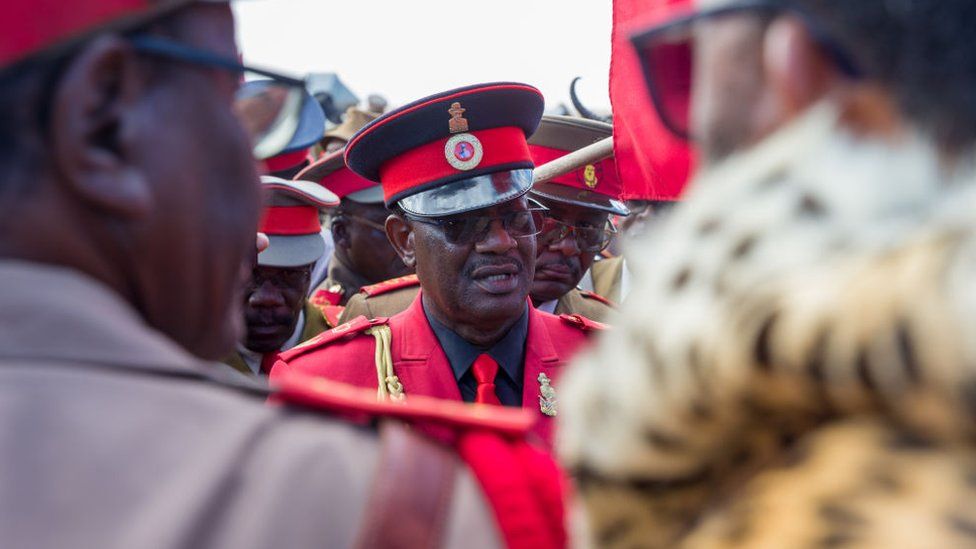
A particular point of contention is around language. The agreed deal focuses on the idea of reconciliation over formalised compensation, with Mr Maas describing the aid package as a "gesture" rather than reparation.
Jürgen Zimmerer, professor of global history of University of Hamburg, told the BBC World Service a great number of descendants of the victims of the genocide felt excluded.
"This is quite a problem if reconciliation is the aim," he said. "How do you reconcile with the victims if the victims feel left out of the entire process?"
Tim Whewell, writing for the BBC earlier this year about the negotiations, said the discussions were the first of their kind by a former colonial power.
He wrote that many Herero and Nama living in overcrowded areas or informal settlements had hoped the deal would go some way to restoring land access and some of the prosperity their ancestors enjoyed before the genocide.
Latest Stories
-
Total revenue & grants stood at GH¢144.5bn in July 2026, lower than targeted amount – BoG
8 minutes -
Ghana Sports Fund urges sports federations to submit credible proposals and measurable targets
12 minutes -
Musk says US government may be behind slowdown of Ukraine drone speeds
29 minutes -
Picking Chief Justices nearing retirement could give Mahama immense power – Bentil
39 minutes -
Netflix to shed 1,000 jobs in steepest cuts since 2022
1 hour -
Burnham had two hospitality dinners with Man City chairman, deleted records show
1 hour -
Semenyo ‘froze’ after alleged racist abuse, court told
1 hour -
‘Shameless’ – Mourinho critical of Vinicius Jr ban timing
2 hours -
Loyalty can outweigh competence in Chief Justice selection – Bentil
2 hours -
Man City suffer as PSG masterclass sets up Champions League win
2 hours -
Customer Service Africa CEO urges business leaders to observe staff and customer interactions
2 hours -
On night of mayhem for Liverpool, Barcola arrives in style
2 hours -
Muzic Mensah finds healing and renewed love in new single ‘WayƐ Late’
2 hours -
FIFA to offer extra £2.6bn for football development
2 hours -
Government backing is no EPA permit – Authority warns GoldBod, ministries
3 hours