

Audio By Carbonatix
Data on Ghana’s rate of Covid-19 infections shows the country’s case count has peaked, a top official of the Ghana Health Service (GHS) has revealed.
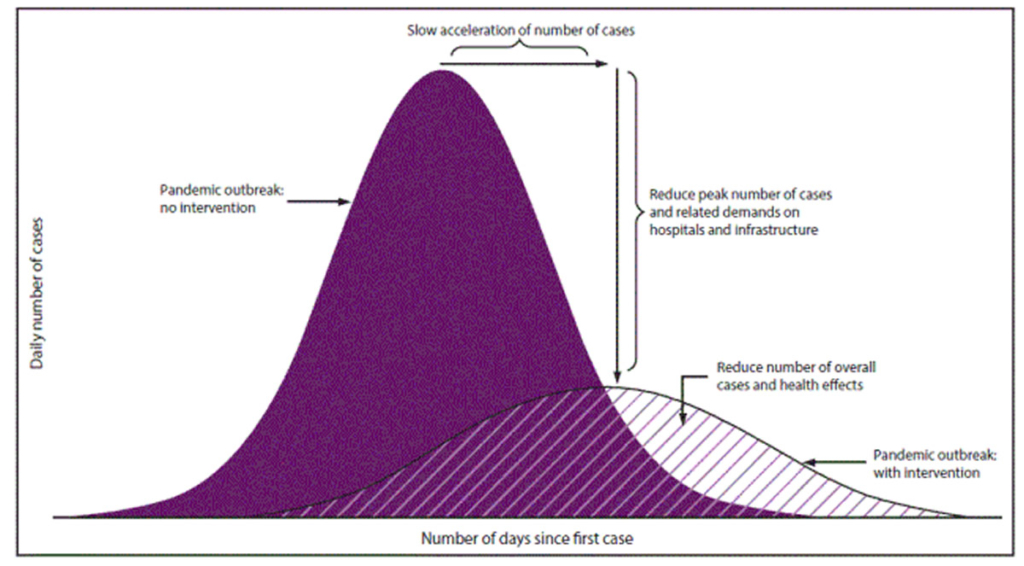
Director of Public Health at the GHS, Dr Ebenezer Badu Sarkodie, said Tuesday that the rate of infection is yet to decline, but this will only happen if the preventive protocol for the virus are adhered to.
“We are not off the hook yet; but then if we continue the way we are doing now – adhering to the various social distancing and adhering to the various individual preventive measures – these will let us come down from where we are,” he said during the Q&A segment of a Ministry of Information briefing on Ghana’s anti-Covid-19 efforts.
(Image: © CDC)
Tuesday's press briefing at the Ministry of Information Press Centre also addressed a number of issues, key among them, Ghana’s Rapid Diagnostic Testing (RDT) plans for the Covid-19.
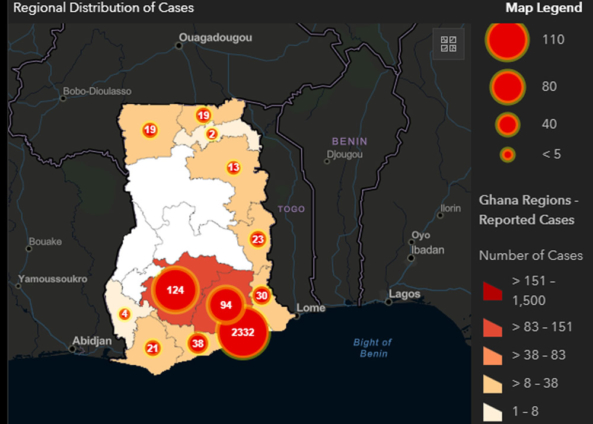
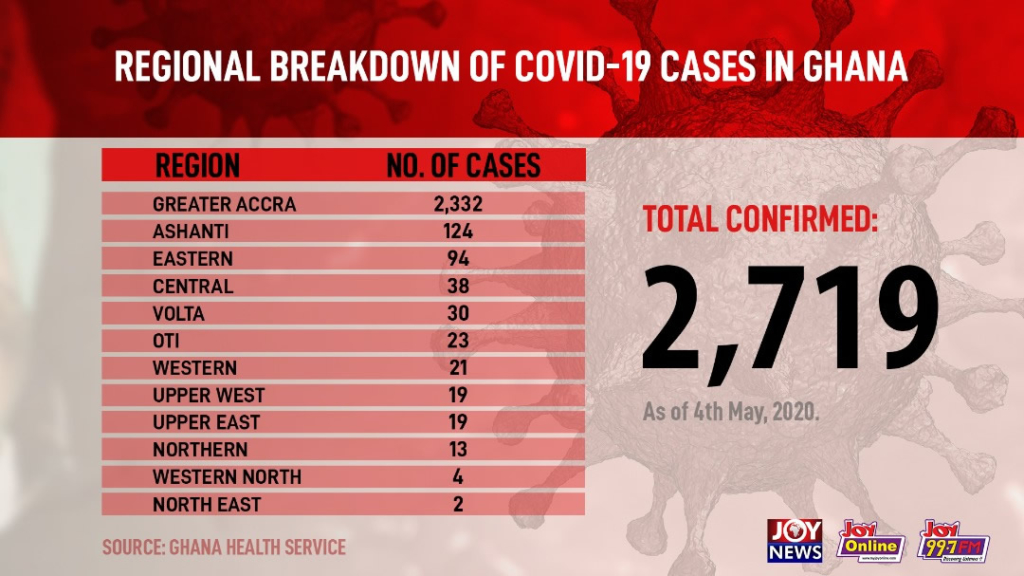
Ghana has recorded 2,719 coronavirus cases as of May 4, 2020, with 18 deaths and 294 recoveries. The country has tested over 129,000 suspected cases since March.
Answering the question on where Ghana was on the Covid-19 infection curve, Dr Sarkodie explained that because Ghana started an aggressive and enhanced contact tracing early on - for instance testing a lot of people who were not even showing symptoms - only a few people tested positive for the virus from a large pool of samples.
He said the best data that Ghana has been using to plot the bell-shaped curve that pinpoints the country’s position in terms of infection rate, are results from samples received from different parts of the country - that is from March 12, 2020, when the first case was confirmed.
Global picture
The global numbers for Covid-19 infections are growing rapidly and far from the peak, an expert from the World Health Organisation (WHO) said Tuesday.
Dr Gauden Galea, WHO representative in China, said at a press conference that the only way that the pandemic will be overcome is when everyone has immunity either from being exposed to the virus or after taking a vaccine.
"Until such a time, we are given what we might call the old-fashioned public health methods that have stood the test of time. We need to assess the risks at levels that range from at the top of country-level down to the individuals," he said.
He has called for "testing, testing and testing" to improve risk assessment and prevention measures such as hand washing and respiratory etiquette.
Latest Stories
-
Baffour Awuah granted GH¢50m bail after EOCO detention
34 minutes -
“Every genre we create doesn’t have to be ‘Afro’ something” – M.anifest
46 minutes -
GMTF marks first anniversary with lifesaving equipment for 9 more hospitals
1 hour -
NAIMOS seizes 10 excavators in raid on illegal mining sites blocking River Pra’s flow
1 hour -
Pump prices may stay unchanged as government holds TOR, Sentuo prices
1 hour -
Akra Reads! 2026: Ladé Wosornu poetry contest expands to JHS
1 hour -
K9 dog sniffs out 72lbs of prohibited Ghanaian food items at JFK
2 hours -
If family planning is our choice, why isn’t it in our budget?
2 hours -
Mahama, Lordina to attend World Assemblies of God Congress opening in Accra
2 hours -
‘The power play is disgusting’ – Atta Akyea questions Baffour Awuah’s detention by EOCO
2 hours -
Ghana to review all public-sector AI acquisitions under new directive
2 hours -
NPP ready for national elections; 7,121 delegates to vote
2 hours -
‘I didn’t expect this under Mahama’ – Annoh-Dompreh on Baffour Awuah’s detention at EOCO
2 hours -
GRA welcomes Tribunal decision upholding US$393 million tax assessment
2 hours -
COMAC says Uniform Fuel Pricing Fund should not be confused with fuel subsidy
2 hours