

Audio By Carbonatix
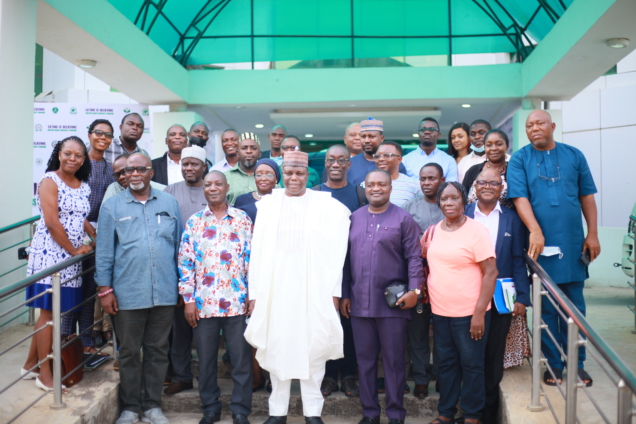
A team of Ghanaian agricultural policy and regulatory stakeholders including scientists and researchers have visited Nigeria to trade ideas on the use of science and technology-based solutions to address agricultural problems in Sub-Saharan Africa.
The one-week tour is meant to provide the Ghanaian scientist and researchers the opportunity to share notes with their Nigerian counterparts in the area of biotechnology.
The African Agricultural Technology Foundation (AATF) collaborated with the Agricultural Biotechnology and Biosafety stakeholders in Nigeria to put together the special tour (seeing-is-believing – SIB) for scientists to study the policy, regulatory and commercialization mechanism for the responsible delivery of products of agricultural biotechnology in Africa.
Nigeria has become a stalwart in employing biotechnology to improve its agricultural production and food security campaigns.
“Nigeria is producing 47 percent of the cowpea that is consumed in Africa, it is producing 46 percent of the cowpea that is being consumed in the world, it will surprise you because of our population, we consumed about 50 percent of what we produce, so you see that we have to you use what we have to make sure that we are safe”, the Director-General of National Biotechnology Development Agency (NABDA), Prof Abdullahi Mustapha, revealed at a welcome meeting in Abuja.
In the wake of challenges like pest and diseases coupled with climate change impacts, products of biotechnology have been identified as a remedy worth looking at.
Ghana through its initiatives like planting-for-food and Jobs (PFJ), has been clear about measures to improve crop yields and food security.
Chairman of the Parliamentary Select Committee on Science Technology and Innovation, Dr Emmanuel Marfo, who led the Ghanaian contingent acknowledged why policymakers especially politicians must participate in such technical conversations to advance the course of science and technology in Ghana.
“Sometimes when we are able to attend technical-level meetings and discussions like this it helps us have an appreciation of what you (scientific community) are doing.
"…and also helps us to expand our understanding of the things we need to do So that when it comes to oversight, then we are very much positioned to provide the right oversight and lobby. So that when it comes to talking for science, we will have more of us there to represent and make the necessary contributions”.
He observed often science-based agencies struggle to get the needed budgetary support for instance because there are few with interest and less knowledge in the area.
“…every year agencies come to parliament for budget hearing, sometimes they turn to tell us a lot of things sometimes you cannot relate to, especially your language that very few politicians understand – science and technology.”
Ghana is recognized as a leader in Agricultural Biotechnology in Africa having established a functional biosafety policy, regulatory and institutional framework for the development and commercialization of products of the technology.
The Ghana contingent included the board and technical unit of the National Biosafety Authority. CEO of the Authority, Eric Okoree, is upbeat about lessons to drawn from the interactions.
“one of the things I will be picking from here is how you managed to scale over the hurdle of public understanding of biotechnology, I believe within these four days the answer is going to come”,
The AATF is an Africa-based international non-governmental organization that facilitates and promotes public/private partnerships for the access and delivery of appropriate agricultural technologies for sustainable use by smallholder farmers in Sub-Saharan Africa (SSA) through innovative partnerships and effective stewardship along the product value chain.
Latest Stories
-
Cedi depreciates by 7.11% against dollar in August 2026 – BoG report
5 minutes -
Put women and youth at the centre of mineral resource governance — ActionAid
20 minutes -
Theovision provides free healthcare to 2,500 rural residents and Ejura prison inmates
35 minutes -
UG warns public against fake resumption and hall fees notice
1 hour -
‘Follow Ghana’s steps’ – IMF Africa Director hails economic gains
2 hours -
Kwame Nkrumah’s son Gamal dies; burial scheduled for Saturday in Egypt
2 hours -
Ghana will beat IMF’s upgraded 5.7% growth forecast – Ato Forson
2 hours -
Middle East tensions, global risks to shape November policy rate decision – BoG Governor
2 hours -
MTN Ghana to invest $1.1bn over three years, deploy 500 new sites in 2026
2 hours -
15 arrested over alleged sand-winning activities along new Accra-Kumasi Expressway project
2 hours -
Agriculture slows to 3.9% as Ghana’s economy grows by 6%
3 hours -
Government launches rCOMSDEP to promote responsible mining in Western Region
3 hours -
Foreign Affairs Ministry procures 20 pickups to improve passport services
3 hours -
Oil prices retreat as investors weigh supply outlook, Middle East tensions
3 hours -
Mahama Ayariga highlights Jimi reclamation project as effort to tackle flooding
3 hours