

Audio By Carbonatix
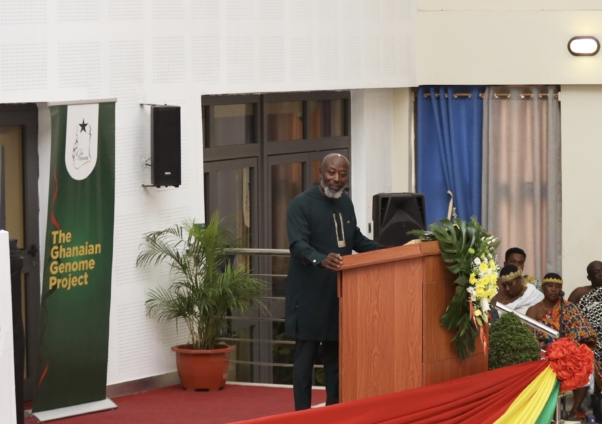
Director of the Ghanaian Genome Project, Professor Fiifi Ofori-Acquah, has stressed the need for Ghanaians to deepen their knowledge of the sickle cell disease.
He said this will help stop families from breaking apart and the needless accusation of relatives of being responsible for the disease.
Prof. Ofori-Acquah explained that the burden of undiagnosed genetic diseases, low information, and family discourse has triggered unhappiness among some Ghanaian families with the disease.
To understand the disease, therefore, one must be able to appreciate the interaction between genes, lifestyle, and the environment, to offer help to people, especially kids, who are helpless in this country.
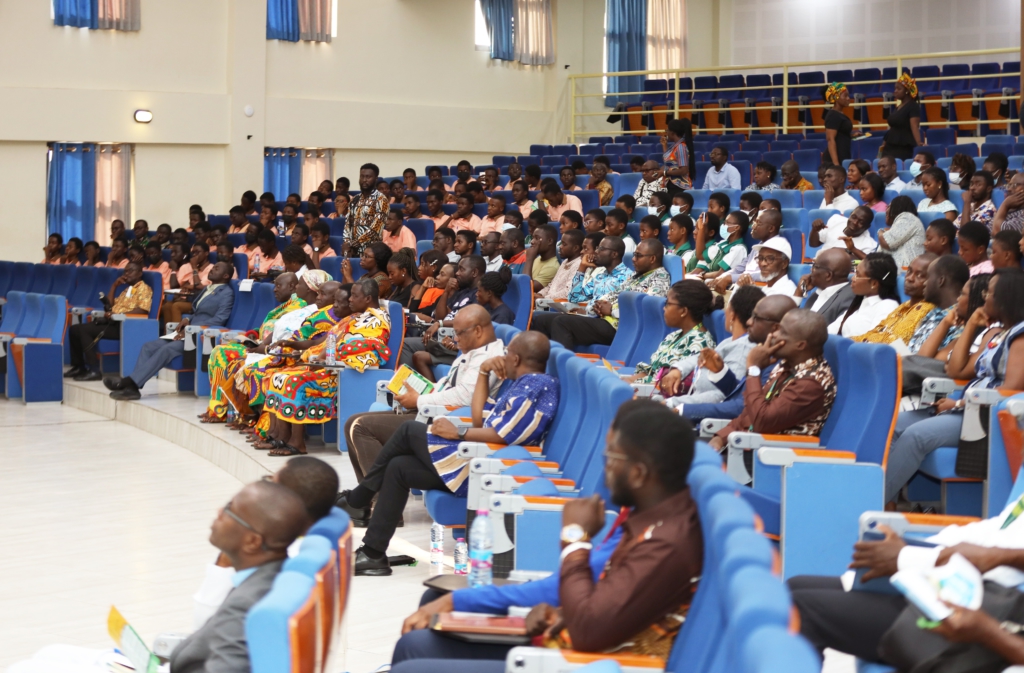
Prof Ofori-Acquah was speaking at a public lecture on the Ghanaian Genome (GhGenome) Project at the Kwame Nkrumah University of Science and Technology (KNUST), Kumasi.
Sickle Cell Disease (SCD) caused by inheritance of one sickle cell mutation, according to him, is the most common genetic disease and most of the cases are in Africa.
Over one percent of all babies with SCD have one parent who is negative for the sickle cell mutation; non-paternity may be assumed wrongly to be the reason for this phenomenon in most cases.
In Ghana, one out of every 50 babies born has sickle cell disease.
He said it is, therefore, the duty of experts to decode the Ghanaian genome to help people embrace sick conditions.
Prof Ofori-Acquah said Ghana ought to develop genetic programmes to diagnose rare diseases and to identify mutations that drive childhood cancers, adding that, it is a major developmental health challenge.
He mentioned that the West African Genetic Medicine Center and the African Center of Excellence have put up proposals to address developmental health challenges.
“A developmental challenge is a genetic disorder, and this can be done, but cannot be done alone in the universities or laboratory, this requires a national conversation,” he observed.
Over 400 children in Ghana are diagnosed with cancer every year - lymphomas and leukaemia (40 percent), RB1 gene mutations (15 percent), Wilms tumour (15 percent) and others constitute 30 percent.
He pointed out that the lack of genetic testing in Ghana means a death sentence for many children diagnosed with childhood cancers, saying “it is our duty to decode the mutations that cause childhood cancers in Ghana.”
The GhGenome Project is focused on training, research, as well as public and community engagement in all aspects of the human genome in Ghana.
Latest Stories
-
Ghana Water revenue mobilisation below 50% of potential – MD
5 minutes -
Ghana’s democracy must accommodate dissent and constructive criticism – Haruna Iddrisu
6 minutes -
Fact check: Trump posts fake quote of Denzel Washington supposedly praising him
7 minutes -
UPSA students lament high fees at private hostels, call for government intervention
18 minutes -
We will upgrade Ghana’s credit ratings if government maintains fiscal discipline, policy effectiveness – Moody’s
19 minutes -
Gender Ministry supports four siblings allegedly sexually abused by their father
22 minutes -
UMB MD wins ‘CEO of the Year’, banking category at 2026 Ghana Credit Excellence Awards
23 minutes -
Don’t throw away empty egg cartons — 6 smart ways to reuse them
27 minutes -
GoldBod poised to surpass 2025 forex performance – Sammy Gyamfi
28 minutes -
Old students of Peki SHS break ground to give 70-year-old school infrastructure a facelift
42 minutes -
Ablakwa facing ‘personal vendetta’ over refusal to grant Nana B service passport – Majority
43 minutes -
Every year, the lawyers come out, and so does the nonsense! – Ace Ankomah writes
55 minutes -
Digital transformation without an ownership culture can digitise poor service
58 minutes -
Fishing communities demand revocation of offshore gold exploration licences over livelihood concerns
1 hour -
How Ghanaian tycoon Manoj Lakhiani built a water and plastics empire from a $25,000 loan
1 hour