

Audio By Carbonatix
Ghana’s gross international reserves have fallen to about US$11.1 billion at the end of August 2026, reducing the country’s foreign-exchange buffer to 4.2 months of import cover and prompting the Bank of Ghana to flag renewed risks to the external position.
The latest decline represents a significant reversal from the US$14.16 billion recorded in March. Reserves fell to US$12.94 billion by June and have since declined by a further US$1.87 billion, leaving the country with a considerably smaller cushion to meet external payment obligations and respond to pressure in the foreign-exchange market.
The deterioration has occurred despite strong export performance, particularly from gold. The Bank of Ghana previously reported that Ghana recorded a US$8.8 billion trade surplus in the first half of 2026, supported by strong gold and cocoa export earnings, while the current account surplus reached US$5.1 billion.
Gross international reserves, however, stood at US$12.9 billion at the end of June.
The latest reserve position means Ghana has lost roughly 1.5 months of import cover since the beginning of the year, falling from 5.7 months at the end of 2025 to 4.2 months currently.
The shrinking buffer could become more significant if demand for foreign exchange rises during the traditionally stronger fourth-quarter period.
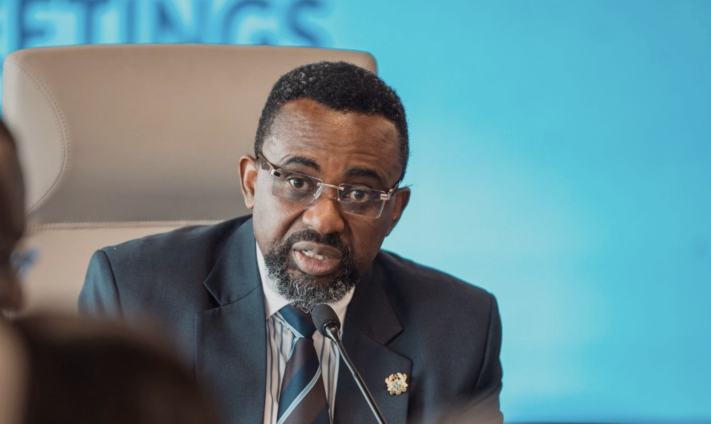
Bank of Ghana Governor Dr Johnson Asiama identified the declining reserves, a projected current account deficit and a pause in gold exports by the Ghana Gold Board since mid-August as key risks that require close monitoring.
He said the developments would be important considerations for the Monetary Policy Committee as it assesses the balance between inflation, exchange-rate stability and economic activity.
“Rebuilding reserves will be a key priority for the Bank in the coming months,” Dr Asiama said, signalling the importance the central bank attaches to restoring the country’s external buffers.
The pause in GoldBod’s gold exports introduces an additional uncertainty because gold has been a major source of Ghana’s export earnings and foreign-exchange accumulation.
The Bank’s concern comes against a broader effort to strengthen the external position, following the substantial improvement recorded in the first half of the year before the recent drawdown.
The immediate challenge for policymakers is therefore not only to maintain the recent gains in macroeconomic stability but also to rebuild the foreign-exchange reserves needed to provide protection against external shocks.
With the fourth quarter approaching, the trajectory of reserves, gold exports and foreign-exchange demand is likely to remain an important consideration for monetary policy.
Latest Stories
-
Augustine Boakye: the talent Ghanaians are waiting to see
11 minutes -
KNUST launches Ghana Photonics and Optics Laboratory
52 minutes -
Ghana’s reserve buffer shrinks to 4.2 months as BoG flags fresh external risks
57 minutes -
Ghana, China reaffirm commitment to deepen strategic partnership
1 hour -
Mahama rings Nasdaq closing bell, declares Ghana ‘open for business’
1 hour -
Judge blocks Trump’s White House media ban, orders access to be restored
1 hour -
GNFS contains Dansoman, La fires and saves three adjoining buildings
1 hour -
Parliament pushes for GH¢5.6m release to Petroleum Commission for data centre
1 hour -
GNFS honours two officers for bravery during Sogakope flood rescue
1 hour -
Bagbin pushes for direct election of ECOWAS Parliament members to deepen democracy
1 hour -
Togbe Afede apologises for late start of Volta economic forum
1 hour -
Cedi depreciation hits 9.5% as renewed FX pressure weighs on currency
2 hours -
Togbe Afede calls for unity to accelerate Volta development
2 hours -
Finance Minister urges Ghanaians to demand tax invoices
2 hours -
Data Protection boss calls for connected regulators to tackle big tech power
2 hours