

Audio By Carbonatix
The Ashanti Regional Chairman of the Ghana Journalists Association (GJA), Mr Kofi Adu Domfeh, has called for stronger adherence to responsible journalism amid the rapidly evolving media landscape.
He said the contemporary media environment, shaped by digital platforms and rising misinformation, required heightened professionalism and vigilance.
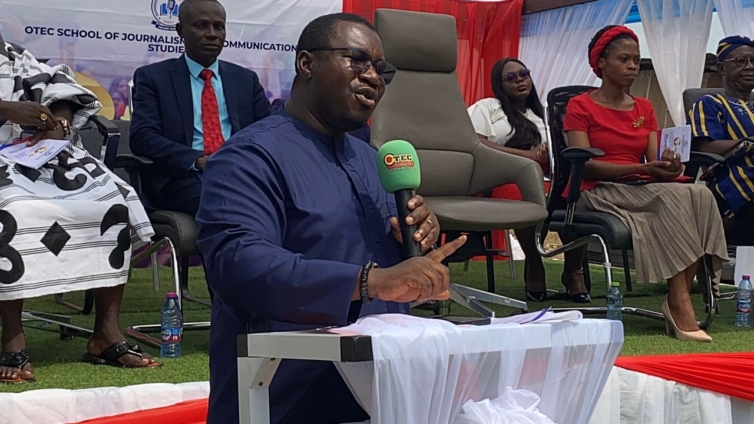
Mr Domfeh made the call at the 6th Congregation and Matriculation of the OTEC School of Journalism and Communication Studies in Kumasi, where he delivered the keynote address on the theme: “Responsible Media: A Prerequisite to National Development.”
He said responsible media practice had become more urgent with the proliferation of social media, shrinking newsrooms, and increasing manipulation of online content.
He noted that while digitisation had expanded opportunities for expression, it had also intensified the risks of misinformation and sensationalism.
“In such an environment, responsibility becomes both a personal ethos and an institutional imperative,” he said.
“Your credibility is your most valuable asset. Lose it, and you lose your audience.”
Mr Domfeh urged journalists to prioritise verification, balance and public-interest reporting, stressing that national development depended on an informed citizenry and accountable leadership.
“Responsible media is the foundational infrastructure for progress, just as essential as roads, electricity or clean water,” he added.
He encouraged new graduates not to compromise professionalism for quick gains, cautioning that unethical conduct eroded public trust and weakened the role of the media in nation-building.
To the matriculating students, he advised discipline, curiosity and commitment to ethical practice, saying: “The habits you form here will define your future practice.”
He commended the OTEC School of Journalism and Communication Studies for its contribution to media training, noting that Ghana needed strong communication institutions to safeguard the integrity of the national narrative.
Mr Domfeh urged journalists to prioritise their safety and mental well-being, describing responsible media as inseparable from responsible practitioners.
He appealed to the public to adopt environmentally friendly practices, including planting trees and gifting natural plants to support environmental preservation.
He charged the graduates and students to “influence the narrative, shape the future and serve the public good with integrity and courage.”
Journalism remained a powerful tool for promoting unity, accountability and national development, he noted.
Latest Stories
-
Poor Ghanaians are being jailed because they cannot afford justice – Crime Check Foundation
30 seconds -
No conflict in appointing Emelia Agbenyo as Deputy EC Chair – NDC
1 minute -
87-year-old man jailed 20 years for defiling 9-year-old girl at Ofankor
4 minutes -
Sankofa Gold targets 70kg output after 9-month shutdown
6 minutes -
Tamale, Bolgatanga had just one Legal Aid lawyer between them – Kwesimintsim MP
13 minutes -
PAC orders eviction of former irrigation company MD from official residence
17 minutes -
Legal Aid Commission has offices in only 45 of Ghana’s 261 districts, needs 180 more staff
19 minutes -
Challenging Heights welcomes Ghana’s Tier 1 ranking, calls for more anti-trafficking funding
39 minutes -
Cedi extends depreciation against dollar; going for GH¢12.10 at forex bureaus
41 minutes -
ECG cannot keep lending electricity for free
43 minutes -
No trader will be evicted from Aboabo Market after redevelopment – Mahama Ayariga assures traders
50 minutes -
GAUA to communicate decision on strike suspension after Tuesday
54 minutes -
Moody’s upgrades Ghana’s credit ratings to B3, but changes outlook to stable
1 hour -
‘I want to raise well-rounded individuals, not just men’ – Kate Addo on parenting boys
1 hour -
Yaa Konadu Agyeman’s ‘Exceptionally Yours’ is the perfect romance read for the holiday season
1 hour