

Audio By Carbonatix
The number of people facing acute food insecurity could nearly double this year to 265 million due to the economic fallout of Covid-19, the United Nations’ World Food Programme (WFP) said on Tuesday.
The impact of lost tourism revenues, falling remittances and travel and other restrictions linked to the coronavirus pandemic are expected to leave some 130 million people acutely hungry this year, adding to around 135 million already in that category.
“COVID-19 is potentially catastrophic for millions who are already hanging by a thread,” said Arif Husain, chief economist and director of research, assessment and monitoring at the World Food Programme (WFP).
“We all need to come together to deal with this because if we don’t the cost will be too high - the global cost will be too high: many lost lives and many, many more lost livelihoods,” he told reporters at a virtual briefing in Geneva.
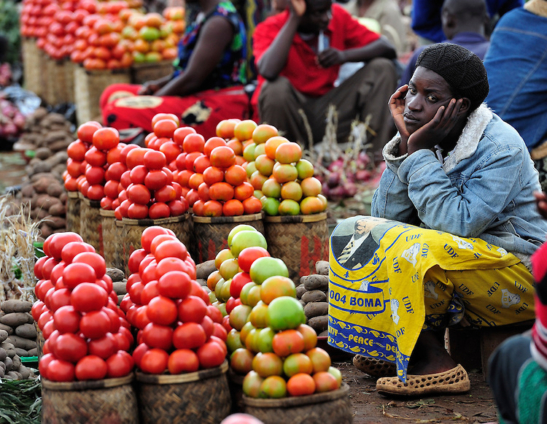
Husain said it was critical to act quickly in order to prevent people already living hand-to-mouth, such as food vendors in Kenya, from selling their assets as it could take them years to become self-reliant again.
In some cases, such as when farmers sell their ploughs or oxen, it could have knock-on effects for food production for years to come, he added.
“These were the people we were concerned about – those who were OK before Covid and now they are not,” he said, adding he was “really worried” about people living in countries with little or no government safety nets.
“Acute food and livelihood crisis” is category three of five U.N. phases meaning a “critical lack of food access and above usual malnutrition”.
Category 5 means mass starvation. U.N. officials did not give a geographical breakdown of the growing needs, but said that Africa was likely to be hardest hit.
WFP expects to need $10-$12 billion to fund its assistance programmes this year compared to a record $8.3 billion raised last year, Husain added. It plans to pre-position food stocks over the coming months in anticipation of growing needs.
Of those already deemed acutely hungry, many are in conflict zones such as Syria or in countries badly hit by the impact of climate change, according to a U.N. report.
Even before the coronavirus pandemic, desert locusts in east Africa had destroyed crops and boosted the number of people reliant on food aid.
Latest Stories
-
Ghana’s BRICS move requires clear strategy to manage risks – Godfred Bokpin
31 seconds -
Pay teachers realistic income – Duncan Amoah to gov’t
17 minutes -
Bechem to become chicken capital of Ghana – Mahama projects
18 minutes -
Gov’t targets recruitment of 16,500 health professionals in 2026
39 minutes -
Two-week strike will not derail academic calendar – GNAT President
54 minutes -
Headmaster detained after BBC investigation into alleged sexual abuse of students
1 hour -
GNAT pushes for clear implementation procedures of teachers’ conditions of service
1 hour -
Recurrent strikes threaten quality of education and academic calendars – Prof Bokpin
1 hour -
‘Cockroach’ group leaders among hundreds detained in Delhi protest
2 hours -
Don’t let speed of information become your judgement – CJ tells new lawyers
2 hours -
World Cup visa scandal: People have leveraged public office to facilitate fraud – Senyo Hosi
2 hours -
Glut! Farmers count losses as prices crash, customers happy
3 hours -
GSA postpones auction of unserviceable vehicles
3 hours -
Man charged with attempted murder after stabbing
3 hours -
World Cup visa scandal: Senyo Hosi says issue goes beyond calls for Sports Minister’s resignation
3 hours