

Audio By Carbonatix
Ama stood at the edge of her family's farm, her eyes fixed on the muddy, polluted stream that once nourished their crops. Where lush cassava plants had once thrived, there now lay barren, chemical-laden soil. The distant rumble of machinery echoed across the land as illegal miners continued their relentless search for gold. Ama's stomach growled, a stark reminder of the dwindling food supply in her village. She couldn't help but wonder: in their quest for golden riches, had they forgotten the true wealth that lay in the earth's ability to feed its people?
World Food Day, celebrated annually on October 16th, commemorates the founding of the United Nations Food and Agriculture Organization in 1945. This day unites governments, civil society organizations, and the media to raise awareness and drive action toward achieving Sustainable Development Goal 2 – Zero Hunger. This year, under the theme “Right to Food for a Better Life and a Better Future,” I reflect on the grave impact of illegal mining on food security in Ghana.
The intersection of environmental degradation, public health, and food security is becoming painfully obvious in our country. As a Master of Public Health student with a background in environmental science, I am deeply concerned by how illegal small-scale gold mining, or "galamsey," is undoing much of the progress Ghana has made in the fight against hunger and malnutrition. Although the country has made strides in reducing food insecurity, the environmental devastation caused by “galamsey” is eroding our access to basic necessities like clean water, healthy soil, and, ultimately, food.
Ghana’s food production is largely dependent on its arable lands and reliable water sources, both of which are under threat. In regions like Eastern, Western, and Ashanti, illegal mining has rendered vast tracts of land unsuitable for agriculture. Farmers, particularly in rural communities, are losing their livelihoods because they can no longer cultivate their land. This disruption of agriculture has serious consequences for food security in a country already grappling with hunger in vulnerable regions.
The contamination of water bodies by mercury and other chemicals used in illegal mining compounds the problem. Rivers that once served as lifelines for irrigation and fishing have become toxic, impacting not only crop yields but also the health of the people who depend on these waters. The theme of this year’s World Food Day underscores the right to food, a right that is being compromised. The environmental toll of “galamsey” undermines efforts to provide equitable and sustainable access to food, which is critical for national development.
Beyond food security, “galamsey” poses a serious threat to public health. Hazardous chemicals released into the environment don’t just harm crops and livestock; they also infiltrate the food chain. Mercury, for instance, accumulates in fish, a key protein source for many communities. Consuming mercury-contaminated fish can lead to severe health problems, including neurological disorders, especially in children. The long-term public health costs could be catastrophic if illegal mining activities continue unchecked.
In my work in global health research, I see clear links between environmental degradation and the emergence of diseases. The communities most affected by “galamsey” are often rural, where access to healthcare is already limited. When contaminated food and water enter the equation, these communities face a compounded public health crisis. The inequity is stark: those living in “galamsey”-prone areas are disproportionately affected, with limited access to the healthcare they need to cope with these additional burdens.
While illegal mining may offer quick financial gains for some, the long-term consequences far outweigh these short-term benefits. The economic losses from the destruction of farmlands and water sources are immense, and the costs of environmental restoration will likely fall on the government and taxpayers, not the perpetrators.
Socially, “galamsey” has deepened inequalities. Rural communities, which are already underserved in terms of infrastructure and services, are hardest hit by the environmental destruction. The economic downturn caused by degraded lands and polluted waters has deepened poverty in these areas, widening the gap between urban and rural populations. This is not just an environmental crisis—it’s a human rights issue. The right to food, as highlighted in this year’s World Food Day theme, is intimately tied to access to healthy ecosystems and the equitable distribution of resources—both of which are being undermined by “galamsey.”
Ghana has the potential to secure both its environmental future and its food security, but this requires urgent, sustained action. “Galamsey” is not merely a criminal issue—it is a direct threat to the well-being and future of our country. We must choose now between gold and grain, and ensure that the decisions we make today protect every Ghanaian’s right to safe, nutritious food and a healthier future.
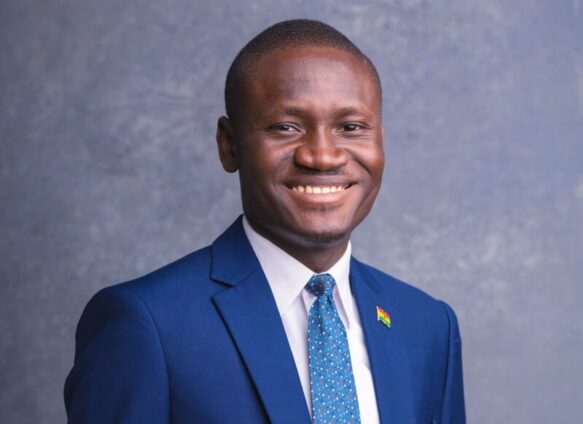
Charles Lwanga Tengan,
MPH Global Health, SPH - KNUST
Global Health and Infectious Disease Research Group, KCCR.
Latest Stories
-
Ghana to honour Christina Hammock Koch for historic Artemis II mission
49 minutes -
Supreme Court appointments require more than 15 years’ experience – Justice Adjei-Frimpong
1 hour -
Fire destroys 3-bedroom house at Bogyawe
1 hour -
Why the Supreme Court is a “policy court” – Justice Richard Adjei-Frimpong breaks it down
2 hours -
Playback: The Law discussed Supreme Court @150
3 hours -
MTN Momo staff walk to promote wellness and fitness
3 hours -
Assafuah: Sedina Attionu’s return from Nevada will test government’s commitment to accountability
3 hours -
How GRA’s Modified Taxation Scheme is boosting revenue compliance & SMEs competitiveness
3 hours -
Stonebwoy Can Do It: A call to unite behind 2026 BHIM Fest
4 hours -
World Shea Expo returns to Tamale for 2026 edition
4 hours -
Prioritise cocoa sector with better prices, timely payments-Annoh-Dompreh urges NDC
4 hours -
Lands and Mines Watch Ghana endorses Heath Goldfields’ mining capacity
5 hours -
Gbintiri residents protest alleged diversion of 24-hour market project
5 hours -
Justin Bieber headlines Coachella with nostalgia-fuelled set
5 hours -
Ukraine and Russia accuse each other of hundreds of ceasefire violations
5 hours