

Audio By Carbonatix
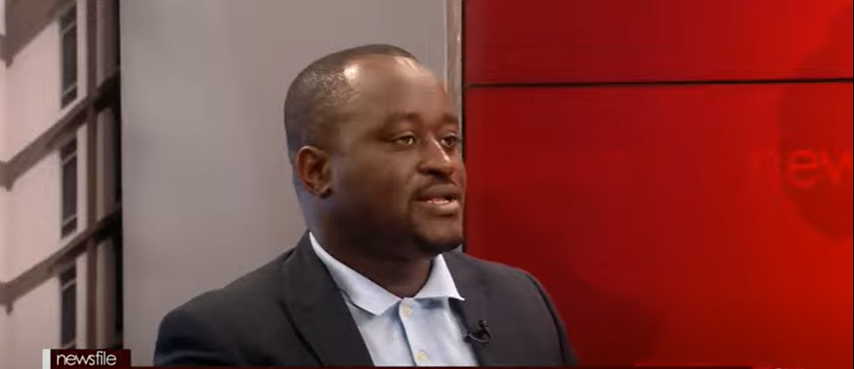
An economist, Dr. Theo Acheampong, has called on government to take advantage of the current economic conditions especially in regards to food inflation to solve some of the teething problems with the food industry in Ghana.
While speaking on the government’s attempt to provide affordable food produce to Ghanaians at below-market prices at the Ministry of Agriculture, he noted that government cannot subsume all of the responsibility of the market thus must invest in solving the structural issues that plague the industry.
“But the point is that if the government is bringing in say plantain and selling it in Accra relatively cheaper than what the market women are, the government cannot subsume all of the responsibility. So necessarily you need some sort of market coordination mechanism in there,” he said on JoyNews’ Newsfile on Saturday.
He explained that the current high cost of food produce on the market is as a result of secondary factors such as the cost of transportation and fertilizer, hence it behooves on government to develop new ways of addressing how agriculture is done in the country.
He added that government would also have to find solutions to issues of food transportation such that large amounts of food produce can reach urban centres in record time against the current system of trucks bringing the food to the markets.
“What is driving the cost of the product or the food is not necessarily about the thing itself, but we have to look at the input that is going into it; fertilizer, and when they harvest the food and you’re transporting it the cost of fuel as well.
“The man just talked about spending 14,000 now he’s spending 60,000 to bring the same quantity of rice from somewhere in the north to Accra. And people generally are rational so they’ll price in these things,” he said.
“So the attempt to solve it from a demand point of view, yes, commendable, but the structural issues must still be addressed, which is that fundamentally we have to change the way we practice agriculture in this country. And if we don’t take advantage of this crisis and this opportunity then our worry or my concern is that we always will be diagnosing problems and not providing solutions.
“But the process of providing the solution is equally as important as the solution itself because you need to really think through how you connect those value chains and ultimately how you bring down the cost of production such that you have enough food to feed the people in the country,” he added.
Latest Stories
-
GRA forms 9-member committee to probe alleged missing containers at Tema Port
38 minutes -
Foreign Minister inspects VFS Global Visa Centre, highlights commitment to service quality standards
53 minutes -
Declan Rice close to agreeing new Arsenal deal
1 hour -
‘Draining’ few days for Gauff after online racist abuse
1 hour -
Media worker, journalist remanded over alleged GH¢800,000 fraud
1 hour -
PAC sends Ghana Water hearing back, demands Minister and MD appear over financial status
2 hours -
Foreign Affairs Minister inspects 20+ visa centres, demands better conditions for Ghanaian applicants
2 hours -
Guardiola set to attend Man City v PSG next week
2 hours -
GACL to hold full-scale emergency simulation exercise on October 15
2 hours -
327 entries submitted for 30th GJA Media Awards
3 hours -
Mahama proposes rent-to-own scheme for unfinished houses
3 hours -
Mahama wants banks to introduce affordable housing loans within six months
3 hours -
Photos from National Conference on Housing Finance
3 hours -
Italy, Ghana unite 40 artists for ‘Beyond Creation’ exhibition at Accra Art Centre
3 hours -
Premature to call for Sports Minister’s removal while CID probe is ongoing – Ernest Norgbey
3 hours