

Audio By Carbonatix
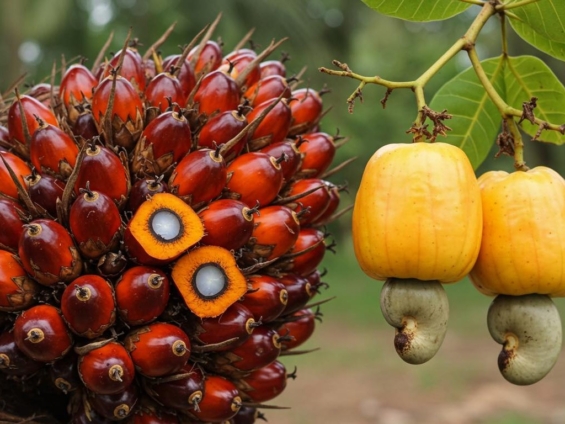
The Ghana Private Sector Competitiveness Programme (GPSCP II) has reaffirmed its commitment to strengthening the growth and resilience of Ghana’s cashew and oil palm sectors through targeted support for small and medium-scale enterprises.
At a capacity-building training focused on quality, certification and standards, the programme highlighted the importance of inclusive and sustainable growth in unlocking the full potential of the cashew and oil palm value chains.
The initiative seeks to enhance trade competitiveness by equipping agribusinesses with the knowledge and tools needed to comply with internationally recognized quality and certification requirements.
In an interview, Team Lead for the Ghana Private Sector Competitiveness Programme (GPSCP II), Juliana Ofori-Karikari, pledged their continuous support for SMEs.
“We noticed that a number of SMEs are applying for certification, and the process through which they are asking for the grant may not be able to support them to qualify for certification, and since this program is to support the growth of businesses in the area of cashew and oil palm processing, we saw the need to align them with international standards,” she said.

The training forms part of broader efforts under GPSCP II to improve market readiness among SMEs operating in the cashew and oil palm sectors.
By strengthening adherence to quality standards, the programme seeks to expand access to both regional and international markets, while promoting higher productivity and value addition within the agribusiness sector.
These interventions are expected to help agribusinesses overcome key barriers related to standards compliance, market access and sustainable production practices.
The Ghana Private Sector Competitiveness Programme (GPSCP II) is supported by the Swiss State Secretariat for Economic Affairs (SECO) and is jointly implemented by NIRAS International Consulting and Proforest.
The programme focuses on improving the enabling environment for the cashew and palm oil sectors, with the ultimate goal of boosting private sector productivity and strengthening Ghana’s agribusiness economy.

Latest Stories
-
Benedict Okyere Yeboah: Ghana’s football problem goes beyond sacking a coach
5 minutes -
GPL 2026/27: Darkwah Wiafe’s winner sees All Blacks beat Kotoko
10 minutes -
ITF World Tour : Patel Wins Boys’ Singles Final at J100 Accra
23 minutes -
Ghana must pursue BRICS partnership if it brings economic benefits – Kpebu
26 minutes -
Success and Wright Claims J100 Accra Girls’ Doubles Championship
27 minutes -
ITF J100: America’s Wright wins J100 Accra Girls’ Singles Title
33 minutes -
Expedition hopes to find aviator Amelia Earhart’s plane on remote island
34 minutes -
US seeks changes to rejected $109m health compact with Ghana – Mahama
1 hour -
Nine dead in mass shooting at Pennsylvania home
1 hour -
‘Time for Ukraine to get new president,’ says Trump after Zelensky condemns diesel deal
1 hour -
Hincapie injury adds to Arsenal issues after Guimaraes rescue act
2 hours -
Henderson scores twice as Chelsea thumb Bournemouth
2 hours -
Photos: Mentapulse Africa convenes health and labour summit to address talent retention
2 hours -
Mahama inspects Nkokɔ Nketenkete plant, eyes Bechem as chicken capital
2 hours -
Ghana not seeking full BRICS membership, applying as Partner Country – Ablakwa
2 hours