

Audio By Carbonatix
The "Grow 24" component of President John Dramani Mahama's "24-Hour Economy" initiative is set to launch 20 "agro-ecological enclaves" nationwide, fundamentally transforming the nation's farming landscape.
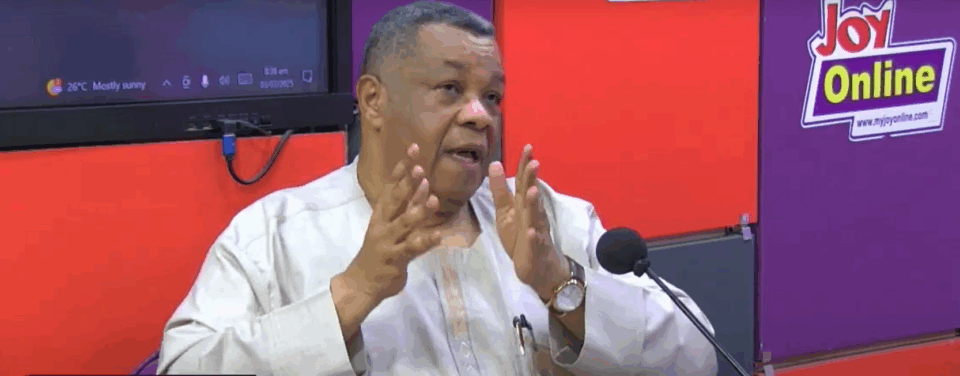
Mr Goosie Tanoh, Presidential Advisor on the 24-Hour Economy, revealed this during an appearance on Joy FM's Super Morning Show today, July 3.
Mr. Tanoh introduced the concept of "Abedu" – literally a "farm town" – as the core model for these enclaves.
Each Abedu will be a self-contained agricultural ecosystem boasting comprehensive mechanisation support, advanced irrigation systems, a 24-hour energy supply, integrated road networks, and crucial extension services.
READ ALSO: 24-Hour Economy: Goosie Tanoh explains how ‘Grow 24’ will boost agriculture
"It has a farmers' organisation. Anchor farmer is a guaranteed market for the small farmer," Mr Tanoh explained, detailing a crucial aspect of the model.
He further elaborated that these anchor farmers will also have guaranteed markets because industrial parks, designed to process raw materials or serve as off-take points for buffer stock and wholesale markets, will be co-located with the Abedus.
This integrated approach aims to minimise post-harvest losses and maximise value addition.
The initial phase of "Grow 24" will focus on establishing 20 such agro-ecological enclaves, ranging in size and strategically located to produce key crops identified for their potential to reduce inflation, decrease import dependence, and enhance price competitiveness.
Mr Tanoh specifically mentioned maize (for feed and human consumption), soybeans (for feed, oil, cosmetics, and other industrial applications), and rice.
Highlighting the critical need for this transformation, Mr Tanoh cited Ghana's demand for 1.8 million tonnes of rice annually, with only 800,000 tonnes currently produced locally, leading to significant imports.
He asserted that the Abedu model, by upskilling small-scale farmers and improving on-farm practices like water retention and soil husbandry, will drastically increase yields from an average of four tonnes per hectare to seven tonnes.
This increased production, he believes, will solve the raw material shortage currently plaguing local processing facilities, such as a rice mill in Tamale operating at a mere 10% capacity due to lack of supply.
The Presidential Advisor revealed that the groundwork for these 20 initial enclaves is already underway.
"Between now and January, we're doing the concept notes for the Abedus that are going to start and the 'womb wombs' – which are the industrial parks," he stated. These concept notes are crucial for testing financial viability with bankers and financiers.
Once bankability is confirmed, funding arrangements will be put in place through a "funding ecosystem". The Ghana Infrastructure Fund (GIF) will serve as the primary infrastructure provider, seeking viability gap funding from the government.
This will then facilitate private sector investment in the Abedus and the associated industrial parks, leveraging long-term returns, particularly from pension funds.
Financial support will also be channelled through the Development Bank Ghana (DBG) as an anchor, which aims to raise between $1 billion and $1.5 billion in concessional loans.
These funds will be lent to commercial banks with strict protocols and Bank of Ghana supervision to ensure the capital reaches the intended anchor farmers and agricultural ventures, eliminating foreign exchange hedging costs and providing some forbearance on traditional collateral requirements.
Mr Tanoh underscored that this integrated approach of increased yields, local processing, and guaranteed markets will not only create employment and ensure food self-sufficiency for human consumption but also provide crucial raw materials for industries like poultry, ultimately driving Ghana's economic growth and reducing reliance on imports.
Latest Stories
-
2026 U-20 WWC: Black Princesses fall to Ecuador in opening game
1 hour -
GPL 2026/27: Hearts of Oak start new season with emphatic win over Berekum Chelsea
2 hours -
GPL 2026/27: Asante Kotoko held by debutants Debibi United in four-goal thriller
2 hours -
CAF CL: Medeama suffer home defeat in first leg against TP Mazembe
2 hours -
GPL 2026/27: Samartex secure 3-1 victory over Karela in season opener
3 hours -
Kumawu MP calls for urgent action on SHS infrastructure deficits
3 hours -
Vice President urges Methodist Church to add digital skills to women’s training programmes
4 hours -
Forestry Commission arrests 12 illegal miners in Atewa Forest
4 hours -
NPP National Treasurer aspirant involved in accident during campaign
5 hours -
Treat coastal communities as partners in sea turtle conservation – Dr Agyekumhene
5 hours -
The Chief Justice is not a Touring Minister: Baffoe-Bonnie’s SOE visits are unconstitutional officiousness
5 hours -
Enforcing environmental laws carries political cost, while offenders go unpunished – Frimpong-Boateng
5 hours -
Galamsey fight collapsed after safeguards introduced in 2018 were abandoned – Prof Frimpong-Boateng
5 hours -
Jail officials who approve projects in wetlands and forest reserves – Prof Frimpong-Boateng
6 hours -
Ghana needs $21bn to restore lands damaged by illegal mining – Frimpong-Boateng
6 hours