

Audio By Carbonatix
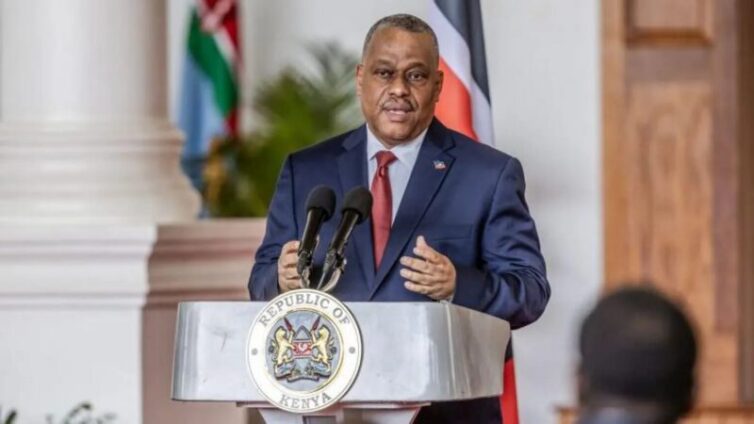
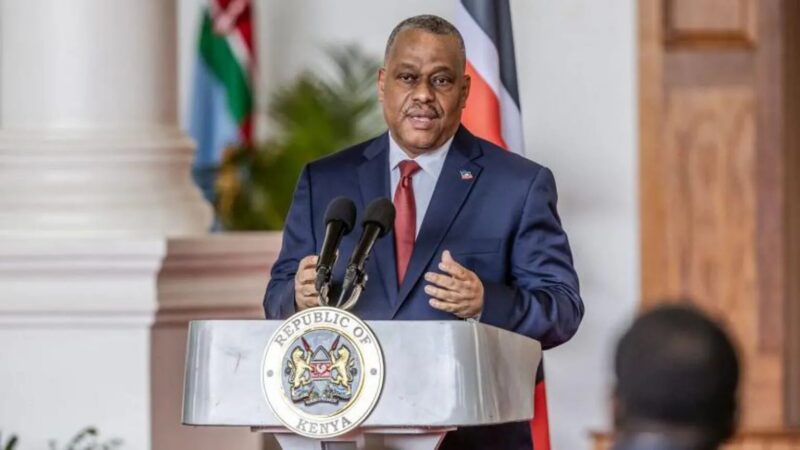
Haitian Prime Minister Garry Conille has been fired by the country's ruling council less than six months after he took office.
An executive order, signed by eight of the council's nine members, named businessman and former Haiti Senate candidate Alix Didier Fils-Aime as Conile's replacement.
Conille, a former United Nations official, was brought in to lead Haiti through an ongoing, gang-led security crisis and had been expected to help pave the way for the country's first presidential elections since 2016.
He described his ousting as illegal, saying in a letter - seen by Reuters news agency - that it raised "serious concerns" about Haiti's future.
Haiti currently has neither a president nor parliament and, according to its constitution, only the latter can sack a sitting prime minister.
Conille was sworn in on 3 June.
"This resolution, taken outside any legal and constitutional framework, raises serious concerns about its legitimacy," Conille's letter was quoted as saying.
Haiti's transitional presidential council (TPC) was created in April after Ariel Henry, Conille's predecessor, was forced from office by a network of gangs that had taken over parts of the capital Port-au-Prince.
Henry left Haiti to attend a summit in Guyana on 25 February 2024 and gang members subsequently seized the city's international airport, preventing him from returning.
The TPC was tasked with restoring democratic order to the Caribbean country, where such violence is rife.
More than 3,600 people have been killed in Haiti since January and more than 500,000 have had to leave their homes, according to the UN, which describes Haiti as being one of the poorest countries in the world.
Two million Haitians currently face emergency levels of hunger, UN data shows, while almost half the population "do not have enough to eat".
One of the country's most powerful gang leaders, Jimmy Chérizier, also known as Barbecue, previously said he would be prepared to end the violence if armed groups were allowed to be involved in talks to establish a new government.
Presidential elections were last held in Haiti eight years ago, when Jovenel Moïse of the Tèt Kale party was elected.
Since his murder in July 2021, the post of president has been vacant.
Gangs in Haiti have capitalised on the power vacuum and expanded their control over swathes of the country, which has effectively been rendered lawless in places.
Last month, it was reported that hundreds of police officers had been deployed to Haiti from Kenya, with hundreds more set to join them.
Latest Stories
-
Supreme Court appointments require more than 15 years’ experience – Justice Adjei-Frimpong
16 minutes -
Fire destroys 3-bedroom house at Bogyawe
39 minutes -
Why the Supreme Court is a “policy court” – Justice Richard Adjei-Frimpong breaks it down
44 minutes -
Playback: The Law discussed Supreme Court @150
2 hours -
MTN Momo staff walk to promote wellness and fitness
2 hours -
Assafuah: Sedina Attionu’s return from Nevada will test government’s commitment to accountability
2 hours -
How GRA’s Modified Taxation Scheme is boosting revenue compliance & SMEs competitiveness
3 hours -
Stonebwoy Can Do It: A call to unite behind 2026 BHIM Fest
3 hours -
World Shea Expo returns to Tamale for 2026 edition
3 hours -
Prioritise cocoa sector with better prices, timely payments-Annoh-Dompreh urges NDC
3 hours -
Lands and Mines Watch Ghana endorses Heath Goldfields’ mining capacity
4 hours -
Gbintiri residents protest alleged diversion of 24-hour market project
4 hours -
Justin Bieber headlines Coachella with nostalgia-fuelled set
4 hours -
Ukraine and Russia accuse each other of hundreds of ceasefire violations
4 hours -
Asha Bhosle: The sound of Bollywood dies aged 92
5 hours