

Audio By Carbonatix
Health advocates are calling for stronger financial support to sustain Ghana’s immunisation programmes and protect children from life-threatening diseases.
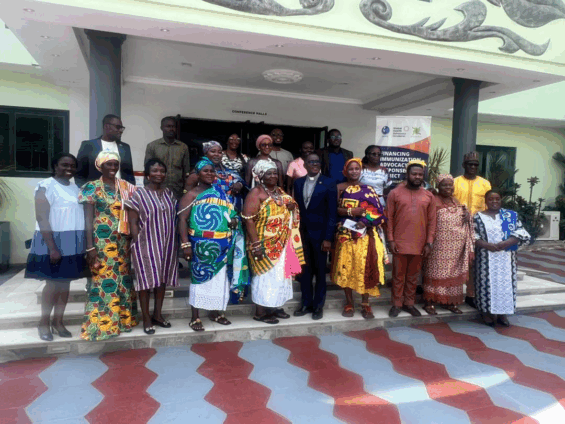
The call was made at a workshop organised by Hope for Future Generations (HFFG) in collaboration with the Global Health Advocacy Incubator (GHAI) and Gavi, the Vaccine Alliance.
Currently, Ghana’s immunisation drive is largely supported by donor funding, but this support is expected to cease by 2028.
HFFG Project Coordinator Sabina Morgan warned that the country risks setbacks in vaccine delivery if it fails to build local vaccine production capacity and strengthen its financing mechanisms.
She highlighted delays in the release of immunisation funds as a major threat, stressing the need for government to close gaps that undermine vaccine availability and the country’s ability to respond quickly during health emergencies.
“Timely and consistent financing for vaccines is not just a health imperative—it is a strategic investment that protects productivity and sustains economic growth,” she said.
GHAI Country Coordinator, Steven Atassige, also urged stronger citizen engagement and sustainable financing strategies in the 2026 national budget.
He commended government for improvements this year, noting that Ghana had already paid $24.6 million in co-financing for traditional vaccines before the end of the third quarter, a significant improvement from previous years.
“This is very encouraging. However, to sustain this progress, immunisation funding must be consistently prioritised in future budgets to prevent payment delays and avoid vaccine stockouts,” he added.
Representing the Ministry of Health, Principal Planner Kwaku Saffu-Mensah reaffirmed government’s commitment to sustaining immunisation programmes despite budgetary pressures and the recent withdrawal of support from the United States Agency for International Development (USAID).
He disclosed that the Ministry of Health, in collaboration with the Ministry of Finance, is exploring innovative financing measures, including public-private partnerships, to address the shortfall.
He further noted that the ministry has established a Resource Mobilisation Unit and an Intersectoral Collaboration Unit to improve efficiency and ensure resources are used for maximum impact.
Latest Stories
-
GRA welcomes Tribunal decision upholding US$393 million tax assessment
3 minutes -
COMAC says Uniform Fuel Pricing Fund should not be confused with fuel subsidy
12 minutes -
Mercy Ships targets over 2,000 surgeries, 3,500 dental treatments during Ghana mission
14 minutes -
NITA appoints ShaQ Express founder Anthony Owusu-Ansah as Acting Deputy DG
20 minutes -
Government moves to compel public institutions to buy food from Ghanaian farmers
26 minutes -
‘Baffour Awuah won’t die in EOCO’s detention, even if he dies there, that’s okay for us’ – John Boadu
30 minutes -
OccupyGhana calls for parliamentary scrutiny of EOCO, BNI powers
36 minutes -
Mahama calls for continued care for Mercy Ships patients after surgeries
41 minutes -
NDPC DG calls for stronger financing, accountability to improve nutrition outcomes
47 minutes -
Over 130 courts are without magistrates – JUSAG
56 minutes -
SWAG calls on GFA leadership to fix Ghana football or step aside
1 hour -
Gender Ministry launches breast cancer campaign, pushes support over stigma
1 hour -
Feed Ghana Programme cuts food import dependence
1 hour -
Mahama welcomes Global Mercy Hospital Ships back to Ghana
1 hour -
Tourism Minster calls for improved maintenance, consistent storytelling at tourist sites
1 hour