

Audio By Carbonatix
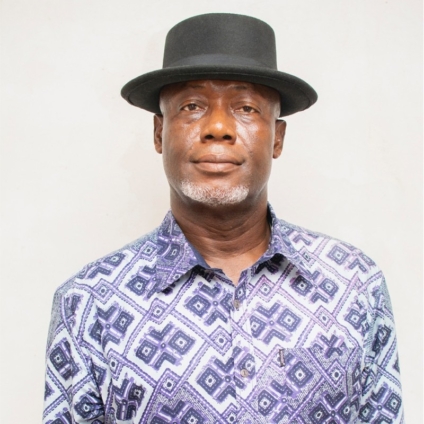
The President of the Sundoulous Advanced Leadership Training (SALT) Institute, (now University College), Dr Kodzo Alabo, has bemoaned the high cost affiliation fee demanded by public universities, as the charges are negatively impacting private universities.
He has, thus, appealed to them to be more considerate on the private universities when charging the fees to reduce the burden on the institutions and sustain them.
Dr Alabo made the appeal when some management members of the SALT Institute called on the Director General of the Ghana Tertiary Education Commission (GTEC), Professor Ahmed Jinapor Abdulai, following the granting of university status to the Institute by the Commission.
The purpose of the visit was to, among other things, seek advice from the Commission to enable the Institute to live up to its current mandate.
Speaking in an interview with the Ghana News Agency (GNA), Dr Alabo said, a lot of private universities who were affiliated to State universities were barely surviving due to the high cost of affiliation and course fees demanded by these public institutions.
He said “because we are private institutions, we don't enjoy so much of the government support that goes to the state universities and that by itself means that we have to balance our books from the fees that are paid. But then, we are dealing with a market you cannot over-charge, if you charge more than the market it means that you will be completely out or you won't get the students.”
Dr Alabo noted that, already, they were faced with stiff competition from the State universities who had branched into areas such as campuses, offering the same subjects and reducing their cut off grades, to try and attract the same students, which hitherto, were solely operated by them (private universities).
“And because they are already established, they have got big campuses, large quarterly of lecturers and the State support upon that which we do not have, it puts us at a radical disadvantage compared to them. And as I said earlier, they have brought their entry levels so low that they can get as many students as possible,” he said.
“Private universities are struggling to balance their books, basically, so if upon that, affiliation fees are also very high, then it creates more problems for us. Remember, you cannot charge more than the market is charging, otherwise you will completely price yourself out of the market,” he added.
Founded in 2003, the core objective of SALT Institute is to train transformational leadership that would propel the country's development.
Currently, it is affiliated to the Ghana Institute of Management and Public Administration (GIMPA).
Dr Alabo said the award of a university status to SALT Institute marked a remarkable chapter in the future of the institution.
Currently, the Institute offers three Masters of Arts programmes- MA in International Relations and Diplomacy; MA in Entrepreneurship and Management and MA in Leadership and Management, and two PhD programmes-Leadership and Management, and International Relations and Diplomacy.
Dr Alabo said “with the university that will become a reality when we get chartered, now it is a university college, it gives us opportunity to reach out to the market and say that we are a tertiary institution that are offering university programmes.”
He indicated that, the Institute had already submitted six new programmes to GTEC, awaiting their approval, saying “we are hoping that we bring on board several critical graduate programmes in ICT both Msc and PhD, we are having legal programmes like international law and diplomacy, even LLB in commercial law.”
“The niche that we are carving for ourselves is not simply university college or university education, but we are also focusing on graduate programmes,” he added.
Prof Ahmed Jinapor Abdulai, Director General of the GTEC, urged the Institute to ensure it complied with all university governing laws to avert any repercussions.
Latest Stories
-
EOCO grants Suame MP John Darko enquiry bail in GH¢27m SIC investigation
1 minute -
NPP cannot question EC appointment after appointing own people to Commission – Kwakye Ofosu
7 minutes -
BoG deepens public trust with regional stakeholder forum in Techiman
17 minutes -
‘We have turned the tide’ – Ato Forson says Ghana is ready to take off
21 minutes -
Police arrest man captured in viral video assaulting wife in Agona Nkwanta
23 minutes -
KATH Mother and Baby Unit construction stalled for 14 months over unpaid contractor arrears
37 minutes -
Government wanted to ‘tilt the balance’ with new EC appointments – Kwakye Ofosu
44 minutes -
Angry Tema Community 25 residents threaten to sleep at GWL over water shortage
57 minutes -
BoG takes financial literacy drive to Techiman, vows to protect depositors
57 minutes -
‘Stop the distractions’ – Akosua Manu demands answers over GH¢49.7m South Africa evacuation cost
58 minutes -
Formula 1 to return to Africa with Rwanda Grand Prix in early 2030s
1 hour -
Mahama says Ghana is safer today as he commissions 85-bed ward at Police Hospital
1 hour -
LA 2028: Black Queens face Zambia in final Olympic qualifier
1 hour -
WAFU Zone B: Black Starlets seal semifinal place with 3-1 win over Benin
1 hour -
Black Queens thrash Mauritius 7-0 to advance 10-0 on aggregate in Olympic Qualifiers
2 hours