

Audio By Carbonatix
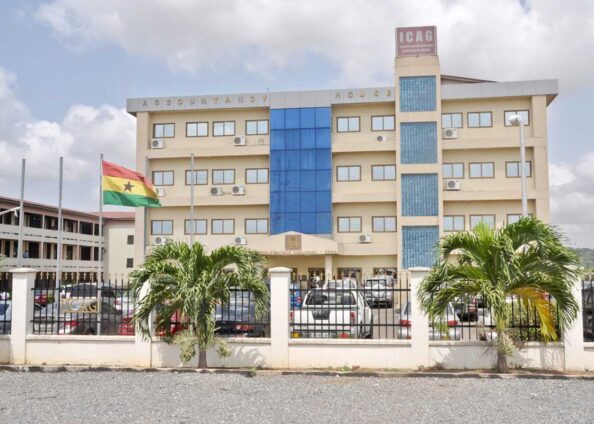
The Institute of Chartered Accountants, Ghana (ICAG) has announced a significant legal victory after the High Court affirmed its exclusive statutory mandate to regulate, train, certify and admit professionals into the accountancy profession in Ghana.
The ruling, delivered in a case involving the Chartered Institute of Certified Tax Accountants, Ghana, the National Accreditation Board, ICAG and the Attorney-General, establishes that all disciplines of accountancy, including tax accounting, fall within the regulatory jurisdiction of ICAG.
In a statement issued on Tuesday, June 23, ICAG said the court's decision reinforces the legal framework governing the accountancy profession and serves as a warning against organisations seeking to offer professional accounting qualifications without lawful authority.
According to the institute, the High Court held that the training, certification, admission and regulation of persons practising any branch of accountancy are matters exclusively reserved for ICAG under Ghanaian law.
The court further declared unlawful the activities of the applicant, which sought to regulate and certify individuals as Chartered Certified Tax Accountants.
As a result, the court restrained the organisation from advertising, training, certifying and admitting persons into such membership programmes.
The judgment is expected to have far-reaching implications for professional accounting education and certification in the country, particularly in specialised areas such as taxation and financial reporting.
ICAG explained that its regulatory authority derives from the Institute of Chartered Accountants, Ghana Act, 2020 (Act 1058), which grants the institute sole responsibility for regulating the accountancy profession in Ghana.
The institute said the ruling also aligns with the provisions of the law that empower it to train, examine, certify and admit persons into the profession while maintaining professional standards and ethical conduct.
"The legal position has been further strengthened by the Institute of Chartered Accountants, Ghana Act, 2020 (Act 1058), which vests in the Institute the sole statutory mandate to regulate, train, examine, certify and admit persons into the accountancy profession in Ghana," the statement noted.
Following the judgment, ICAG urged students, employers, educational institutions and the general public to exercise caution when enrolling in professional accounting programmes or relying on qualifications offered by organisations claiming authority to regulate or certify accountants.
The institute warned that any institution, body or organisation presenting itself as authorised to train, certify, license or regulate accounting professionals in Ghana without legal backing could be acting unlawfully.
It stressed that qualifications issued by such entities may not enjoy legal recognition under Ghana's regulatory framework.
"Any such representation is liable to be challenged under the applicable laws of Ghana," the institute stated.
ICAG said it remained committed to protecting the integrity and credibility of the accountancy profession and would continue taking appropriate steps to prevent unauthorised institutions from misrepresenting themselves as professional accounting bodies.
The institute also emphasised the importance of maintaining uniform professional standards in accounting practice to safeguard public confidence in financial reporting, taxation and auditing.
The Institute of Chartered Accountants, Ghana, was established under the Chartered Accountants Act, 1963 (Act 170) and later reconstituted under the Institute of Chartered Accountants, Ghana Act, 2020 (Act 1058).
The institute serves as the country's principal professional accountancy body and is responsible for promoting the study and practice of accountancy, regulating members of the profession and ensuring compliance with professional and ethical standards.
Under the Companies Act, 2019 (Act 992), members of ICAG are recognised as the professionals authorised to undertake statutory audits of company accounts in Ghana.
Industry observers say the ruling provides long-awaited legal clarity on the regulation of accounting and tax-related professional qualifications, while strengthening efforts to protect students, employers and the public from potentially misleading certifications.
Latest Stories
-
GoldBod Jewellery opens new showroom in Takoradi to promote gold value addition
12 minutes -
National Cathedral site handed back to government pending AG’s review – Mahama Ayariga
13 minutes -
Gov’t outlines measures to expand access to affordable housing as Ghana marks World Habitat Day
14 minutes -
Ghana AI Summit 2027 set for Accra in March
17 minutes -
GoldBod to sell spot dollars to banks twice a week under new FX framework
19 minutes -
‘No vacancy’ notice was administrative, not policy to halt national service – Parliament
21 minutes -
Hopeson Adorye elected to World Taxpayers Association board
22 minutes -
Deputy Education Minister appeals to striking teachers to return to classrooms
33 minutes -
Mahama satisfied with Aayalolo contra-flow results – Ayariga
34 minutes -
Ghana’s Rabiu Alhassan joins board of International Fact-Checking Network, IFCN
47 minutes -
Argentina hit 7 as Burkina Faso land five hours before kick-off
51 minutes -
NPP’s choice of Kojo Bamba, is a rejection of ‘suit and big English’ – Mustapha Gbande
55 minutes -
Innovators urged to build low-cost, locally maintainable health solutions
58 minutes -
Frank Appiah Kusi, PhD: Governance Gaps, Transparency, and the Business of Football in Ghana
58 minutes -
Manhyia South MP charged with conspiracy, financial loss and money laundering
1 hour