

Audio By Carbonatix
A member of Parliament's Local Government and Rural Development Committee, John Darko, has criticised the government's proposed model for electing Metropolitan, Municipal and District Chief Executives (MMDCEs).
He argued that allowing the executive to shortlist candidates defeats the purpose of direct elections.
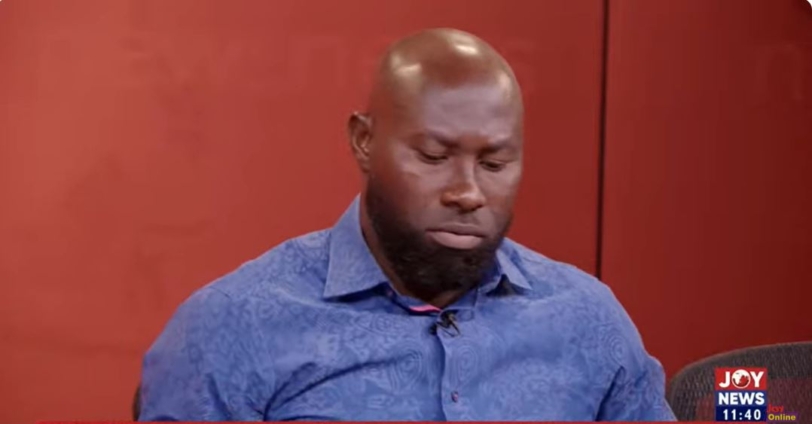
Speaking on Joy FM’s Top Story, during a discussion on the government's response to the Constitutional Review Committee's recommendations, Mr Darko said the proposal represents a departure from the committee's recommendation that MMDCEs be elected through an open, non-partisan process.
"I think it's clear that government has moved from the position that was advanced by the committee that it set up," he said on Tuesday, August 4.
Mr. Darko recalled that the National Democratic Congress (NDC), while in opposition, opposed the previous New Patriotic Party (NPP) government's proposal to amend the Constitution to allow political parties to sponsor candidates for MMDCE elections ahead of the planned 2019 referendum.
"The proposal that the previous administration brought was to enable political parties to sponsor candidates and then allow the voters to directly elect who becomes their chief executive. The NDC fought against this and said they didn't want political parties to be involved because the process should remain non-partisan," he said.
Mr. Darko contended that although the current government now supports electing MMDCEs, its proposal to screen and shortlist candidates before presenting them to voters still gives the executive excessive influence over the process.
"You cannot have a situation where, for instance, the NDC is in government, presents three people to us, and then asks the people to select one of them," he argued.
"On what basis would the government do the selection? It is the same thing we are talking about. The only difference is that the government presents those three people to us."
He questioned why voters should be restricted to choosing from government-approved candidates instead of being allowed to elect anyone who qualifies to contest.
"Why can't the people in the constituency decide that out of the three we don't want any of them?" he asked.
"Give us the opportunity to vote for anybody we want."
Mr. Darko said a truly non-partisan election would encourage candidates to campaign on local development priorities rather than national party politics.
"If we make the election non-partisan, the issues that will be discussed during the election will be local issues," he said.
"Whether gutters are clean, whether the market is clean, whether enough tolls are being collected to maintain the market—those would be the issues."
He warned that once the executive becomes involved in determining who can contest, local government elections risk becoming extensions of presidential and parliamentary contests.
"The argument is that we've had parliamentary elections and presidential elections, which are national in nature. Let's have one that is local-based and allow the people in the locality to choose from all those who want to put themselves up for election."
Mr. Darko's comments come amid growing debate over the government's White Paper on the Constitutional Review Committee's recommendations, particularly its proposal to have prospective MMDCE candidates screened before a final shortlist is presented to voters.
Latest Stories
-
Mahama Ayariga urges banks to take responsibility for beautifying public spaces
33 minutes -
Account for the old economy before selling us a new one
1 hour -
Abanga sets 4 million youth-vote target for Bawumia ahead of 2028 election
1 hour -
Gold edges lower with focus on Fed minutes, rate path clues
1 hour -
Oil prices rise as storms and air strikes threaten supply
2 hours -
Nigeria nears 2,000 repatriations from South Africa after latest evacuation flight
2 hours -
‘How can an office…close at 5pm?’ – Abanga questions 24-Hour Economy
2 hours -
‘4 million is possible’ – Abanga unveils NPP’s youth-vote battle plan
2 hours -
‘I never gave up’ – Abanga Fusani reflects on journey to NPP Youth Organiser victory
3 hours -
World Bank maintains Ghana’s growth rate forecast at 4.8% in 2026
3 hours -
Cedi was worst African currency in quarter 2, 2026 – World Bank
3 hours -
US death row inmate Christa Pike awake and speaking after failed execution, lawyers say
3 hours -
AI gains can lift three times as many people out of poverty in Ghana – World Bank
3 hours -
Scammers target ECG customers with fake meter sales and MoMo payment calls
5 hours -
Abanga Fusani credits hard work and consistency for NPP Youth Organiser victory
5 hours