

Audio By Carbonatix
Ghana’s digital payment systems handled substantially more activity during 2025. A Bank of Ghana report released in September 2026 recorded strong growth in mobile money and instant bank payments.
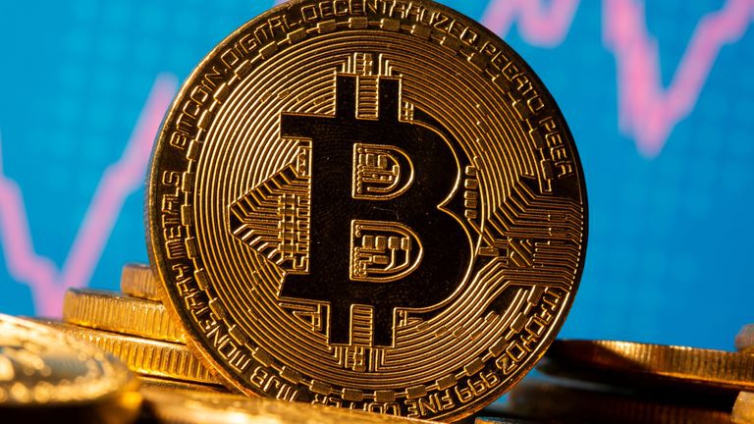
Bitcoin is not part of those domestic systems, yet its price appears regularly in financial news and apps. That figure is usually given in US dollars, even when the reader earns and spends in cedis. Binance’s BTC to USD page offers one international reference. At 3:31 a.m. UTC on September 20, 2026, it showed one Bitcoin at $80,351.03. For a reader working in cedis, that number was incomplete.
How Is Ghana’s Digital Finance Market Changing?
Digital transfers are now a routine part of Ghana’s financial system. Mobile money supports everyday payments, while instant-payment services move funds between participating financial institutions.
Ghana’s established digital-payment habits provide important context for Bitcoin interest. The Bank of Ghana’s Payment Systems Oversight Annual Report 2025 recorded 202.8 million GhIPSS Instant Pay transactions worth GH¢712 billion during the year. The World Bank’s Ghana overview provides broader economic and digital-development context for the country.
Mobile-money activity also grew. Monthly transaction value rose from GH¢333 billion in January 2025 to GH¢518 billion in December. These figures cover regulated payment services rather than cryptocurrency, but they show the scale of digital transactions taking place across Ghana. Mobile money is recorded in cedis and runs through domestic infrastructure. Bitcoin is priced on international markets and can change value throughout the day. Sharing a digital format does not make the systems interchangeable.
Why Is the Dollar Price Only Part of the Picture?
A Bitcoin quote in dollars leaves a Ghanaian reader with a currency conversion to make. The BTC/USD price must be compared with the USD/GHS rate available at roughly the same time.
The daily figures reported by Binance show why timing matters. During the 24 hours leading to 3:31 a.m. UTC on September 20, 2026, Bitcoin traded between $80,098.77 and $81,911.14. A calculation near the bottom of that range would not match one made near the top. At the recorded price of $80,351.03, 0.001 BTC came to approximately $80.35. Its cedi equivalent would depend on the dollar exchange rate used. A change in either Bitcoin or the USD/GHS rate could alter the result.
The amount offered by a financial service might differ again. Providers do not necessarily update their feeds simultaneously and some include a spread or conversion charge. A dated price records what Bitcoin was worth at one point, rather than guaranteeing the amount available through every service.
Why Is Regulatory Clarity Becoming More Important?
A price on a screen says little about the company displaying it. Users still need to identify the provider, understand how it calculates conversions and see which charges apply.
The Bank of Ghana has encouraged businesses to begin building regulatory compliance into their operations. The message extends beyond banks because more financial activity now passes through technology companies, payment services and mobile applications.
A public Bitcoin price cannot confirm whether a service is authorized in Ghana. It also cannot explain how that service manages cedi conversions, transaction records or complaints. Consistent disclosure would make comparisons easier. If a service identifies the source and time of its price, displays its exchange rate and lists its charges, a user can follow how the final cedi amount was reached.
What Does Bitcoin Market Data Actually Show?
Price is the figure most likely to appear in a headline, but it does not describe all market activity. Volume and supply answer different questions.
On September 20, 2026, Binance placed Bitcoin’s 24-hour trading volume at about $21.4 billion. The page also showed 20.1 million BTC in circulation, equal to 95.65% of the fixed 21 million limit. These figures provide a dated market snapshot. One records recent trading activity, while the other shows how much Bitcoin had entered circulation by that point. A busy trading day can accompany either a rise or a fall in price.
Market pages may also show slightly different values. Each service draws on its own trades, liquidity and supported trading pairs. Refresh times can create another small difference, making the source and timestamp important.
What Would Make Bitcoin Pricing More Useful in Ghana?
A useful local comparison needs more than a Bitcoin price in dollars. The quotation should include its source and timestamp, while the cedi calculation should show the USD/GHS rate and any charges. Ghana already moves substantial values through digital channels, but Bitcoin introduces an international price and a separate currency conversion. Keeping those figures distinct explains why the global price may not match the amount displayed by a service operating in cedis.
Pam Brown: Finance, loans, crypto & forex
Pam Brown is a journalist with exceptional analytical skills and a strong interest in modern financial systems. She specializes in translating complex topics like crypto, loans, and forex into clear, accessible content. Pam’s precise, research-driven writing has made her a trusted voice in the financial and fintech space.
Latest Stories
-
Don’t let speed of information become your judgement – CJ tells new lawyers
30 minutes -
World Cup visa scandal: People have leveraged public office to facilitate fraud – Senyo Hosi
35 minutes -
Glut! Farmers count losses as prices crash, customers happy
1 hour -
GSA postpones auction of unserviceable vehicles
1 hour -
Man charged with attempted murder after stabbing
1 hour -
World Cup visa scandal: Senyo Hosi says issue goes beyond calls for Sports Minister’s resignation
1 hour -
Yaw Ampofo Ankrah hasn’t taken or received any money to facilitate visas – Lawyer insists
2 hours -
World Cup visa scandal: Senyo Hosi urges focus on constitutional accountability
2 hours -
La Beach demolition: Senyo Hosi condemns lack of consultation
2 hours -
Russian glide bomb attack on Zaporizhzhia kills at least 15 people
2 hours -
Jinapor warns underperforming energy sector CEOs of consequences, says no protection for failure
2 hours -
Fire destroys head of tipper truck on Lower Volta Bridge
2 hours -
Palmer signs new Chelsea contract until 2034
2 hours -
World Cup visa scandal: Mahama will act on corruption allegations – Abass Nurudeen
2 hours -
Abass Nurudeen accuses Minority of ‘scandal scavenging’ over World Cup visa controversy
2 hours