

Audio By Carbonatix
If gospel music had a scouting report, Ghana’s would read like a revival meeting choreographed with stage lights, live bands, and trembling voices lifted heavenward. It would speak of faith and finesse, of raw talent refined by purpose.
At the center of that holy hum stands The Next Gospel Star, a music reality show that has quietly but confidently become one of the most consequential talent pipelines in Ghana’s creative economy.
Now in its sixth season, The Next Gospel Star is less about instant fame and more about calling. Less spectacle, more stewardship. It is reality television that resists the urge to rush greatness, choosing instead the slower disciplines of process, prayer, and patience.
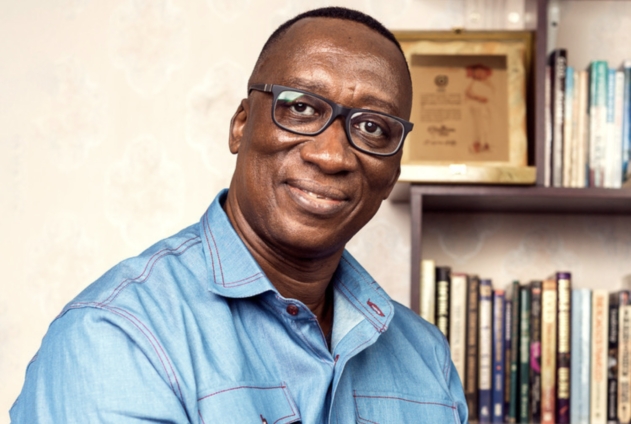
Behind it all is a man whose name may not always dominate headlines, yet whose influence is deeply woven into Ghana’s cultural fabric. His name is Ceejay, born Joe Osae.
The Man Behind the Movement
If you have ever encountered the iconic Akwaaba portrait, bold, warm, and unmistakably Ghanaian, then you have met Ceejay’swork long before you knew his story. The image, now globally recognizable among Ghanaians at home and in the diaspora, is more than a visual trademark. It is a philosophy. Welcome. Belonging. Home.
For over two decades, Ceejay has invested steadily in Ghana’s music and production ecosystem. He has supplied the tools that power performances, backed platforms that elevate voices, and created events that celebrate culture. Through his production equipment company, he has supported countless concerts, films, church programs, and cultural showcases, often behind the scenes and often without applause.
Not loudly. Not flamboyantly. Just consistently.
That consistency has become his signature.
A Personal Service, Not a Business Venture
The Next Gospel Star is Ceejay’s most personal investment yet. Unlike many reality shows buoyed by brand endorsements, glossy sponsorships, and dizzying budgets, this one runs primarily on conviction.
Ceejay describes the show simply as service. Service to God, to the industry, and to a country bursting with undiscovered voices. For six consecutive years, with little to no external investment, he has financed the show himself. Not halfway. Not cautiously. Fully.
Cars for winners.
Cash prizes.
Record deals.
Mentorship.
Trips to Dubai.
These are not promises dangled for publicity. They are commitments fulfilled season after season, like seeds planted with faith rather than spreadsheets. In an industry where sustainability is often discussed more than practiced, Ceejay has chosen to underwrite belief with action.
The result is a show that feels less like a competition and more like a calling ceremony.
More Than a Singing Contest
In a creative space increasingly obsessed with virality and immediacy, The Next Gospel Star plays a longer, more deliberate game. It asks contestants not just, Can you sing? but also, Why do you sing?
The performances are polished, yes, but they are also prayerful. The judges are exacting, yet pastoral. Critique is offered with care, and excellence is demanded with empathy. Contestants are challenged not only to hit notes, but to understand message, ministry, and responsibility.
The audience, too, is transformed in the process. They are not merely fans voting from a distance. They become witnesses, watching journeys unfold, testimonies take shape, and confidence grow where doubt once lived.
This is gospel music not as entertainment alone, but as vocation.
An Anomaly in the Creative Economy
This sixth season carries particular weight. Ghana’s creative economy stands at an inflection point, rich with talent but starved of structured investment. Many speak passionately about supporting the arts. Few build systems. Fewer still stay the course when returns are slow or invisible.
Ceejay has done all three.
Alongside The Next Gospel Star, he continues to run the Akwaaba Festival, another cultural pillar, as well as a production equipment company that has quietly powered the industry for years. His contribution is not theoretical. It is logistical. Financial. Deeply practical.
That makes The Next Gospel Star something of an anomaly, a passion project with professional standards, sustained not by hype but by habit.
The Night That Changes Everything
The grand finale of Season Six comes off on 21st December at the National Theatre of Ghana, a venue befitting both the artistry and ambition of the show. On that night, the lights will be bright, the harmonies full, and the stakes unmistakable.
One contestant will drive away with a car and GH₵10,000 in cash. Beyond the tangible prizes, however, lies something far more enduring: visibility, credibility, and a serious foothold in the gospel music industry.
For many finalists, the show has already changed their lives by expanding their networks, sharpening their craft, and affirming their purpose. Winning is significant. Being seen is transformative.
The Pattern, Not the Prize
Yet the real story of The Next Gospel Star is not the prize. It is the pattern.
Season after season, Ceejay demonstrates what happens when entrepreneurship meets purpose. When cultural pride meets spiritual gratitude. When someone decides that success is incomplete until it circulates.
In an era where creative philanthropy often arrives wrapped in press releases and photo opportunities, The Next Gospel Star has grown largely on word of mouth, testimony, and results. Its credibility has been earned, not announced.
Some of its most powerful moments happen off-camera. Quiet rehearsals. Last-minute pep talks. Unseen financial sacrifices. This is not charity as performance. It is investment as worship.
A Ghanaian Blueprint for Impact
Perhaps that is why the show has endured. Not because it promises stardom, but because it honors process. Not because it chases trends, but because it trusts talent. In the crowded universe of reality television, The Next Gospel Star has carved out a lane that is unmistakably Ghanaian, rooted, reverent, and resilient.
As the lights rise at the National Theatre this December, the applause will rightly belong to the finalists. Somewhere between the harmonies and the hallelujahs, however, another story will be playing softly in the background. It is the story of a man who turned gratitude into infrastructure, faith into opportunity, and a personal thank you to God into a national platform.
In gospel music, we call that grace.
In Ghana’s creative economy, we call it leadership.
Latest Stories
-
Girls must have equal place in Ghana’s digital future – Vice President
5 minutes -
High Court issues EOCO warrant to arrest Manhyia South MP Baffour Awuah
10 minutes -
Ghana at the heart of global PR excellence
18 minutes -
Ghana Institute of Architects clarifies position on ARC-ASG dispute amid ongoing case
19 minutes -
NDC supporters storm Fomena constituency office over alleged disqualification of chairman aspirant
22 minutes -
NPA CEO assures tanker drivers of action on welfare concerns
23 minutes -
Karpowership seeks contract extension as Ghana’s power demand grows
26 minutes -
Gender Ministry inaugurates committee to drive early childhood development
28 minutes -
Four Schools, One Crown: Prempeh, Corpus Christi, Mfantsipim and St Augustine’s battle for NIQ trophy
28 minutes -
HIV status cannot be used to deny employment under Ghana law – Ghana AIDS Commission
29 minutes -
Buffer Stock calls for expansion of national storage capacity as it falls below 50,000 metric tonnes
30 minutes -
Central Regional Minister urges use of religious platforms to change environmental, sanitation practices
53 minutes -
Henry Kweku Banning
53 minutes -
Execution of US murderer Christa Pike halted an hour before it was due to happen
56 minutes -
GoldBod generates US$1.87bn in FX in September, exceeds monthly target
59 minutes