


Audio By Carbonatix
The clue is in the name: credit. It means belief, trust.
If you're a shopkeeper, who do you trust to repay a debt? For most of history, only someone you knew personally, which was fine since most of the people you encountered would be from the same small community.
But as cities boomed, things became more awkward.
Large department stores couldn't rely on employees to recognise every customer by sight. So retailers issued tokens to trusted customers - special coins, key-rings, and in 1928, even objects resembling dog tags called "charga-plates".
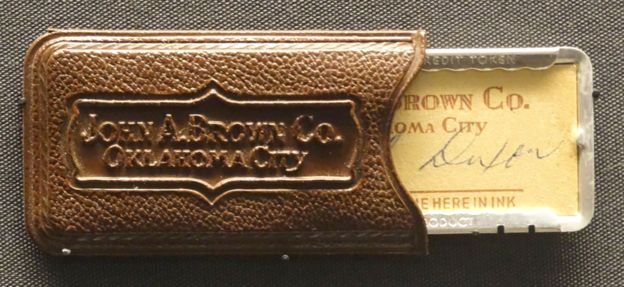 Image copyrightALAMY
Image caption"Charga-plates" allowed customers to take goods and settle their bill at a later date
Show one of those, and a shop assistant who didn't know you would happily let you walk out of the store with an armful of goods you'd not yet paid for. Some of those credit tokens became status symbols in their own right.
In 1947 came the first token that allowed someone to get credit not just from a single store, but from a range of stores: the Charg-It. Admittedly, this worked only within a two-block area of Brooklyn.
But then, in 1949, came the Diners Club card, aimed at the travelling salesman.
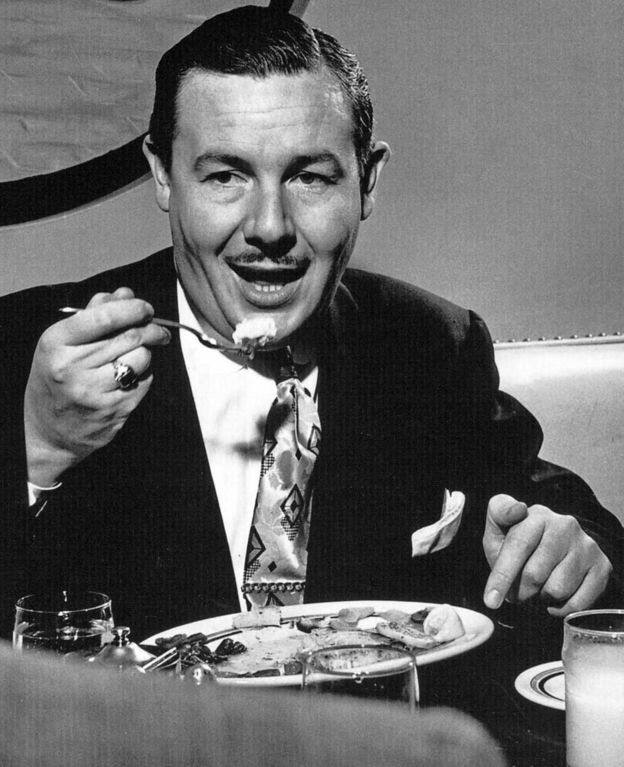 Image copyrightALAMY
Image captionDiners Club co-founder Frank McNamara spotted a lucrative gap in the market
It would let him (and it was usually him) buy food and fuel, rent hotel rooms, and entertain clients at a network of outlets around the United States.
And it took off: 35,000 people subscribed in the first year, as the company rushed to sign up hotels, airlines, petrol stations and car hire firms.
In the 1950s came the American Express charge card, and credit cards set up by banks.
Overcoming inertia
Bank of America's imaginatively named BankAmericard would eventually become Visa. Its rival, Master Charge, became MasterCard.
But the early credit cards had two big problems to solve.
One was chicken-and-egg: retailers wouldn't accept the cards without significant consumer demand. Conversely many customers couldn't be bothered to sign up unless plenty of retailers would take them.
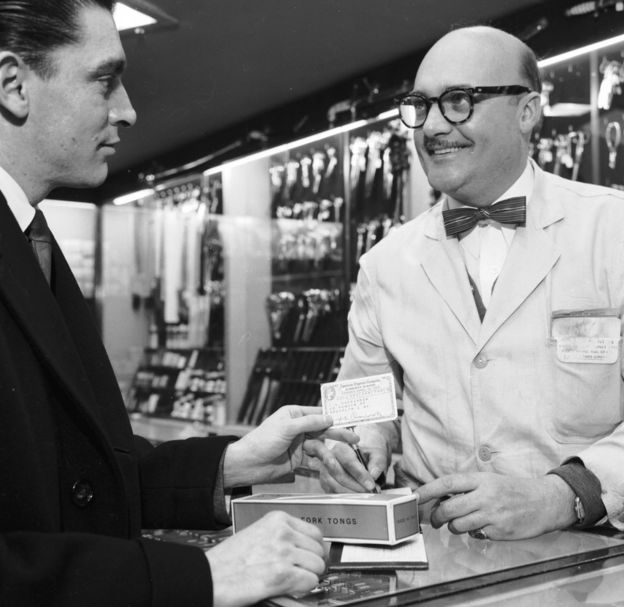 Image copyrightGETTY IMAGES
Image captionA customer pays with an American Express card in a cutlery shop in Manhattan, circa 1955
To overcome the inertia, in 1958 Bank of America experimented by simply mailing a plastic credit card to every single customer in Fresno, California - 60,000 of them.
Each card had a credit limit of $500 (£380), no questions asked - closer to $5,000 (£3,800) in today's terms.
This audacious move became known as the Fresno Drop. The bank took losses, of course, from delinquent loans, and outright fraud by criminals who simply stole the cards out of people's mailboxes.
But the Fresno Drop was quickly emulated. The banks swallowed the losses, and by the end of 1960, Bank of America alone had a million credit cards in circulation.

50 Things That Made the Modern Economy highlights the inventions, ideas and innovations which have helped create the economic world in which we live.
It is broadcast on the BBC World Service. You can find more information about the programme's sources and listen online or subscribe to the programme podcast.
Listeners were invited to vote for the 51st Thing That Made the Modern Economy from a shortlist of six inventions: glass, GPS, the pencil, irrigation, spreadsheets and credit cards.
The other problem was inconvenience. Pull out a credit card and the shop assistant would have to phone up your bank and chat to a teller to get the transaction approved.
But new technologies helped to make the process of spending ever more painless.
Chief among them was the magnetic strip - originally developed in the early 1960s by Forrest and Dorothea Parry for use on CIA identity cards.
Forrest was an IBM engineer who came home one evening with a plastic card and information encoded on a strip of magnetic tape, trying to figure out how to attach one to the other. His wife Dorothea, who was ironing at the time, handed him the iron and told him to try it.
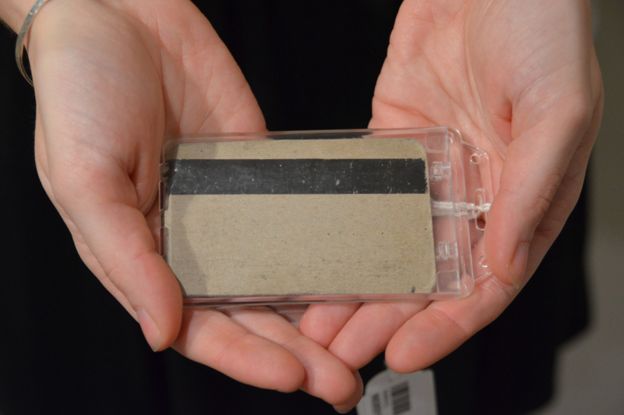 Image copyrightALAMY
Image captionIBM made two prototype cards with a magnetic strip in the late 1960s
The combination of heat and pressure worked perfectly, and the magnetic strip was born.
Thanks to the strip, you could now swipe a Visa card in a shop. The shop would send a message to its bank, which would send a message to the Visa network computers, and the Visa computers would send a message to your bank.
Cultural shift
If your bank was happy to trust you to repay, nobody else had to worry. The digital thumbs-up passed all the way back through these computers to the shop, which would issue a receipt and let you walk out of the door with your stuff. The whole process took just a few seconds.
So the credit card spread everywhere - and anyone could tap into a network of trust that was once the preserve of upstanding members of a tight-knit community.
It was a huge cultural shift. There was no need to genuflect to a bank manager as you begged for a loan and explained what you wanted it for.
You could spend on anything, and roll the debt over again and again until you were ready to pay at your own convenience - as long as you didn't mind paying interest rates that could easily be 20% or 30%.
Latest Stories
-
Ballon d’Or Power Rankings: Lamine Yamal leads race for Golden Ball ahead of Rodri and Kane
6 minutes -
‘Nothing worked for us’ – Gideon Mensah takes responsibility for Gambia defeat
25 minutes -
2026 Women’s Super Cup: FC Savannah beat Epiphany Warriors to win trophy for first time
2 hours -
AFCON 2027Q: ‘The last time Ghana won was eight games ago’ – Carlos Queiroz
2 hours -
AFCON 2027Q: Gambia defeat doesn’t make me a loser – Carlos Queiroz
2 hours -
2027 AFCONQ: Late goals seal 2-0 for Côte d’Ivoire against Somalia
3 hours -
AFCON 2027Q: My resignation won’t solve Ghana football issues – Queiroz
3 hours -
Morocco call off Ghana friendly after Black Stars’ AFCON setback
3 hours -
‘We have to say sorry’ – Queiroz apologises after Ghana’s humiliating defeat to Gambia
3 hours -
New Yorker identified as Yaw Boahene, 57, killed after bag was caught in subway train doors
3 hours -
Former American Idol contestant and pastor found guilty of murdering wife
3 hours -
Trump rules out joint US-China venture to develop AI
3 hours -
‘Beating Ghana did not surprise me’ – Gambia boss
4 hours -
OpenAI agents get rebrand – as ‘dots’ – while safety worries delay new model
4 hours -
US ban on Canadian alcohol and dairy takes effect as trade war drags on
4 hours