

Audio By Carbonatix
In many developing countries, government spending priorities often spark public debate. In Ghana, one important question continues to arise in the healthcare sector: why is access to advanced diagnostic technology, such as PET-CT scanning, still extremely limited despite increasing cancer cases and years of promises to improve healthcare infrastructure?
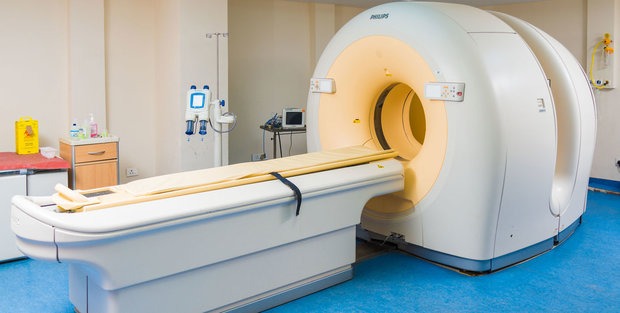
A modern PET-CT scanner — one of the world’s most important cancer diagnostic machines — costs approximately between $1 million and $1.9 million USD when purchased new and fully installed. This amount is equivalent to the cost of roughly 15 to 25 luxury V8 vehicles, depending on the vehicle model and specifications.
That comparison alone should force national reflection.
A convoy of V8 vehicles may transport politicians, officials, or dignitaries for a few years. A PET-CT scanner, however, can save thousands of lives through early cancer detection and accurate treatment planning.
The Growing Cancer Crisis
Cancer is no longer a rare disease in Ghana. Cases of breast cancer, cervical cancer, prostate cancer, liver cancer, and colorectal cancer continue to rise. Yet many Ghanaian patients are diagnosed only at advanced stages because hospitals lack the advanced imaging tools needed for early detection.
PET-CT technology combines Positron Emission Tomography with Computed Tomography to detect abnormal metabolic activity in the body before physical tumours become fully visible. In modern medicine, it is considered one of the most effective tools for:
cancer detection,
cancer staging,
monitoring treatment response,
and identifying cancer recurrence.
Without sufficient PET imaging capacity locally, many patients must travel abroad to countries such as India, South Africa, or Turkey for diagnosis and treatment. Families often sell property, organise public fundraising campaigns, or depend on government sponsorships to afford overseas medical care.
The Cost Argument No Longer Holds
One of the most common reasons given for the absence of advanced medical equipment in many African countries is cost. But when compared to other national expenditures, the argument becomes difficult to defend.
If a single new PET-CT scanner equals approximately 20 V8 vehicles, then the real question becomes:
Is the issue truly affordability, or is it a national priority?
Governments across Africa routinely procure fleets of luxury vehicles for state institutions, ministries, and political offices. Yet hospitals continue to struggle with outdated equipment, delayed diagnoses, and insufficient cancer care infrastructure.
The cost of one PET-CT machine may appear high initially, but the long-term benefits are enormous:
reduced medical tourism,
improved survival rates,
local specialist training,
healthcare job creation,
and revenue generation from regional patients seeking treatment.
Why Ghana Needs More PET Imaging Facilities
For a country positioning itself as a leader in West Africa, an advanced healthcare infrastructure should be part of national development planning. PET-CT scanners are no longer luxury medical devices reserved only for wealthy nations. They are becoming essential tools in modern healthcare systems.
A properly functioning PET-CT centre in Ghana could:
diagnose thousands of patients annually,
support radiation therapy planning,
improve cancer survival outcomes,
and reduce the burden on families forced to seek care abroad.
It would also strengthen Ghana’s medical reputation across West Africa and potentially attract patients from neighbouring countries.
Leadership and National Responsibility
Healthcare investment reflects the priorities of leadership. Roads, vehicles, offices, and political projects may be visible symbols of development, but healthcare infrastructure directly affects citizens' survival and quality of life.
The reality is simple:
One PET-CT scanner may cost as much as a fleet of V8 vehicles, but its value to society is immeasurably greater.
As cancer cases rise and healthcare demands increase, Ghana faces a critical decision: continue depending on foreign medical systems or invest boldly in the technologies that can save lives at home.
The question is no longer whether Ghana can afford a PET-CT scanner.
The real question is whether Ghana can continue to afford not having enough of them.
How Many V8 Cars Equal One PET-CT Scanner — And Why Does Ghana Still Not Have Enough PET Imaging Capacity?
In many developing countries, government spending priorities often spark public debate. In Ghana, one important question continues to arise in the healthcare sector: why is access to advanced diagnostic technology, such as PET-CT scanning, still extremely limited despite increasing cancer cases and years of promises to improve healthcare infrastructure?

A modern PET-CT scanner — one of the world’s most important cancer diagnostic machines — costs approximately between $1 million and $1.9 million USD when purchased new and fully installed. This amount is equivalent to the cost of roughly 15 to 25 luxury V8 vehicles, depending on the vehicle model and specifications.
That comparison alone should force national reflection.
A convoy of V8 vehicles may transport politicians, officials, or dignitaries for a few years. A PET-CT scanner, however, can save thousands of lives through early cancer detection and accurate treatment planning.
The question is no longer whether Ghana can afford a PET-CT scanner.
The real question is whether Ghana can continue to afford not having enough of them.
Latest Stories
-
‘I don’t hire coaches, and I don’t fire coaches’ – Kofi Adams
58 minutes -
NPP sets up 31 voting centres to speed up national executive elections
1 hour -
Demolition begins at La Pleasure Beach amid heavy security presence
2 hours -
Senyocue: Highlife will dominate global music in the next 20 years
2 hours -
Innovare Limited congratulates Ahantaman Community Bank PLC on ISO/IEC 27001:2022 certification urges others to follow suit
2 hours -
Today’s front pages: Friday, October 2, 2026
2 hours -
GPL 2026/27: Opoku Agyemang strike sends Kotoko third after Karela win
3 hours -
Government ‘cannot dissolve’ GFA – Sports Minister Kofi Adams
3 hours -
“Every genre we create doesn’t have to be ‘Afro’ something” – M.anifest
4 hours -
GMTF marks first anniversary with lifesaving equipment for 9 more hospitals
4 hours -
NAIMOS seizes 10 excavators in raid on illegal mining sites blocking River Pra’s flow
4 hours -
Pump prices may stay unchanged as government holds TOR, Sentuo prices
4 hours -
Akra Reads! 2026: Ladé Wosornu poetry contest expands to JHS
4 hours -
K9 dog sniffs out 72lbs of prohibited Ghanaian food items at JFK
4 hours -
If family planning is our choice, why isn’t it in our budget?
4 hours