

Audio By Carbonatix
The human papillomavirus, or HPV, vaccine is cutting cases of cervical cancer by nearly 90%, the first real-world data shows.
Cancer Research UK described the findings as "historic", and said it showed the vaccine was saving lives.
Nearly all cervical cancers are caused by viruses, and the hope is vaccination could almost eliminate the disease.
The researchers said the success meant those who were vaccinated may need far fewer cervical smear tests too.
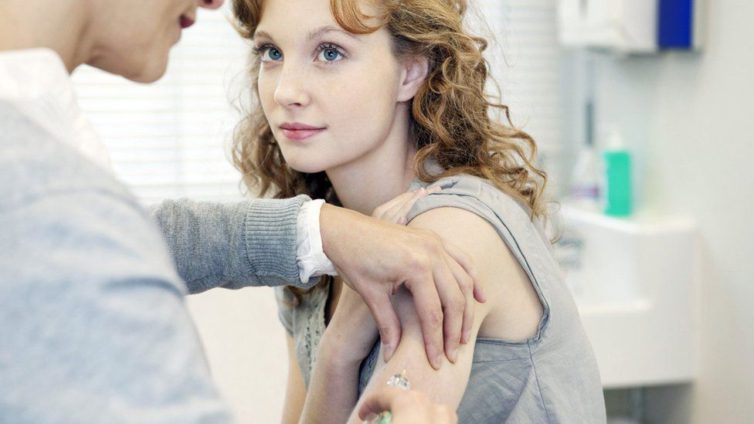
Girls are offered the vaccine between the ages of 11 and 13, depending on where they live in the UK. The vaccine has also been offered to boys since 2019.
The study, published in the Lancet, looked at what happened after the vaccine was introduced for girls in England in 2008.
Those pupils are now adults in their 20s. The study showed a reduction in both pre-cancerous growths and an 87% reduction in cervical cancer.
"The impact has been huge," said Prof Peter Sasieni, one of the researchers at King's College London.
The reductions were less dramatic when older teenagers were immunised as part of a catch-up campaign. This is because fewer older teenagers decided to have the jab and ideally it needs to be given before they became sexually active.
Overall, the study estimates the HPV programme has prevented about 450 cancers and 17,200 pre-cancers.
Prof Sasieni says that is "just the tip of the iceberg" because those vaccinated are still young to be getting cancer, so the numbers will only grow with time.
Screening
At the moment, women are invited for a smear test every three to five years to screen for cervical cancer.
But Prof Sasieni says there "definitely" needs to be a rethink after these results.
He told me: "It should be a wake-up call to policy-makers, women will read this and think 'why should I go for screening?'.
"I would hope we'd come back with a new screening programme, two to three times a lifetime and continue screening women who have not been vaccinated."
This is not the final say on the HPV vaccination. There are still questions about how long protection lasts and whether there needs to be a mid-life booster.
There are also more than 100 types of human papillomavirus.
The UK started using a vaccine that protected against two of them and is about to introduce one that protects against nine viruses, including the main causes of genital warts.
The cancer-causing versions lead to dangerous changes to the DNA of infected cells that transform them into cancer.
This can happen in any infected tissue. The viruses can be spread through vaginal, oral, and anal sex, so are also linked to anus, penis and some head and neck cancers.
However, 99% of cervical cancers are caused by human papillomaviruses. It is why more than 100 countries have starting using the vaccine as part of World Health Organization plans to get close to eliminating cervical cancer.
Dr Vanessa Saliba, a consultant epidemiologist for the UK Health Security Agency, said the findings were "remarkable" and showed the vaccine "saves lives by dramatically reducing cervical cancer rates among women".
Michelle Mitchell, the chief executive at Cancer Research UK, said: "It's a historic moment to see the first study showing that the HPV vaccine has and will continue to protect thousands of women from developing cervical cancer."
Latest Stories
-
Government launches rCOMSDEP to promote responsible mining in Western Region
44 minutes -
Foreign Affairs Ministry procures 20 pickups to improve passport services
49 minutes -
Oil prices retreat as investors weigh supply outlook, Middle East tensions
57 minutes -
Mahama Ayariga highlights Jimi reclamation project as effort to tackle flooding
1 hour -
Ayine pushes duty-lawyer scheme to protect suspects at police stations
1 hour -
Fire at GRIDCo’s Mallam Substation cuts power to parts of Accra
1 hour -
Stephen Amoah criticises 20% digital services tax as excessive
1 hour -
Ghana secures $3.5bn investment commitments to revive oil and gas sector – Jinapor
1 hour -
Court to hear Wontumi’s bail application today
1 hour -
DPC flags six companies for data protection breaches
1 hour -
Chief Justice appointment from outside Supreme Court possible but unlikely – Bentil
1 hour -
NEDCo replaces faulty transformer at Saasigli
2 hours -
Dr Seidu Jasaw urges climate financiers to align funding with farmers’ planting seasons
2 hours -
Bank of Ghana urges public to uphold dignity of local currency
2 hours -
Global Chairman of World Assemblies of God Fellowship lauds Mahama’s sterling leadership
2 hours