

Audio By Carbonatix
In our series of letters from African journalists, Umaru Fofana looks back at how reporting on Sierra Leone's civil war 25 years ago got personal and what dangers correspondents still face today.
WARNING: This report contains descriptions some readers will find disturbing.
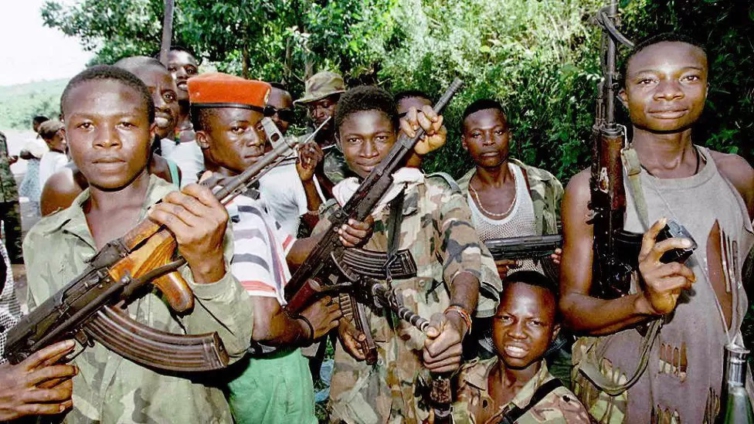
During the bloody rebel war that raged in Sierra Leone for more than a decade, fake news and rumours abounded - without the aid of social media.
At a time when only the elite had landlines and there was no internet or mobile telephones, reporters often had to go in person to find out information.
I would then have to go the telecommunications HQ in the capital, Freetown, to make a reverse-charge call to London to be able to file a report for the BBC.
Six years in to the conflict, on 9 October 1997, I ventured out to confirm a report that the military's HQ had been bombed by a Nigerian military jet.
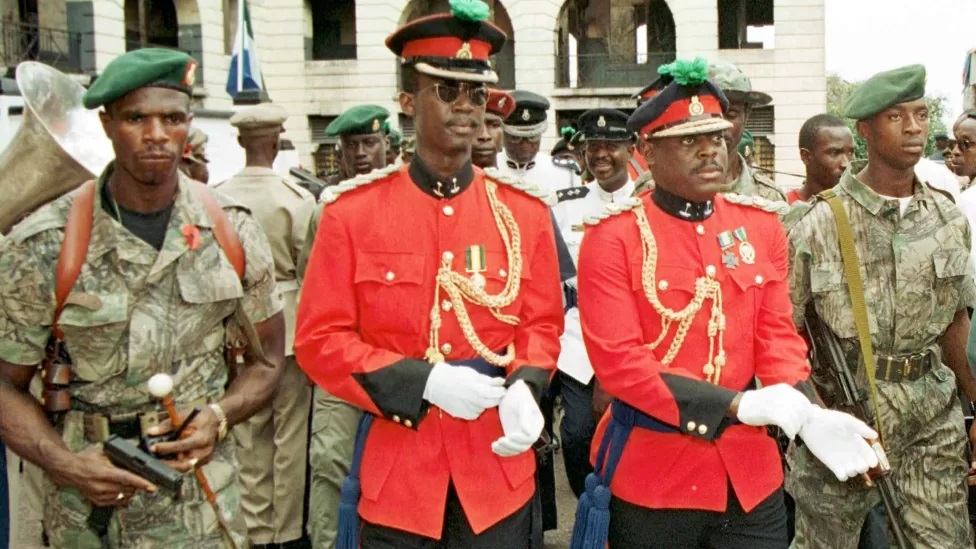
In apparent reprisal, the soldiers were said to have set ablaze the private residence of the exiled president.
It was at the stage in the war when the Revolutionary United Front (RUF) rebels - notorious for being intoxicated on drugs and hacking off people's limbs - had teamed up with the military junta who had recently taken power.
Nigerian troops - part of the West African intervention force known as Ecomog - were stationed in the outskirts of the capital, with no mandate to intervene at the time.
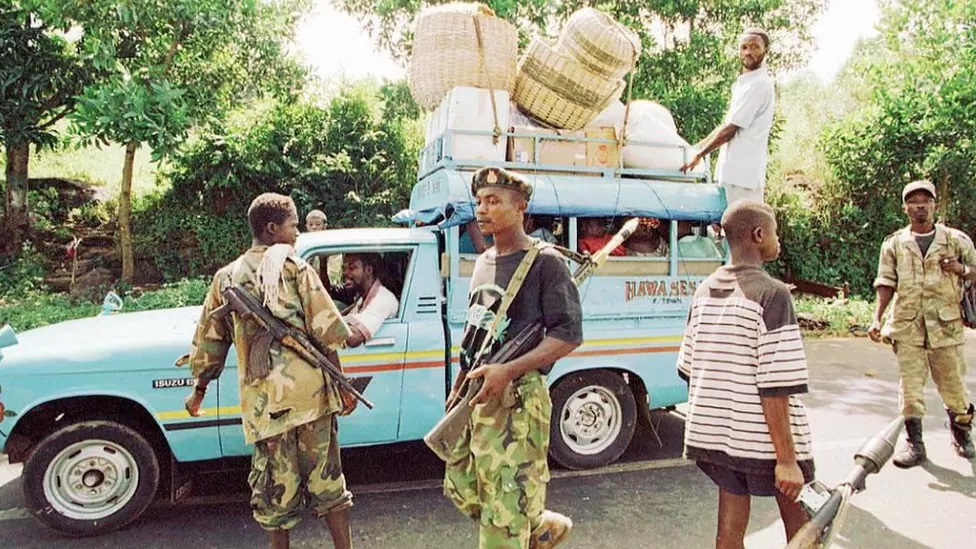
I set off, walking past a roadblock manned by soldiers and their rebel allies. Somehow they knew I was headed to the burned-out residence.
About half a dozen of them chased me. "Stop!" they shouted, cocking their guns. "Running away would be fatal," I said to myself. So I stood still.
When they got closer, one of them pulled a trigger. My right tibia bone was shattered.
I hopped on my left leg as they goaded me to their checkpoint. They kept kicking and hitting me whenever I fell down, shouting at me to get up.
At their checkpoint I leaned on a tree. As they flipped through the pages of my confiscated notebook, they were unhappy to read a piece I had filed about the death in a road accident of one of their bosses.
Their hate for journalists was palpable.
One of them pulled a trigger to finish me off, but another one pushed him and the bullet hit the tree.
They then decided to take me to their hideout, in the boot of a commandeered passing car - where they tortured me.
Among other things they lit a polyethylene plastic bag, dripping the flames on my back. They attempted to cut off my right hand, but I instinctively resisted. One of them urinated in my mouth, forcing me to swallow.
They took me to the back of the building in apparent readiness to kill me that night.
The owner of the commandeered vehicle would later tell me that those inside the car had said that was their intention.
But one of their commanders brought some wounded colleagues back to the hideout for treatment - and inquired where I was as he had seen me earlier at the checkpoint.
I heard them telling him they taken me to the hospital, so I shouted: "It is a lie, I am here."
Eventually I was delivered to the military hospital known as 34, where a doctor recommended an X-ray.
As a soldier - working as an orderly - pushed my wheelchair, he deliberately let go of it and I rolled on the slippery surface, sustaining more injuries.
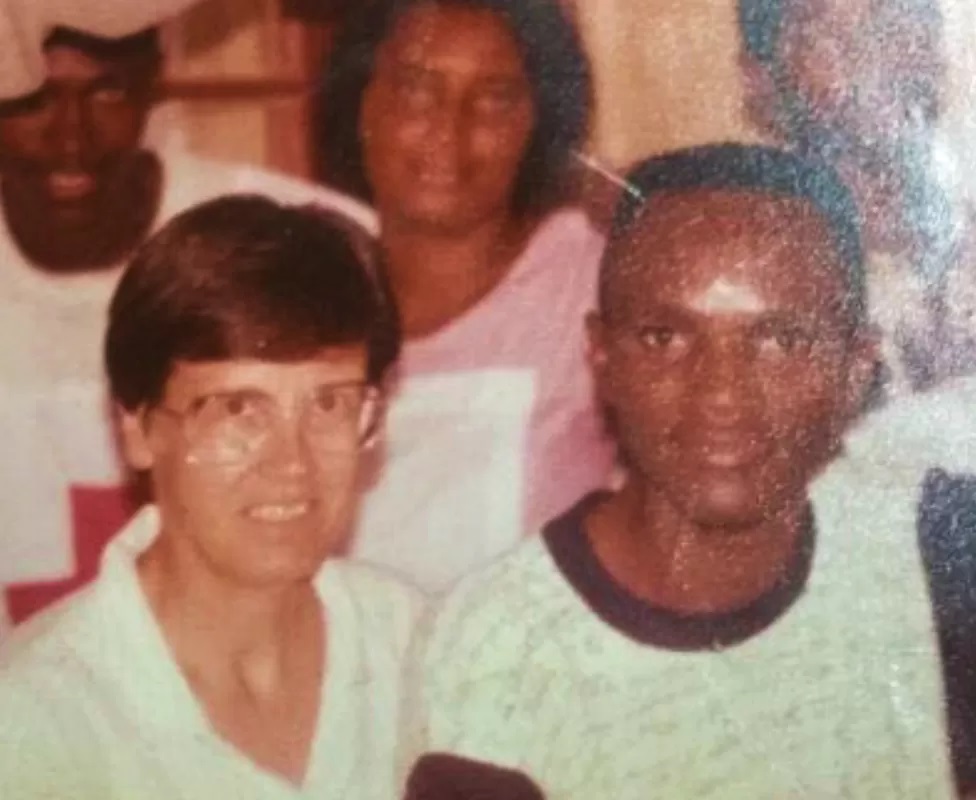
Two days later, through a fruit seller in the ward, I got a message to my local newspaper office to let them know what had happened. They informed London. Then I was transferred to a civilian hospital.
Many journalists were killed during the brutal 11-year conflict.
According to the media rights group, the Committee to Protect Journalists (CPJ), 15 foreign and local reporters were killed between 1996 and 2000 alone.
So in many ways I was lucky not to have been a part of those statistics.
Death threats from trolls
With the war over, and the repeal in 2020, after a long campaign, of the criminal defamation law - under which truth was not a defence and journalists could be jailed at will - the perils we face have considerably minimised.
Yet with all sides of the political divide and their supporters wanting to influence media content, there is no let-up in the tactics they use.
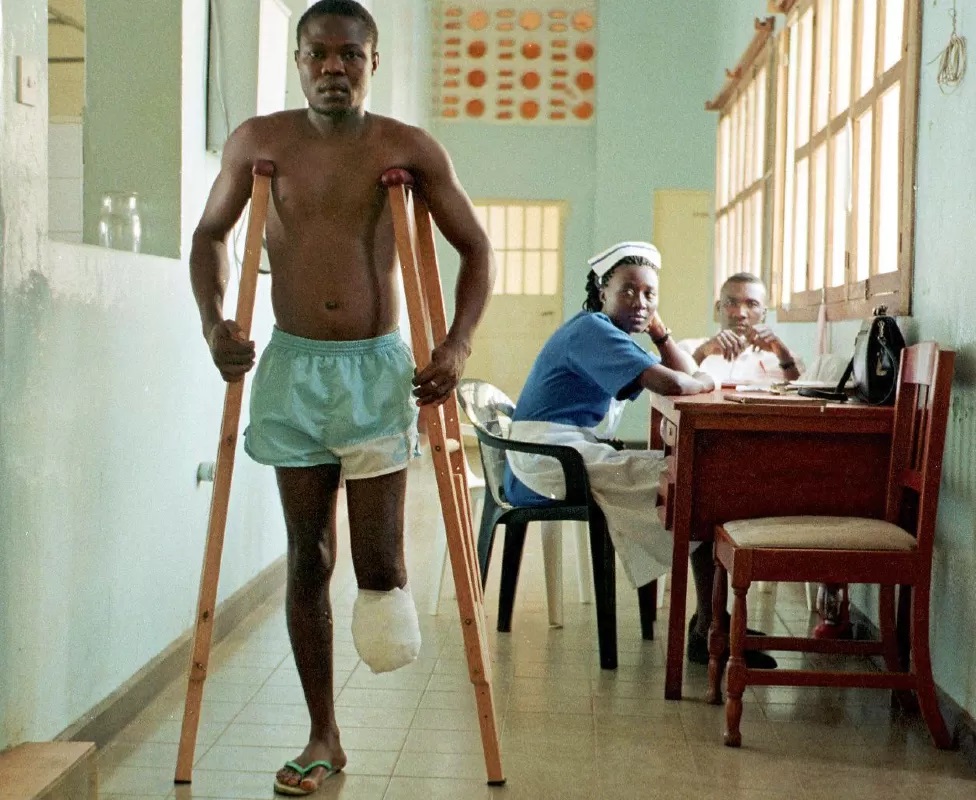
Some journalists do still get physically attacked.
For example Alusine Antha was set upon earlier this year by a community in Waterloo, just outside the capital, as he covered a meeting to resolve a land dispute.
Police at the scene had fled as tensions rose and people attacked the journalist and vandalised his car fearing he would take sides in the row.
The security forces still lash out too.
A local media outlet, AYV TV, complained in December 2021 that their camera operator Ransford Wright was physically attacked by eight police officers in Freetown.
The beating came after he had filmed police chase a commercial motorbike rider which resulted in a child being injured.
When he went to the central police station for comment, he was attacked.
Journalist Fayia Amara Fayia is still facing charges for trying to cover a story about coronavirus before the start of a three-day lockdown in April 2020.
Rights group allege he was beaten up by soldiers when he went to photograph a newly set up quarantine centre in the eastern city of Kenema.
The Standard Times reporter was admitted to hospital and after being discharged four days later was arrested by police and charged with disorderly behaviour and the obstruction of security officers' duties.
But these days the harassment of journalists is more nuanced and most prevalent on social media, which enables people to say virtually anything they like.
They troll us in a way that harms my family, especially my young children when I receive death threats.
These tend to be for not covering a particular political story or covering one in a way that did not suit the online agitators.
But these dangers are nothing like what I faced 25 years ago.
Latest Stories
-
Trump says he is considering firing US ambassador to Greece
3 hours -
Man City bananas ‘brought fun back’, says Varadi
3 hours -
Meta releases Muse Wonder AI models to challenge Anthropic and OpenAI
3 hours -
Daily Insight for CEOs: The CEO as Chief Decision Maker
3 hours -
Burnham had formal meeting with Man City chair while mayor
3 hours -
Is Ghana producing too many lawyers? What is the best lawyer-to-citizen ratio?
3 hours -
NDC sinking Ghana’s democracy with Emelia Agbenyo’s appointment – Miracles Aboagye
3 hours -
Seedorf back in football as Corinthians head coach
4 hours -
Hincapié and Zubimendi injured in post-match training session
4 hours -
Fridges in French supermarkets hit by cyberattack
4 hours -
Qantas flight grounded after bedbug outbreak
4 hours -
Reality Zone with Vicky Wireko: International Day of the Girl, shaping today’s girl for tomorrow’s future – ZONTA Clubs lead the way
4 hours -
Global health must be led by countries, not designed for them – Mintah Akandoh
5 hours -
Mahama honoured at 2026 World Health Summit in Berlin for global health leadership
5 hours -
Breast cancer is not a death sentence – Besease Kontire Obaapanin, Magmina Foundation lead awareness campaign
5 hours