

Audio By Carbonatix
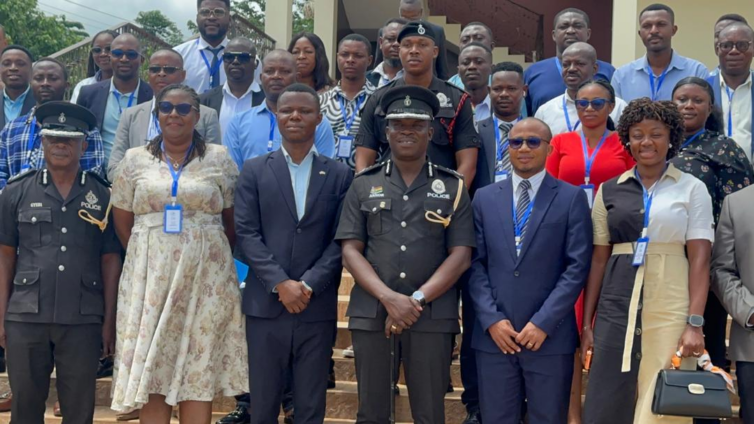
The International Justice Mission (IJM) Ghana, in partnership with the Embassy of the Kingdom of the Netherlands, has launched an intensive capacity-building workshop on tackling human trafficking for police officers in the Ahafo region.
The initiative, which officially commenced on Monday, June 1, 2026, aims to curtail human trafficking and forced child labour across the country's prominent cocoa belt.
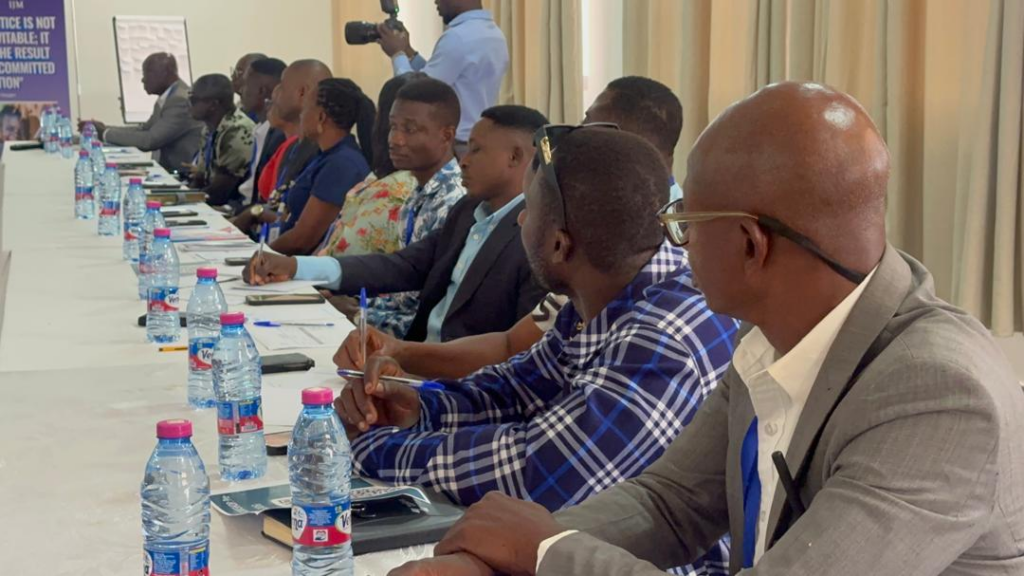
The workshop targeted police officers selected specifically for their specialised backgrounds in investigations, prosecutions, mediation, and advocacy.
Participants were taken through topics including elements of human trafficking, pre-rescue intelligence gathering, trauma-informed interviewing, evidence gathering, the admissibility of evidence, witness statements, confession disclosures, crime scene report writing, and a multidisciplinary approach to case management.
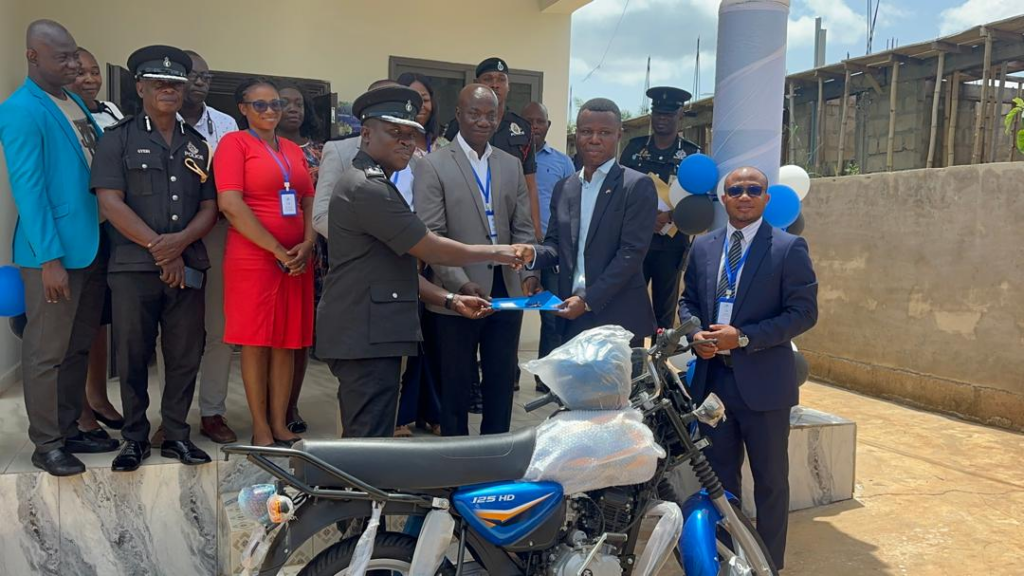
A newly constructed, fully furnished Child-Friendly Anti-Trafficking Unit, funded by the Dutch government, was officially handed over to the Regional Police Service.
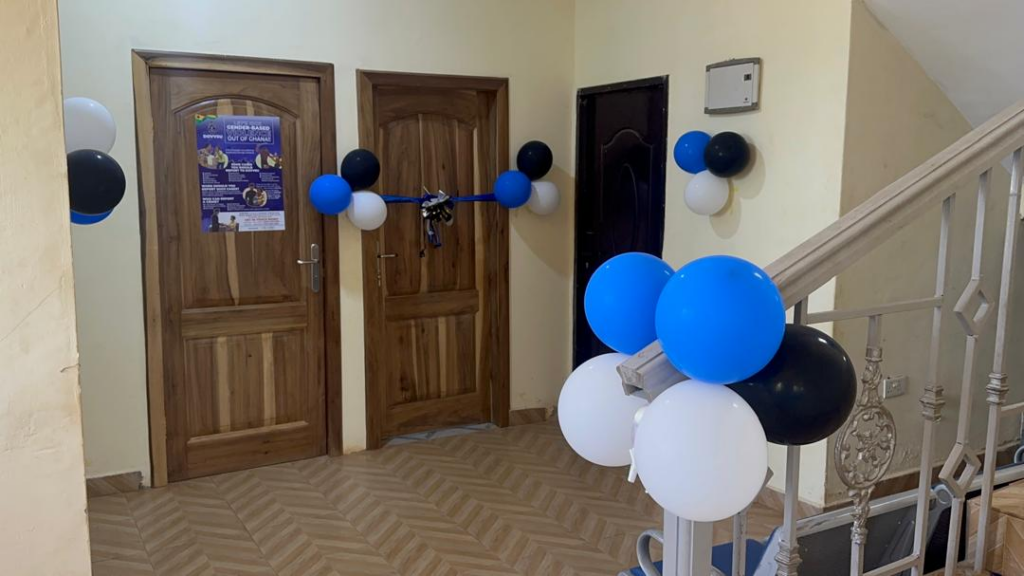
To further enhance the mobility and rapid-response capabilities of the officers in the field, the team also presented a motorcycle to the newly commissioned unit.
The centre in Goaso delivers essential impact by improving victim identification, funding protected shelters, and facilitating global law enforcement partnerships. These coordinated efforts help disrupt transnational crime rings while ensuring vulnerable survivors receive vital medical, legal, and psychosocial care.
The collaboration leverages a multi-pronged approach, heavily funded by the Dutch government, which has a deep interest in improving the sector as the world’s leading importer of Ghanaian cocoa.
Speaking at the opening ceremony, Gabriel Acolatsey, the Project Manager for IJM Ghana, emphasised that combating trafficking requires a fortified public justice system.
He noted that IJM's focus remains on training public justice actors to effectively investigate and prosecute trafficking networks while championing survivor-centred, trauma-informed care to ensure rescued victims are not re-traumatised by the legal process.
Peter Dadzie, the Policy Officer for Cocoa and Business Development at The Kingdom of the Netherlands Embassy in Ghana, reiterated the Netherlands' pivotal role in funding local security operations, supporting multi-stakeholder supply chain initiatives, and pushing for economic resilience in cocoa-growing communities to tackle the root causes of forced labour.
The Ahafo Regional Police Commander, Deputy Commissioner of Police (DCOP) James Annor, thanked IJM and the Netherlands government for selecting the Ahafo region for this timely training session on eliminating human trafficking in the enclave.
He stressed that eradicating child trafficking demands extreme vigilance, high levels of professionalism, and specialised skills from the police and all key stakeholders.
DCOP Annor indicated that the training had arrived at a critical point where law enforcement must place a renewed emphasis on protecting the safety, rights, and dignity of vulnerable persons.
Empirical survey data reveal that approximately 20 out of every 1,000 children working in Ghana's cocoa production are forced to work by someone other than a parent.
When isolating cases driven exclusively by external networks, studies suggest that roughly 1.5 out of every 1,000 working children are victims of child forced labour at the hands of third-party traffickers outside the immediate family.
The crisis is not limited to the youth. Adult exploitation remains highly prevalent, with an estimated 3.3 victims of forced labour per 1,000 adult workers across Ghana’s core cocoa-producing regions.
Children and young people are regularly exposed to profound occupational hazards, including strenuous physical labour, handling sharp tools like machetes, and direct contact with harmful chemical pesticides without adequate personal protective equipment.
Although Ghana maintains progressive statutory protection,s such as the 1998 Children's Act, which criminalises child labour under 15 and bars anyone under 18 from hazardous work, enforcement mechanisms remain weak, and rural communities are largely unaware of these provisions.
To combat this, IJM and the Netherlands government have spent over a decade building public awareness and demanding stricter policy enforcement by partnering with civil society, the media, and traditional leaders.
Over the span of this decade, the joint efforts have yielded significant success, contributing to the rescue of nearly 600 victims, the arrest of over 235 suspects, and numerous successful convictions through the Ghanaian court system.
Latest Stories
-
Ayawaso West Assembly cracks down on unauthorised market near Villagio
4 minutes -
Lastec CEO Lasisi Oseni nominated for Ghana Auto Fix Award
9 minutes -
Polo Beach Club land belongs to La Traditional Council, not Labadi Beach Hotel – Freddie Blay
10 minutes -
‘Don’t speculate’ – Upper West Minister charges SOCO facilitators as project delivers 127 projects, 173 more underway
11 minutes -
Finance Ministry approves 3 months’ rent allowance for security personnel
25 minutes -
Ten people linked to Kenya’s first-ever Ebola case quarantined as screening concerns grow
39 minutes -
Ghana warns medical travellers to South Africa to obtain visas for treatment beyond 90 days
46 minutes -
Canada suspends plans to expand assisted dying to people with mental illness
47 minutes -
Minority accuses Sports Ministry, NSA of creating fake portfolios for VISA applicants
48 minutes -
6th Inter Tourism Expo comes off in Cape Coast this October; register now
1 hour -
Afenyo-Markin accuses government of diverting attention from cocaine seizures linked to Ghana
1 hour -
GJA gives Armed Forces 14 days to account for alleged assaults on Sika Official, Bullet TV’s Philip Abutiate
1 hour -
PAC gives CWSA 30 days to recover GH¢10m in unpaid water bills from police, army, hospitals, other public institutions
1 hour -
Major Accra roads to get facelift ahead of Ghana’s 70th Independence anniversary – Agbodza
2 hours -
Account for GH¢650bn allocated to existing programmes before new economy – Oppong Nkrumah to gov’t
2 hours