

Audio By Carbonatix
Canoe owners and fishers in Ghana have pledged to work together to eradicate forced labour in marine fisheries. This collaboration is aimed at promoting sustainable practices and ensuring that the sector thrives.
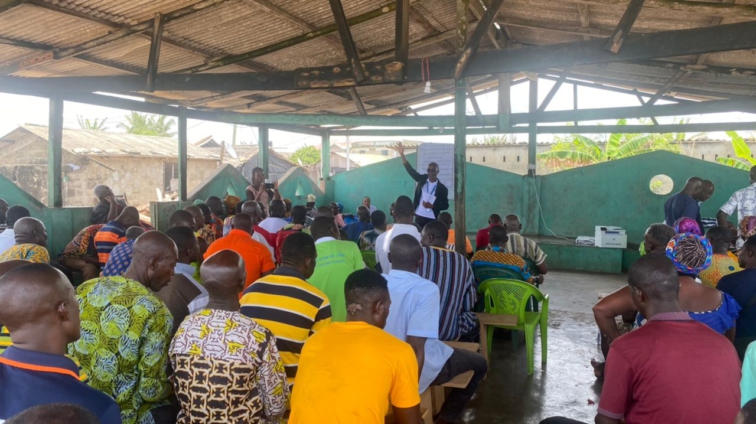
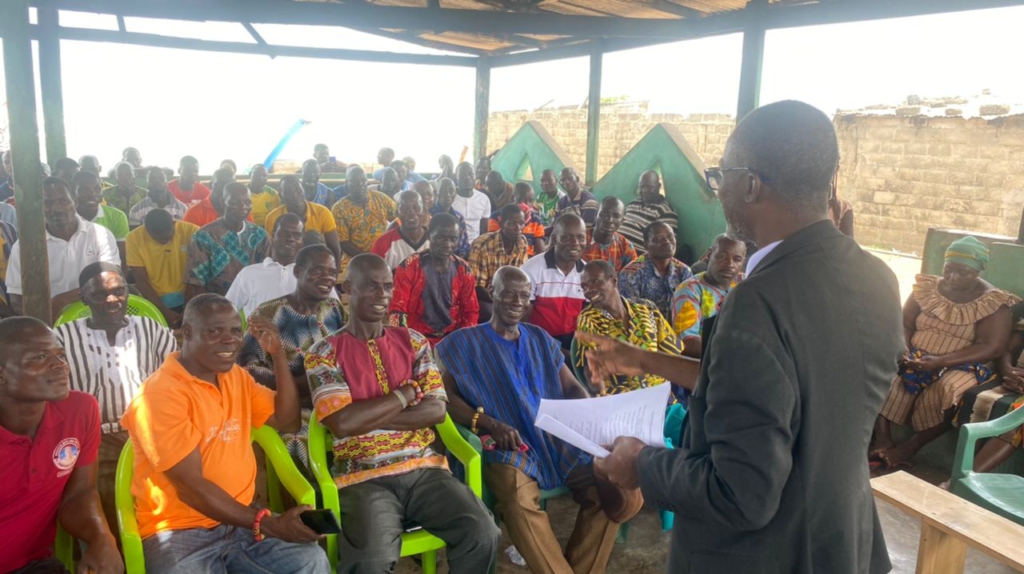
The International Labour Organisation (ILO) collaborated with the Ghana National Canoe Fishermen Council (GNCFC) to provide training for members of the Council in the Western Region, to empower them to prevent and eliminate forced labour in coastal marine fisheries in Ghana.
During the training, Emmanuel Kwame Mensah, National Project Coordinator at the International Labour Office, reiterated the ILO's commitment to promoting decent work for all workers, regardless of where they work.
He highlighted the need for the Ghanaian government to ratify the C155 (Occupational Safety and Health Convention) and C. 187 (Promotional Framework for Occupational Safety and Health Convention) to ensure that the country meets the required standards in the marine fisheries sector.
In addition to the Fundamental Conventions, Mr Mensah explained that the ILO has developed technical conventions for specific areas in marine fisheries, including the C. 188 (Work in Fishing) Convention, which seeks to ensure that fishers have decent conditions of work on board fishing vessels.
This includes minimum requirements for accommodation, food, health protection, occupational safety, social security, and medical care, among others.
Cecelia Sagu Mensah, a Canoe Owner, admitted that before the training, she had a significant gap in her relationship with her workers.
She believed that being hard on them would enable them to work effectively and promote accountability. However, the training has been an eye-opener for her, and she has decided to defray from verbally assaulting her workers.
She has also committed to enrolling her workers in social protection packages like Social Security National Insurance Trust (SSNIT).
Nicholas Darko, a canoe owner who participated in the training, expressed his gratitude to the International Labour Organization and the Ghana National Fishermen Council for organizing the session.
He acknowledged the existence of forced labour in marine fisheries and stated that the training provided him with valuable insights on how to work better with his fishers to ensure their welfare and promote ethical practices in the sector.
Mr Darko pledged to share the knowledge gained during the training with his peers and called for more such sessions to keep them informed and equipped to tackle the challenges in the sector.
This collaborative effort by Ghanaian canoe owners and fishers is a step towards eradicating forced labour in the marine fisheries sector. It is hoped that more stakeholders will join in this effort to ensure that the sector is sustainable and that workers are treated fairly.
Latest Stories
-
NADMO mobilises over 1,000 mattresses as relief efforts continue for Hohoe flood victims
45 seconds -
President Mahama courts diaspora investment, highlights Ghana’s economic and energy gains at UNGA – Town Hall
1 minute -
Hohoe floods: Volta Regional Minister assures affected residents of government support
8 minutes -
Ablakwa assures Ghanaians in New York of stronger consular support and recognition of diaspora contributions
11 minutes -
Gender Ministry prepares officers to monitor LEAP payments nationwide
15 minutes -
AMA reminds drivers of yellow-plated vehicles to obtain commercial driver’s licences from Assembly
16 minutes -
My focus is victory in 2028, those with Agenda 2032 can wait — John Boadu
39 minutes -
AK24 Entertainment wins Event Promoter of the Year at Ghana Entertainment Awards USA 2026
42 minutes -
KNUST, UNCDF host EU Ambassador to advance EU Pact for skills development initiative agenda
42 minutes -
Teachers’ strike: School in Wa turns ghost town; pupils forced onto ‘virtual holiday’
44 minutes -
Gov’t should not see bipartisan probe into 3.9-tonne cocaine haul as attack – Akuapem North MP
56 minutes -
The foundation of every boy’s upbringing is important – Kobby Kyei
58 minutes -
Middle East conflict pushed Ghana fuel prices higher in first half of 2026 – COMAC
1 hour -
President Mahama puts mining firms on notice over 2030 raw mineral ore export ban
1 hour -
Ghana’s fuel consumption rises 12.24% to 4.06 billion litres in first half of 2026
1 hour