

Audio By Carbonatix
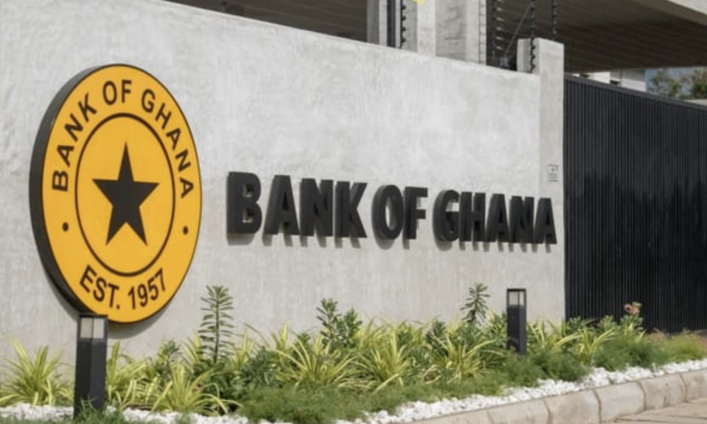
Rising inflation, renewed pressure on the Ghana cedi and concerns over economic growth are expected to dominate discussions as the Bank of Ghana’s Monetary Policy Committee begins a three-day meeting to review developments in the economy.
A key question before the Committee is whether the current policy rate should be increased to contain recent inflationary pressures.
The MPC began its meeting on Wednesday, September 23, 2026, and is expected to conclude its deliberations on Thursday, September 24, with the Bank of Ghana announcing its decision on the policy rate.
Inflation has been rising in recent months, reaching 5% in August 2026, raising concerns about further price pressures.
This could strengthen the case for a policy rate hike, alongside other monetary policy measures, to contain inflation.
However, an increase in the policy rate could also have implications for businesses that are already struggling to access credit.
The Ghana cedi is another key issue expected to feature prominently in the MPC’s deliberations.
There are views that using the policy rate to support the cedi could help limit further depreciation in the coming months.
Market analysts are also expected to consider developments in the Middle East and recent changes in US interest rates and how these could affect Ghana’s economy.
Potential effects include lower gold prices, reduced foreign exchange inflows through the GoldBod, slower reserve accumulation, reduced capacity for foreign exchange intervention and additional pressure on the exchange rate.
These developments could also feed into domestic inflationary pressures.
At the same time, some analysts believe the gap between inflation and the policy rate remains sufficiently wide to warrant caution over any further tightening.
With inflation at 5% and the policy rate at 14%, there are therefore arguments for the MPC to maintain the rate or consider a marginal reduction.
The competing pressures could make the latest MPC meeting a difficult one, as the Committee weighs inflation and exchange rate risks against the potential impact of tighter monetary policy on economic activity and access to credit.
However, persons close to the MPC have told JOYBUSINESS that the Committee’s decision will be guided by economic data as it assesses the policy rate and the way forward.
The Bank of Ghana has also previously indicated that global developments alone would not necessarily mean that the appropriate response is to increase the policy rate.
The MPC’s decision will therefore indicate how the central bank assesses the balance among inflation, exchange rate pressures, external developments, and economic growth.
Latest Stories
-
At least 11 dead in mass shooting at house party in South Africa
12 minutes -
MoMo Fintech Lab attracts close to 1K entries from innovators across, applications end on Sept 30
23 minutes -
Black Stars face Ivorian test as injuries force major squad changes
37 minutes -
Save Nations Foundation donates learning materials to Nooria Islamic Basic School, calls for more support
44 minutes -
From selling food to solving problems: How Esther Owusu Nkwantabisah rethought entrepreneurship
58 minutes -
Explained: Ghana’s water plant deal that produced a $235m judgment debt instead of water for 500,000 people
1 hour -
High Cost of Domestic Airline Fares: Can government do something about it?
1 hour -
Inflation, cedi depreciation put BoG’s MPC under pressure as policy rate decision looms
1 hour -
Lawyer denies Salomey Baffoe received money from ‘Ghana Jollof’ account operator
2 hours -
Beyond politics: Why Kwame Nkrumah’s ideals still matter for today’s leaders
2 hours -
Top South African policeman charged with sexual offences
2 hours -
More than 170,000 respiratory cases recorded in haze-choked Indonesia
2 hours -
Narrowed space, intolerance – Sammy Crabbe says NPP is driving talented members away
2 hours -
We’re not analytical enough – Sammy Crabbe calls for data-driven decision-making
3 hours -
Tonto Dikeh celebrates Bobrisky as birthday tribute sparks online reactions
3 hours