

Audio By Carbonatix
As the world grapples with the effect of climate change; we will tell you how your love for palm wine might be a threat to your very existence and that of future generations.
Global warming caused by carbon emissions might appear theoretical and perhaps far from you. Well, you might be shocked to know that just by enjoying a cup of palm wine, you are contributing to this alarming trend threatening existence on this earth. Carbon sinks in these palm trees destroyed for your delicacy are a major contributor to climate change.
Joyce Balleh is a victim of climate change.
Unpredictable rainfall patterns in the Upper Eastern town of Paga have rendered farming unattractive.
The burden of having to cater for two children drove her down south in search of a source of livelihood.
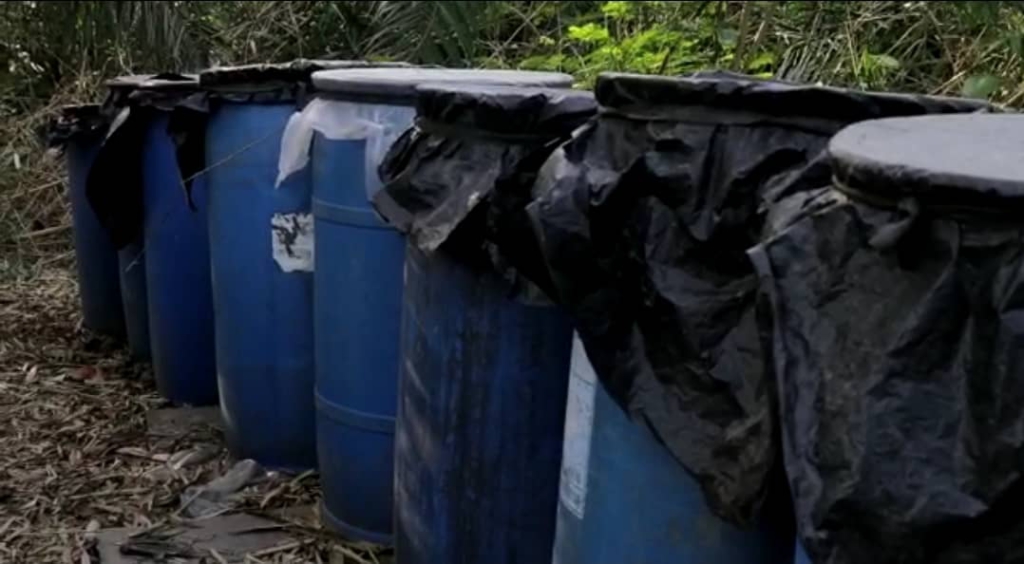
Joyce has been selling palm wine in Aburi in the Eastern Region for the past eight years.
For many travelers who use this stretch; getting naturally fresh and tasty palm wine from Aburi is a toast of the journey.
Unknown to her, the source of her merchandise ironically also has a direct bearing on the environment.
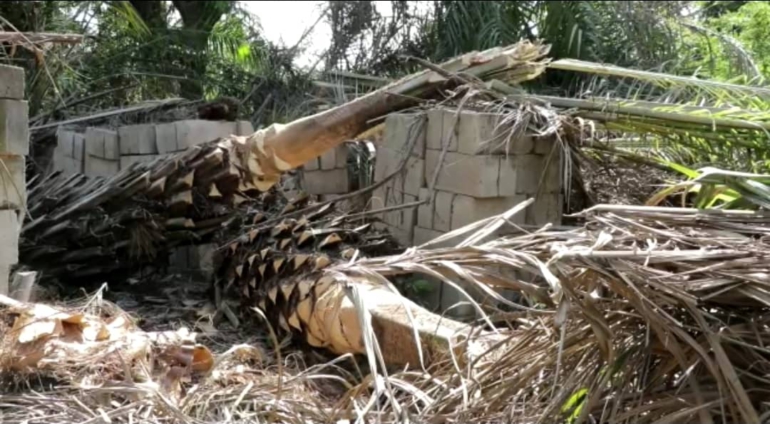
A tree must die before this drink is made. For between GHC100 to GHC150, people allow ecological palm trees to be felled for this purpose.
Joyce admits getting her products might be a problem in the future if more palm trees get lost to this merchandise.
"I am uncertain my stock may run out soon and I also know that getting my products may be a problem in the near future if the trees are lost to this merchandise, "Joyce said.
Ghana recently received 4.8 million dollars as carbon credits for reducing its emissions from deforestation and forest degradation.
Climate change activist and lecturer with the University of Professional Studies, Accra (UPSA) Dr, Martin Segtub paints a clearer picture of the linkages between the unregulated palm wine business and climate change.
Dr Martin Segtub warns unchecked felling of palm for palm wine could offset the gains if the right policies are not implemented.
Aside from this, another practice that threatens the environment is the burning of these trees whenever they are done extracting the wine.
Imagine how much carbon is emitted into the atmosphere for every sip of palm wine you enjoy and how this contributes to global warming.
The only solace will be a system of regulating this market to ensure that every palm tree that goes down is replaced.
The sad harsh reality that for every cup of palm wine or its derivative akpetetsi anyone sips, the world potentially gets warmer is scary.
Hundreds of thousands of palm trees that serve as carbon sinks must die to satisfy the taste buds and cravings of palm wine and akpetetsi lovers. These are the issues that should be of interest to this story:
Economy and livelihoods
Palm wine tapping either for fresh consumption or brewing into local hard liquor appeared as a normal trend of doing business to satisfy a taste. It, however, appears this has an impact on destroying carbon sinks and threatens other livelihoods including oil palm production which do not require the felling of these trees.
The process of tapping, which requires open burning to get the sweetened sap and the failure of tappers to replant poses further climate-unfriendly conditions. Apart from this, there is also frightening research that says palm might fail climate suitability if climate conditions continue to grow harsh; indicating that even plans to replant have a slim chance of success.
Are we doing enough to regulate the felling of these trees just to have our insatiable taste quenched?
More in the last part of drinking to a warming globe.
Latest Stories
-
3 Co-wives, 5 children perish in canoe disaster – Maritime Authority insists life jackets use mandatory for all water transport
2 minutes -
Iran war lands ‘triple blow’ to flood-ravaged Sri Lankans
36 minutes -
Gunmen kill at least 11 people at Afghanistan picnic spot
49 minutes -
Woman, 25, in court for stealing baby at Bogoso
51 minutes -
Trump unveils giant gold-accented victory arch design for US capital
54 minutes -
We spoke to the man making viral Lego-style AI videos for Iran. Experts say it’s powerful propaganda
59 minutes -
Hungarians vote in big numbers on whether to end Orbán rule and elect rival
59 minutes -
At least 30 feared dead in crush at Haitian tourist site
60 minutes -
Boxing: Abdul Ahmed wins WBA Africa Cruiserwight title after dispatching Nigeria’s Eradeye
1 hour -
Nearly 2,000 displaced, schools damaged as windstorm wreaks havoc in Gushegu
2 hours -
Ghana’s Derrick Kohn to work under Marie-Louise Eta as she becomes first woman to coach men’s Bundesliga team
2 hours -
Accra Open Championships conclude with strong performances ahead of African Championships
2 hours -
Ghana to begin camping with 12 athletes after Accra Open Championships – Bawa Fuseni
2 hours -
Anthony Joshua declines showdown with Tyson Fury but admits they ‘probably’ clash next
2 hours -
Tyson Fury dominates Makhmudov, calls out Joshua next
3 hours