

Audio By Carbonatix
Kenya has officially designated the Muslim Brotherhood and Hizb-ur-Tahrir as terrorist entities under the Prevention of Terrorism Act (Cap. 59B), marking a major step in the country’s counterterrorism efforts. According to what the “Star” website reported
The declaration, published in Legal Notice No. 157 of the Kenya Gazette Supplement on September 19, 2025, was issued by Interior Cabinet Secretary Kipchumba Murkomen under Section 3(3) of the Act.
The order, known as the Prevention of Terrorism (Declaration of Specified Entities) Order, 2025, takes immediate effect and will remain in force until revoked by the Cabinet Secretary or a court.
It criminalises membership, support, fundraising, or propaganda linked to the groups.
"The declaration shall remain in force until it is revoked by the Cabinet Secretary or by order of the court," Muirkomen said in the notice dated September 19, 2025.
This means the ban is indefinite, unless directly overturned. It is not clear what motivated the government’s decision.
Section 3(3) of the Act empowers the state to freeze assets, ban meetings, and prosecute anyone who associates with proscribed organisations. Security agencies also gain authority to investigate suspected cells, seek extended detention of suspects under court supervision, and dismantle financial or logistical networks tied to the entities.
Kenya now joins countries such as Egypt, Saudi Arabia, the UAE, Bahrain, and Russia, which have formally designated the Muslim Brotherhood as a terrorist organisation.
The inclusion of Hizb-ur-Tahrir, an Islamist movement advocating for a global caliphate, signals Kenya’s intent to preempt radical mobilisation at an early stage.
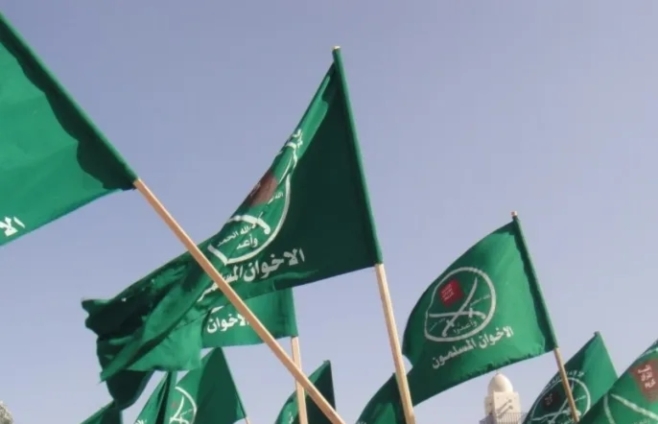
The Muslim Brotherhood, founded in Egypt in 1928 by Hassan al-Banna, is widely regarded as one of the most influential Islamist movements of the 20th century. It blends Islamic revivalist ideology with social, educational, and political activism, aspiring to see governments across the Muslim world governed according to Islamic law.
The Brotherhood has inspired affiliates and branches across the Middle East, North Africa, Europe, and beyond.
While it has at times contested elections and participated in democratic politics, it has also been accused of fuelling extremist ideologies and providing the ideological framework for groups such as Hamas, its Palestinian branch, which is already designated a terrorist organisation by many countries.
In recent years, states such as Egypt, Saudi Arabia, the United Arab Emirates, Bahrain, and Russia have outlawed the Brotherhood, citing its alleged role in spreading extremism and undermining state stability.
For its supporters, however, the group is often seen as a vehicle for social reform, welfare provision, and political participation.
Kenya’s decision to join the list of countries proscribing the Brotherhood is therefore a significant step, reflecting both domestic security priorities and alignment with regional counter-terror policies.
By designating the Muslim Brotherhood and Hizb ur Tahrir, Kenya aims to cut off the ideological and financial pipelines that analysts say nourish radicalisation in the Horn of Africa—particularly among vulnerable youth.
The ban also strengthens Kenya’s ability to monitor and dismantle transnational networks that could otherwise exploit its open political system and charitable sector.
For Kenya, long burdened by the turmoil in neighbouring Somalia, the designations underscore broader momentum in its war on terror.
Officials argue that by pre-emptively outlawing transnational Islamist movements, the state is staying ahead of potential threats rather than merely responding to attacks after they occur.
The move is also likely to bolster Kenya’s international standing with allies who have pushed for tougher measures against global Islamist movements, while reassuring citizens who have endured more than a decade of insecurity.
Kenya has long been on the frontline of the war against terrorism, suffering some of the most devastating attacks in East Africa.
The Westgate Mall siege in 2013, which left at least 67 people dead, scarred the national psyche.
Two years later, the Garissa University massacre killed 148 people, mostly students. And in 2019, a siege at the DusitD2 hotel complex in Nairobi claimed 21 lives.
All were blamed on al Shabab, the Somalia-based al Qaeda affiliate that routinely launches cross-border raids into Kenya.
Nairobi has responded with a range of counter-terror measures, including stepped-up intelligence gathering, military operations in Somalia, tighter border controls, and rehabilitation programmes for returnee fighters. These is efforts have significantly reduced the number of successful large-scale attacks, though sporadic ambushes in border counties like Mandera, Garissa, and Wajir rema
Latest Stories
-
Afoko can give NPP ‘new identity’ ahead of 2028 to overcome NDC – Political scientist, Dr Amakye-Boateng
3 minutes -
2 injured amid gunshots during raid at Nawara Mining office at Nsuapemso
7 minutes -
St Augustine’s College retains 2026 National Investment Quiz title
11 minutes -
KNUST Nursing and Midwifery School staff recognised at 2026 Health Ministry Excellence Awards
19 minutes -
JoyNews’ Esther Esi Nkrumah selected for UK Media Excellence for Emerging Technology Fellowship
24 minutes -
Five NDC youth organisers in Western Region pay courtesy call on Armah-Kofi Buah
37 minutes -
NACOC demands tighter port controls to prevent Tema Harbour drug trafficking
40 minutes -
Ghana’s startup ecosystem must build sustainability into innovation – Ghana Hubs Network
51 minutes -
Friday’s beachfront demolition was carried out at Labadi Beach Hotel’s request, not for flood mitigation – Stan Dogbe
52 minutes -
LA 2028: Mukarama returns to Black Queens squad for Olympic Games qualifiers
54 minutes -
Fusaini Yakubu Abanga leads NPP National Youth Organiser race with 45% in Global InfoAnalytics poll
1 hour -
Suame Methodist JHS marks 120 years with a call for STEM innovation
1 hour -
Global fashion coalition launches in the heart of Kantamanto Market
1 hour -
‘No concrete commitments from government’ – Brong Ahafo teacher unions maintain strike
1 hour -
Finance Minister demands greater returns from NLA after GH¢10 million dividend presentation
2 hours