

Audio By Carbonatix
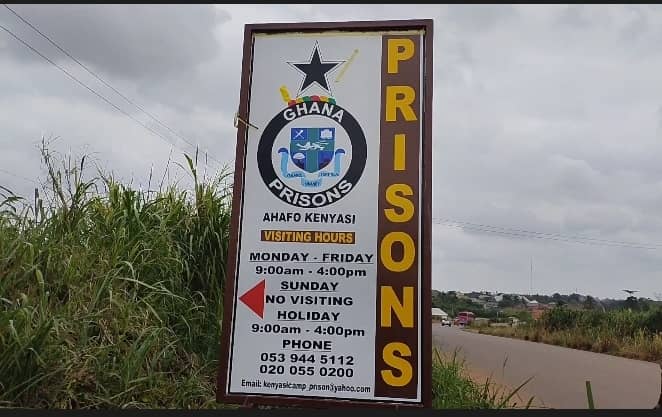
The Kenyasi Settlement Camp Prison is appealing to government agencies, NGOs, and benevolent individuals for essential post-harvest equipment, particularly dryers and storage facilities, to combat significant food losses from crops cultivated by inmates.
This appeal highlights a growing issue affecting not just local food security but also national economic resilience.
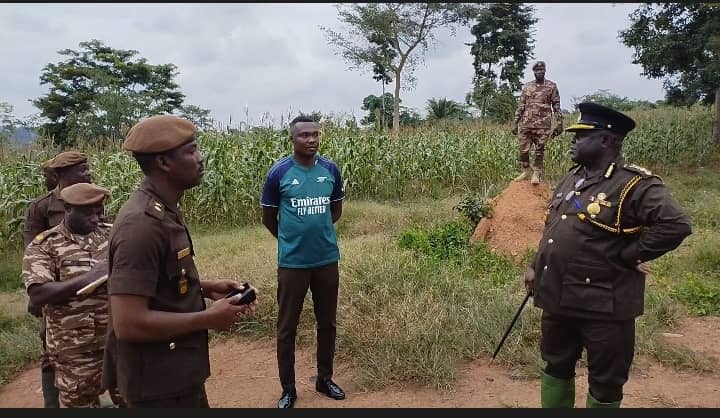
At the Kenyasi Settlement Camp Prison, mainly established for agricultural purposes, inmates work hard cultivating over 200 acres of maize, plantains, palm fruits, and other staple crops as part of their rehabilitation and skills training programmes.
However, despite impressive harvests, a lack of dryers and proper storage facilities means a significant portion of this food is lost, a tragedy in a region battling food insecurity and rising food prices.
“We are losing close to 40% of our produce due to spoilage after harvest,” says the Chief Superintendent of Prisons and the acting Officer In-Charge of Kenyasi Settlement Camp Prison, Elvis Ahadzi.
“If we had solar or mechanical dryers and airtight storage systems, we could store food longer and supply other institutions, schools, and even local markets.”
The importance of dryers and storage facilities cannot be overstated. Dryers remove moisture from crops, particularly maize, cassava, and legumes, reducing the risk of mold, aflatoxins, and rot.
Storage facilities preserve these dried products in controlled environments, extending shelf life and maintaining nutritional value.
According to the Food and Agriculture Organisation (FAO), approximately 30–40% of food produced globally is lost or wasted, with sub-Saharan Africa losing up to 37% of food after harvest due to poor handling, storage, and transport systems.
These losses are especially detrimental in developing economies, where agriculture employs a significant portion of the population and where hunger remains widespread. Post-harvest losses in Africa translate into billions of dollars in economic loss annually, increased reliance on food imports, which weakens local industries and drains foreign reserves, and diminished returns for smallholder farmers, reducing rural incomes and deepening poverty.
Despite having vast arable land and a favourable climate, Africa imported over $50 billion worth of food in 2023, according to the African Development Bank. Much of this imported food could be produced and preserved locally if the right infrastructure were in place.
Post-harvest losses in Africa stand at $4 billion annually in cereal losses alone, with a one per cent reduction in post-harvest losses having the potential to feed millions of people in the sub-region.
“Investing in small-scale food preservation technologies like dryers and silos isn’t just about equipment,” says a food systems expert.
“It’s about empowering communities, strengthening food sovereignty, and reducing unnecessary imports.”
Back in Kenyasi, the inmates continue to plant and harvest with hope, and now, a renewed call for support.
Their request is simple but urgent: equip them to protect their hard-earned produce, feed more people, and contribute meaningfully to national food security.
As the prison continues to blend rehabilitation with agricultural productivity, the appeal from Kenyasi Settlement Camp serves as a microcosm of Africa’s broader food crisis, one where innovation, investment, and infrastructure can make all the difference.
Individuals or organisations willing to support can contact the Ghana Prisons Service or the local administration at the Kenyasi Settlement Camp Prison.
Latest Stories
-
Ghana, Germany deepen cooperation on railways, labour mobility
1 minute -
Huge crowds greet Pope in Paris for open-air Mass
12 minutes -
‘I never said I’ll declare a state of emergency’ – President Mahama on galamsey
53 minutes -
Bobby Banson condemns EOCO’s attempted arrest of Nana Agyei Baffour Awuah
1 hour -
When Kumasi begins to look like somebody is in charge
1 hour -
Parliamentary probe into cocaine seizure would be a waste of time – Inusah Fuseini
1 hour -
Cocaine seizure: Focus on Ghana’s reputation, not partisan blame – Osae-Kwapong
2 hours -
Two Invitations, Three Interrogations: Did Baffour Awuah tell the whole story?
2 hours -
Drug cartels may be seeing Ghana as easy route – Lenin Anane Agyei
3 hours -
Ghana risks gaining notoriety as drug-trafficking hub – Bobby Banson
3 hours -
Government dismissed my drug trafficking warning, then tried to arrest me – Ntim Fordjour
3 hours -
Day Two: 3rd Republic Bank-JoyNews Habitat Fair Clinic underway at Junction Mall
3 hours -
NACOC addressing inherited gaps in fight against drug trafficking – Deputy Director-General
3 hours -
Taekwondo goes to school as GTF launches five-region youth campaign
3 hours -
The issues Mourinho is struggling to fix at Real Madrid
3 hours