

Audio By Carbonatix
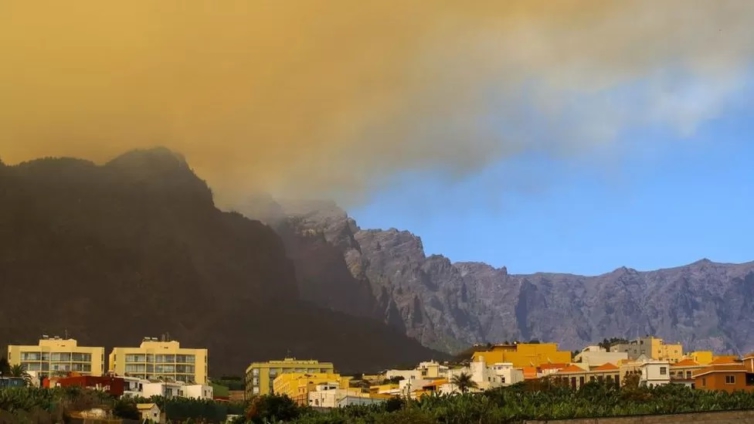
Thousands of residents of La Palma in the Canary Islands have been urged to leave their homes as emergency workers try to bring a wildfire under control.
The blaze began early on Saturday and has already consumed 4,500 hectares (11,100 acres) of land and at least a dozen homes.
Around 400 troops from various agencies are on the ground tackling the blaze.
Officials said some 4,255 people had been evacuated but that others were declining to leave.

It comes less than two years after a volcano erupted on the island, destroying thousands of homes.
President of the Canary Islands regional government, Fernando Clavijo, said there was "resistance to abandoning the houses" but that the priority had to be saving lives.
"People come first, then the houses, and then [extinguishing the fire]," he said.
The blaze began in the area of El Pinar in the north-western municipality of Puntagorda, before spreading south towards the town of Tijarafe.
Mr Clavijo attributed its quick spread to "the wind, the climate conditions as well as the heatwave that we are living through."
Late on Saturday, he said its progress had slowed but that it remained out of control.
A seaplane was used to tackle the fire before nightfall. A second will join the operation on Sunday, local media have reported.
The Spanish army has deployed 150 of its firefighters and a further unit is expected to follow. The Red Cross has also set up a facility to assist evacuees.
Writing on Twitter, Spanish president Pedro Sánchez said he had spoken to Mr Clavijo to convey his "solidarity with the people affected" by the fire and put "all the necessary means" at the disposal of La Palma's authorities.
Speaking to the BBC World Service, resident Leon Barreto expressed a reluctance to evacuate.
"The civil guard comes here and wants to force you to leave your home," he said.
"They want to force you to lose everything you have worked for all your life, and to leave and let it burn because it's protocol. But then they don`t have the protocol to act the way they should act."
The fire comes amid a heatwave that has brought soaring temperatures to much of southern Europe and which is expected to continue into the coming week.
Periods of intense heat occur within natural weather patterns, but globally they are becoming more frequent, more intense, and are lasting longer due to global warming.
Latest Stories
-
6,079 promotion cases fully processed and paid – CAGD says amid nationwide teachers’ strike
3 minutes -
Teacher unions to meet government Monday over nationwide strike
18 minutes -
Photo story: Republic Bank-JoyNews Habitat Fair clinic wraps up after three days of housing solutions, expert engagement
21 minutes -
National Peace Council urges investment in youth to sustain Ghana’s peace
43 minutes -
Afenyo-Markin urges youth to speak up against injustice
54 minutes -
CAF annuls Edo Queens victory, orders WAFU B final to resume from extra time
1 hour -
Interior Minister urges traditional authorities to enforce anti-bushfire bye-laws
1 hour -
3rd Republic Bank-JoyNews Habitat Fair Clinic ends on a high note after three days of strong patronage
1 hour -
Ten climbers missing after avalanche hits Himalayan base camp
2 hours -
NPP had more permanent fuel relief measures than current GH¢2 diesel cut – Amin Adam
2 hours -
Photos from the 3rd Republic Bank-JoyNews Habitat Fair Clinic
2 hours -
Ethiopia’s army promises restraint amid fears of new civil war
3 hours -
Amin Adam calls for review of fuel taxes as diesel prices remain above GH¢18
3 hours -
World Vision Ghana, Ahafo districts sign MoU for universal WASH coverage
4 hours -
When the gold engine stutters: What Ghana’s Cedi and reserves are telling us about the new economic architecture
4 hours