

Audio By Carbonatix
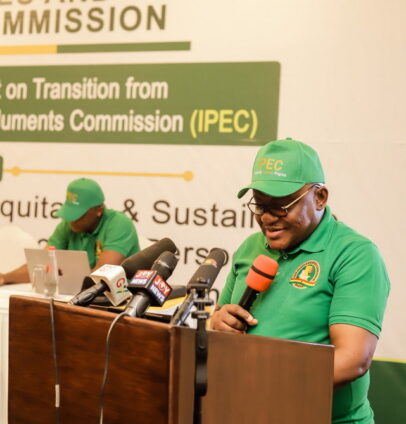
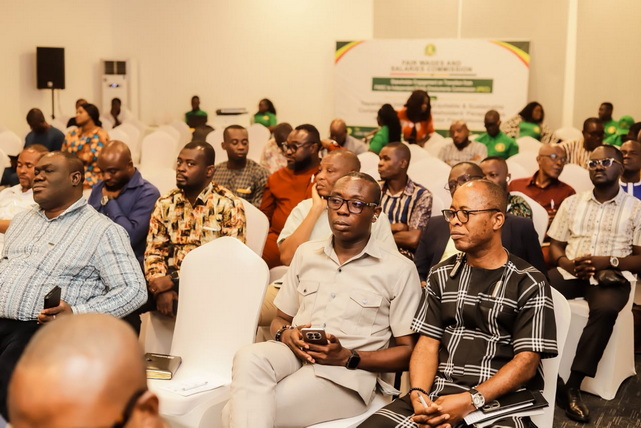
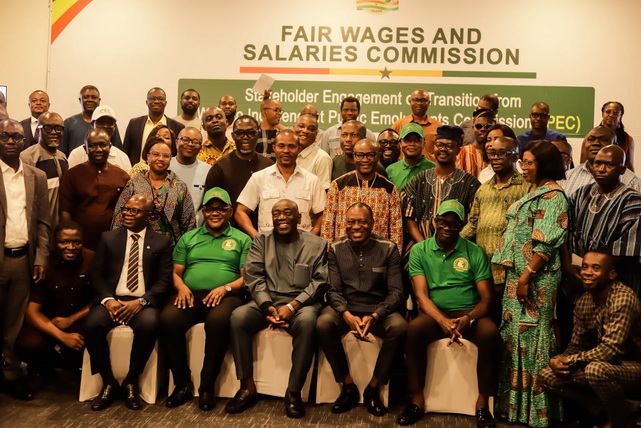
The Fair Wages and Salaries Commission (FWSC) has held a stakeholder engagement with Organised Labour on the transition from FWSC to the Independent Public Emoluments Commission (IPEC).
The engagement, held under the theme “Towards an Independent, Equitable, and Sustainable Compensation System: Stakeholders’ Perspectives on Ghana’s Public Sector Pay Reforms,” brought together key actors to deliberate on the future of public sector compensation.
The two-day meeting was aimed at briefing Organised Labour about the establishment of IPEC and also to solicit input from organised labour towards the development of a draft bill for the establishment of IPEC. The IPEC Bill, when passed, will repeal the Fair Wages and Salaries Commission Act 2007 (Act 737) to address pay fragmentation, politicisation of salaries, and rising wage bill pressures.
Challenges of Single Spine
Speaking at the opening of the meeting, the Chief Executive of FWSC, Dr George Smith-Graham, emphasised that the transition to IPEC must go beyond a mere change in institutional name and instead focus on building a stronger, more credible compensation system.
He noted that years of implementing the Single Spine Pay Policy have exposed several challenges, including disparities in allowances and conditions of service, distortions in internal pay relativities, difficulties in attracting and retaining critical skills, and the increasing need to align compensation with productivity.
“The proposed IPEC should therefore not be understood as a departure from the journey we have travelled. It should represent the next generation of public compensation governance,” he stated.
Dr Smith-Graham further assured Organised Labour that the consultation process was intended to meaningfully shape the proposed legislation, rather than simply validate predetermined decisions.
“Our purpose is not to manufacture consensus where real differences exist. It is to understand those differences, test our proposals against evidence, and build a compensation system that commands legitimacy across the public sector,” he added.
More than 50 labour groups attended, including the Trades Union Congress (TUC), Ghana Federation of Labour (GFL), Civil and Local Government Staff Association, Ghana (CLOGSAG), Ghana National Association of Teachers (GNAT), National Association of Graduate Teachers (NAGRAT), University Teachers Association of Ghana (UTAG), Teachers and Educational Workers’ Union (TEWU), Ghana Registered Nurses and Midwives Association (GRNMA), Ghana Medical Association (GMA), and the Judicial Service Staff Association of Ghana (JUSAG.
Latest Stories
-
NAFCO builds GH¢100m food buffer as Ghana moves to strengthen food security
26 minutes -
Oil heads higher as US-Iran peace talks in stalemate
45 minutes -
GAF sets Sept. 28–30 for Documentation, Body Selection Exercise
54 minutes -
I resigned five months ago – BoG Governor Asiama explains GoldBod Board exit
1 hour -
Trump says men arrested at UK air base used by US were looking to do ‘big damage’
1 hour -
Trump confirms meeting with Anthropic’s Amodei, repeats dismissal of AI fears
2 hours -
China pushes back against US on Iran and Cuba in UN speech
2 hours -
OpenAI, Anthropic CEOs called to appear at Australian AI probe
2 hours -
No land is worth a human life – Sissala West MP mourns 2 dead in Buo-Tiwii clashes
4 hours -
GCAA explains why some prospective airlines fail to complete certification
4 hours -
WHO says Congo Ebola outbreak spreads to two new health zones
5 hours -
Nigeria come from benhind to win in AFCON 2027 qualifier
5 hours -
South African white genocide does not exist, new ambassador to US tells BBC
5 hours -
T-bills auction: Government exceeds target marginally; yield on 91-day bill remains unchanged
5 hours -
Pope says ‘scourge’ of abuse must be rooted out as he visits Lourdes
5 hours