


Audio By Carbonatix
In our series of letters from African journalists, Joseph Warungu peeps into WhatsApp groups to find out who the group administrators really are.
I've just been promoted to become the administrator of a WhatsApp group aimed at mobilising support for development projects for my home village in Kenya.
With a click and a swipe, I can wipe away any member from the group.
So I've been spending sleepless nights, impatiently patrolling the group's activities, waiting for the unfortunate soul who is tempted to contravene the rules governing the group.
I had no idea power tasted this good
Is this how it feels to be Minister of Information?
That I can breathe hell's fire into any person sharing too many photos and videos of goats dancing with cats?
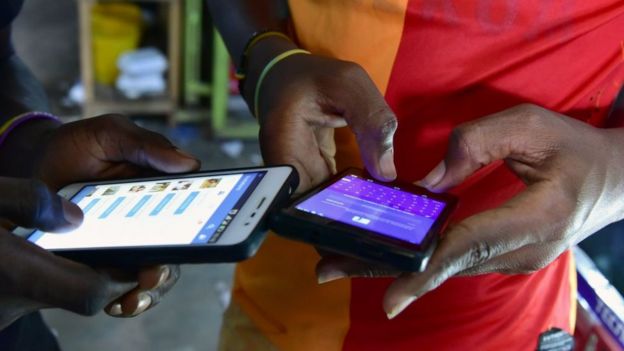
WhatsApp has transformed the way we communicate and socialise.
It is also a source of news. Good news, bad news and lots of fake news.
WhatsApp has also broken relationships and friendships.
It's a useful crowd-sourcing tool, which enables you to get any piece of information from anywhere.
In one journalists' group that I belong to, it takes seconds to get the contact telephone of almost any Kenyan.
In yet another group, plans are at an advanced stage to launch an ambitious business venture conceived and funded by members of the group.
There are whole neighbourhoods and gated communities that are on WhatsApp groups.
One such group in Nairobi is run very strictly. There is no politics, no religious postings, no jokes.
'Saving lives through WhatsApp'
Recently, a Kenyan colleague who needed to travel to India for a medical emergency was able to raise nearly $20,000 (£14,500) in less than two days, through a quick online campaign that relied heavily on WhatsApp.
A friend in Ghana told me he's in a group of very influential people, in which one member posted a long letter suggesting he was going to kill himself.
The members quickly mobilised a support system for the young man.
But sadly, by the time help reached him, he had taken his life.
The group instantly turned into a digital wake in honour of the man.
The value of WhatsApp is well known and well documented.
Based on my own and other's experiences, I have been examining six different admin models as I decide which one to emulate.
1: Digital Dictators
These are power-hungry admins. No-one elected them, but everyone fears them.
They run the group like a fiefdom. Any attempt to introduce a subject or point of view that does not glorify their ego is tackled viciously.
They will not let anyone leave the group.
If you try, you're added straight back! I call this house arrest.
A West African friend told me how a digital dictator of his group was accidentally relieved of her admin powers when she lost her phone.
She pleaded with the interim admin to readmit her on a new telephone line.
As soon as she assumed her executive WhatsApp powers, she instantly ejected the acting admin from the group.
It took the intervention of a senior military officer who is a silent member of the group to plead for the poor member to be readmitted
2: Echo Makers
These are admins who love the sound of their own voice.
They're often found in small WhatsApp groups with only a handful of members.

I belong to one such group that was created for a training exercise after which most members left.
But the admin can be heard every few moments bellowing down the Whatsapp corridor: "Good morning happy people! Just to wish you a happy day!"
But there's no response. There's no-one here.
All you hear is the sound of the admin's voice echoing back and forth with one triviality after another.
3: Mafia Managers
These are not really admins. But they are the power behind the power.
They broker relationships in the group; they determine who belongs and who doesn't.
When their interests are threatened, they step in stealthily and take charge with sharp knives in the form of a subtle post here and a sharp hint there that leaves no doubt as to which direction things must go.
4: Rebel Rulers
These are admins who forget they are the leader.
They'll be the first to post disturbing images, stir up rebellions amongst sleepy members and be the life of the party.
They crossed from street activism to "state house" but forgot to leave their placards behind.
5: People Pleasers
These are the opposite of "Digital Dictators". They embrace the world.
They have a laissez-faire approach to the office of the WhatsApp administrator.
Which means the group is often noisy and chaotic; no-one is in charge and rules are not enforced.
As a result, their powers are usurped by scores of aspiring admins.
6: Grammar Grabbers
These are misplaced teachers. They relish posts that come with spelling or grammatical mistakes.
They will grab such offenders and take them back to pre-school by the ear.
Woe unto you if you cannot tame the spelling abilities of your smartphone.
They are also the moral detectives of the group and any content that threatens the minds of grown-ups is seized upon with speed.
A colleague, who is newly married, once sent a rather explicit message of the plans he had for his wife after his birthday dinner.
But he got his contacts mixed up and the message, intended for the wife, went to his mother-in-law.
Such misposting is Christmas dinner for grammar grabbers!
My Way
Now there are things I will not stomach as the new admin of my WhatsApp group.
Because by opting for WhatsApp, my group members have surrendered their power to meet their fellow members in the physical space, or use their human voice to communicate, I too now wield the power to silence their voice.
And because the Kenyan authorities hold group administrators responsible for anything that is shared in the groups, I will leave no stone unturned to find out who posted that image of a rat chanting: "The powers of WhatsApp groups administrators are unconstitutional!"
Latest Stories
-
The Paradox of Plenty — When every smartphone becomes a newsroom
27 minutes -
GTA sensitises taxi drivers in ‘Know Ghana’ tourism campaign
2 hours -
Archbishop Agyinasare calls for responsible speech amid growing social media abuse
2 hours -
‘It will be inexcusable for gov’t not to honour payment of teachers’ arrears by 30th October’ – Haruna Iddrisu
2 hours -
Forbes’ World’s Best Employers 2026: No Ghanaian firm ranked among 900 companies
2 hours -
Electronic processing of teachers’ data: ‘The decision is the Controller’s’ – GES boss
2 hours -
Teachers’ Strike: Haruna Iddrisu questions paper-based processing of promoted teachers’ data
2 hours -
Savannah Region: Kunfusi bridge collapses again, leaving nearly 4,000 residents cut off
2 hours -
Teachers’ strike: GES targets Monday deadline to submit promotion data to Controller
2 hours -
Inflation to average 11.3% in 2027 – Fitch Solutions
3 hours -
‘I didn’t campaign for NDC to come and do this nonsense’ – Kpebu on EOCO’s conduct
3 hours -
Fitch Solutions maintains policy rate forecast of 14% by December 2026
3 hours -
Diaspora Nasara Caucus congratulates Mohammed Ali Suraj, new NPP executives
5 hours -
Dr Antwi-Boasiako’s cybersecurity book showcased at UN crime prevention congress
5 hours -
We will empower the grassroots and protect every vote – NPP’s 1st Vice Chair Kojo Bamba
5 hours