


Audio By Carbonatix
More than a million doses of antibiotics have been delivered by the World Health Organization to fight an outbreak of plague in Madagascar which has killed at least 33 people.
The authorities have also banned prison visits in the two worst affected areas to prevent the spread of the disease.
The risk of contamination is high in overcrowded and unsanitary jails.
There has recently been criticism of the government's perceived slow reaction to the outbreak.
The health ministry says the latest bout of plague has infected about 230 people - in addition to those who have died - in just two months. There are normally about 400 cases of plague every year in the country.
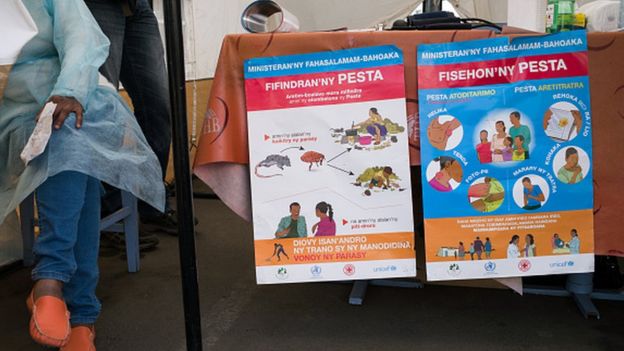
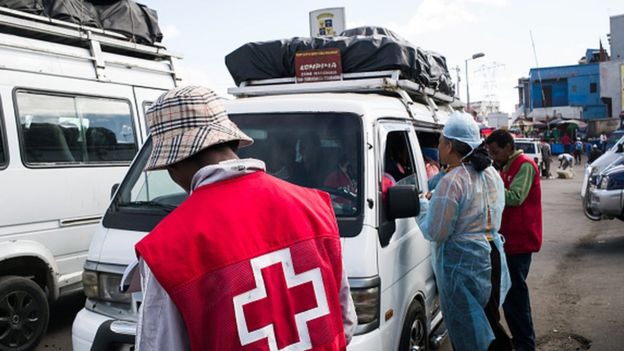
This year however the majority of cases are of pneumonic plague, which affects the lungs and is transmitted through coughing. It is considered to be the most deadly form of the disease and can be fatal within 24 hours.
The less deadly bubonic plague is often spread by rodents fleeing forest fires. Humans usually become ill after being bitten by infected fleas.
Public gatherings have been banned in response to the latest outbreak.
A specialised hospital in the capital Antananarivo is struggling to cope with the influx of ill people, local media reported, with long queues outside for face masks and medicine.
This year urban areas have been affected, a development that has worried aid agencies in a country not renowned for a robust healthcare system.
"Plague is curable if detected in time. Our teams are working to ensure that everyone at risk has access to protection and treatment. The faster we move, the more lives we save," WHO Madagascar Representative Charlotte Ndiaye said in a statement.
When did the latest outbreak begin?
It is unclear when the disease first broke out but the first death occurred on 28 August when a passenger died in a public service vehicle in the town of Moramanga, on the east coast.
Two others persons who came had come into contact with the passenger later died, with two more succumbing to the disease in the centre of the island.
A Seychellois basketball coach died in a hospital in Antananarivo on 27 September during the Indian Ocean Basketball Championship.
Which areas are affected?
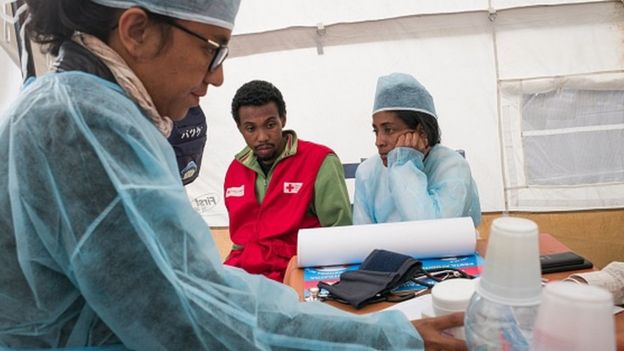
Two regions are particularly hit by the outbreak. The first is in eastern Madagascar - where the first death was recorded on 28 August - and the other is the central part of the island, mainly in Antananarivo.
"The risk of the disease spreading is high at national level... because it is present in several towns and this is just the start of the outbreak," a WHO official said.
How has the government reacted?
On 30 September, Prime Minister Olivier Mahafaly Solonandrasana in a televised statement announced that all public gatherings would be banned in Antananarivo to prevent the spread of the disease following the death of the basketball coach.
In addition to school closures across the country, authorities on 5 October ordered the closure of the country's two main universities in the eastern port of Toamasina and Antananarivo for disinfection purposes. Sports events have also been cancelled.
What else is being done to curtail the plague?
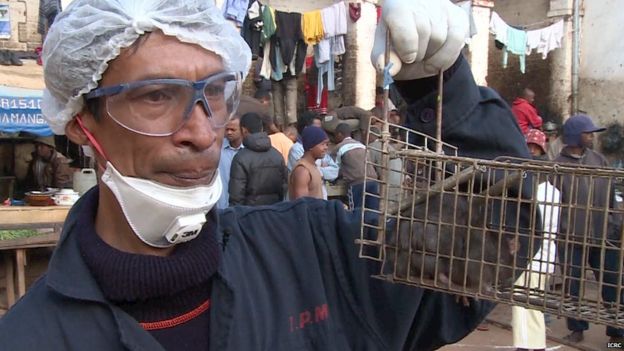
There have been concerted efforts to set up rat traps and spray insecticides in several neighbourhoods to prevent the spread of the disease. The government has also established a toll-free number to report any new cases.
The Ministry of Health in addition has also taken measures against social media users who it accuses of spreading "false news" on the disease to create panic. A Facebook user was arrested and investigated on 3 October for publishing a report which did not correspond to the toll given by the ministry.
What has been the reaction within the region?
The Ministry of Health in Seychelles has advised airlines and travel agencies to discourage people from travelling to Madagascar due to the outbreak. The authorities have also put screening measures in place at the country's main airport.
On 6 October, Seychelles' national carrier announced that it had "temporarily suspended" its flights to Madagascar. Several Malagasy nationals live and work in the Seychelles in various sectors and frequently travel between the two islands.
Latest Stories
-
Stakeholders demand action against foreign-led illegal mining in Ahafo Region
46 minutes -
Ghana handed tricky draw at 2026 Amputee World Cup
53 minutes -
2024 Nyankpala election violence: Youth group petitions authorities over slow probe
57 minutes -
Ghana, UNICEF strengthen partnership to advance child protection
1 hour -
Day Two of 3rd Republic Bank-JoyNews Habitat Fair ends with great homeownership offers and financing solutions
1 hour -
Guinness Ghana DJ Awards 2026 Pub Fest celebrates Ghana’s DJ culture as Accra turns up the energy
2 hours -
10th woman found dead in South Africa’s string of killings
2 hours -
French Embassy trains Ghana Police CTU in counter-terrorism operations
2 hours -
UPSA uncovers mass results manipulation involving 178 students, over 500 results compromised
3 hours -
ECG announces planned power outages in parts of Tema from Sept. 29 to October 1
3 hours -
Sylvester Mensah urges Latenu FM to promote trade, export opportunities in Ga
3 hours -
Ga language under threat of decline as children shy away from speaking it – Sylvester Mensah
3 hours -
‘Let every Ga child you raise know the Ga language and story’ – Sylvester Mensah
4 hours -
‘We are not deterred’ – Ablakwa responds to backlash over South Africa evacuation
4 hours -
Day Two: Republic Bank-JoyNews Habitat Fair gains momentum at Junction Mall
4 hours