

Audio By Carbonatix
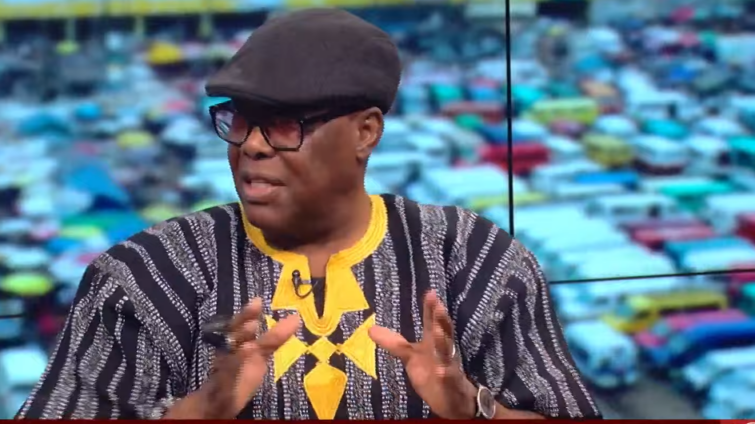
Former Chairman of the National Media Commission (NMC), Nana Kwasi Gyan Apenteng says media houses must uphold and strictly observe high standards to foster responsible and ethical journalism.
He says although media houses have their own different ideological political interests, there should be standards or conventions set by regulators.
For him standard-setting is not only important for media houses as organisations, but also for individual journalists who have a commitment to upholding the principles of ethical practice.
Speaking on JoyNews’ Change Speaker Series VII on Saturday, May 11, he said, “So that we know the difference between news and opinion. So that when we are reporting, say a rally, if it’s an NDC rally, the NPP press won't say that the numbers were small and say all the negative things. We, the public, may not even know what was actually said at the rally because that is not their interest. Their interest is to denigrate the events and then take our minds off from whatever may have been said and vice versa.”
According to him, establishing standards for news reporting that prioritise good values would help to clarify the distinction between news, opinion, and commentary.
“So when we are able to set these standards and show that, in news reporting, if the number is 100 across board for everybody, it’s the same as reporting a football match. So once we have trained the sports writers, they may support Hearts or Kotoko, but if the match is reported, the report is the same. The goal was scored in the 54th minute, they are not going to say, it was scored in the 30th minute because that’s what you wish would have happened. And then after that, you can use other interviews and all that to establish other opinions.”
He proposed that media houses should focus on providing specialised training to at least a number of journalists who can serve as election experts.
“If we know that over a period of time, we have trained people who we know will become our eyes and ears within the media houses and they take pride in saying that, the same way as we have got financial reporters and they are very faithful about what they are doing, we need to train some people, not only as political reporters but as election reporting specialists.
“I’m saying this because the objective of the training must be that in the end, the peace that we want to prevail, the fairness that we want to prevail will become their objective.”
Latest Stories
-
Yaw Ampofo Ankrah hasn’t taken or received any money to facilitate visas – Lawyer insists
17 minutes -
World Cup visa scandal: Senyo Hosi urges focus on constitutional accountability
17 minutes -
La Beach demolition: Senyo Hosi condemns lack of consultation
28 minutes -
Russian glide bomb attack on Zaporizhzhia kills at least 15 people
43 minutes -
Jinapor warns underperforming energy sector CEOs of consequences, says no protection for failure
44 minutes -
Fire destroys head of tipper truck on Lower Volta Bridge
49 minutes -
Palmer signs new Chelsea contract until 2034
50 minutes -
World Cup visa scandal: Mahama will act on corruption allegations – Abass Nurudeen
52 minutes -
Abass Nurudeen accuses Minority of ‘scandal scavenging’ over World Cup visa controversy
54 minutes -
US Embassy recognised NSA, GFA and GTA as separate entities for visa applications – Sports Minister’s aide
1 hour -
Only 30% of Ghanaian teachers satisfied with their jobs – CAPCOE data reveals
1 hour -
Communities affected by construction of Akosombo Dam urge government to speed up compensation process
2 hours -
World Cup visa scandal: Sports Ministry not shielding anyone – Sports Minister’s special aide
2 hours -
World Cup visa scandal: Over 30 people misrepresented as GTA board members to US Embassy – Vincent Assafuah alleges
2 hours -
Fire destroys wooden structure near Yesu Mo Villa at Bush Road
2 hours