

Audio By Carbonatix
A mental health advocacy organization, MindFreedom Ghana has identified the lack of financing as a major stumbling block in ensuring universal mental health coverage in the country.
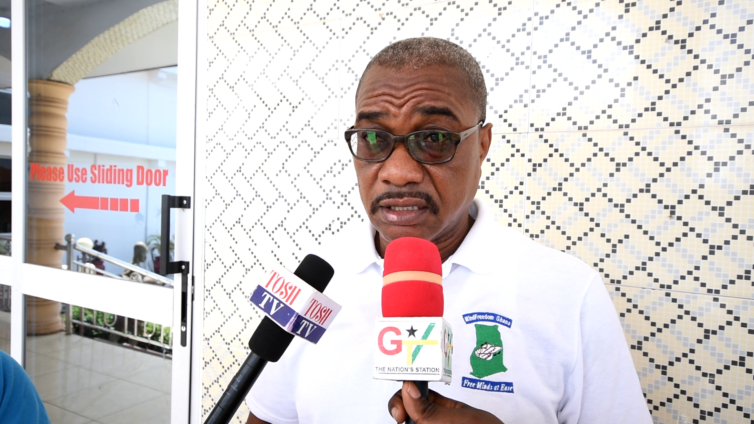
The Executive Secretary of MindFreedom Ghana, Dan Taylor indicated that though mental healthcare is free in Ghana, the lack of funding has made it practically impossible to fully treat mental health patients.
He made the remarks while speaking to the media on the sideline of a Mental Health Advocacy workshop, organized by his outfit in Ho.
He indicated that regardless of the fact that a Mental Health Fund was established, to finance mental healthcare, the fund is suffering a drought, as no proper source of raising money has been institutionalized.
He asserted that the lack of funding contributes to the continuous shortage of medication, and lack of facilities among other problems, leading to patients relapsing treatment, or not being able to access treatment.
“Mental health as a policy in Ghana is free, but currently because of a shortage of medication and other things [used] to treat, people have to buy. And there are those because of the poverty level, they are not able to buy, so relapse, they go back to their conditions”, he lamented.
Mr Taylor thus entreated the government to consider a proposal to tax public-sector workers monthly to raise money for the Mental Health Fund, to establish an effective healthcare system for mental health.
“To start with, 10pesewas should be deducted from the monthly pay of public workers in Ghana, and the number of public workers on the government payroll is about 250,000. Once we start from the public workers tangent, then gradually it will move to the private sector.
And of course, there are other suggestions that there should be some levies on alcohol and cigarettes used to feed the mental health fund”, he said.
He lauded the proposal to incorporate mental health into the National Health Insurance Scheme (NHIS) to enhance the treatment of mental health conditions.
Mr Taylor stressed that mental health conditions are treatable and hence persons identified to be having such conditions must be guided to access healthcare, be diagnosed, and be treated, so they integrate back into society.
“Mental health conditions are not spiritual and all of that, we need to diffuse that kind of thought and wrong perception. Stigma is another issue, as a family, we must not sack them. We must show that kind of love and concern for them.
I can tell you that there are incidents of people who have had mental health conditions, they were aggressive, they were violent, and all of that and they got the treatment. They were able to recollect all that happened or the way they were treated, they will tell you”, he stressed.
Latest Stories
-
Government identifies payment discrepancy holding up teachers’ strike resolution
11 minutes -
BoG signals no FX intermediation for October as GoldBod plans $1bn support for banks
15 minutes -
When share ownership becomes personal: The African mindset of the Dangote IPO
25 minutes -
Why MFWA Legal Fund matters to Ghana’s democracy
25 minutes -
Fuel prices to rise from October 1; diesel could hit GH¢19.60 – COMAC
26 minutes -
Parliament must investigate how 3.9 tonnes of cocaine left Ghana undetected – Samuel Jinapor
27 minutes -
Government pledges to pay striking teachers as payment dispute is resolved
41 minutes -
Government cannot investigate drug exports under its own watch – Abu Jinapor
43 minutes -
Government extends GH¢2 diesel subsidy for two more months
50 minutes -
GTEC flags over 100 tertiary institutions as unrecognised
52 minutes -
Agric Committee chair commends NAFCO for turnaround from GH¢20m debt to GH¢96m profit
57 minutes -
NPP: Judicial office requires judges to surrender some personal freedoms
1 hour -
Senyo Hosi: Ghana missed its chance to end galamsey under Akufo-Addo
1 hour -
Okaikwei Central MP alleges Ghana was close to settling Tullow tax dispute for $150m
1 hour -
Patrick Boamah credits Godfred Dame for Ghana’s victory in $400m Tullow tax arbitration
1 hour