

Audio By Carbonatix
Minister of State in Charge of Climate Change and Sustainability Seidu Issifu has called for an urgent transformation of Ghana's food system, warning that climate change, rising food imports, environmental degradation and increasing diet-related diseases pose growing risks to the country's economic and social development.
Opening a technical workshop on food system resilience in Accra on Monday, the Minister said the country faces an urgent need to transform its food system as climate change, rising food imports, environmental degradation and increasing diet-related diseases threaten national development.
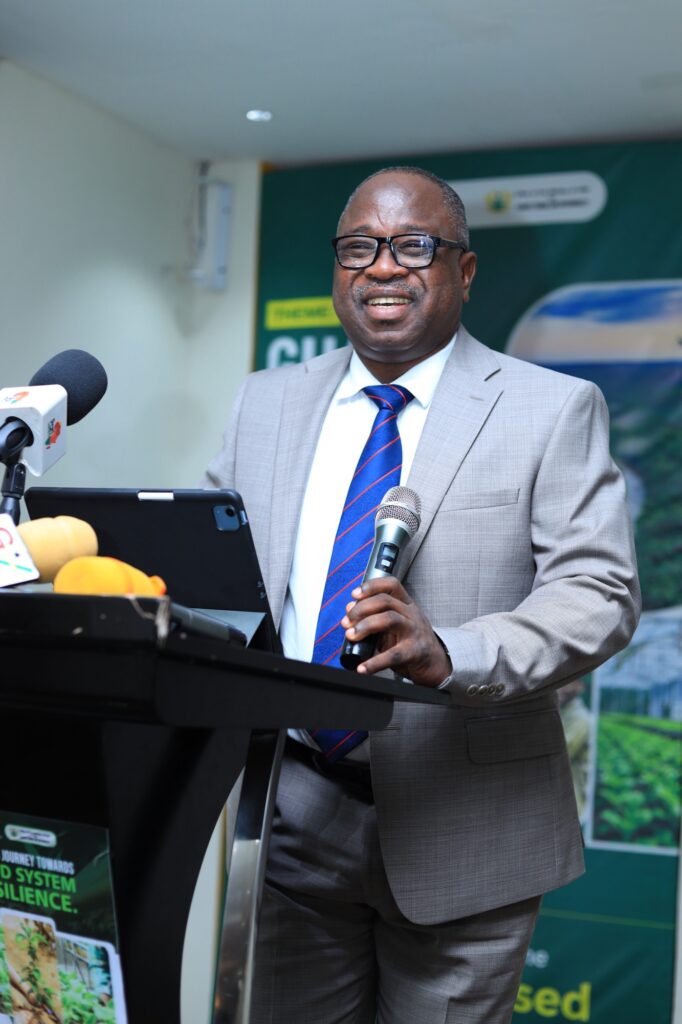
"The evidence confronting us is both compelling and urgent," Mr. Issifu told participants at the workshop, titled "Ghana's Journey Towards Food System Resilience."
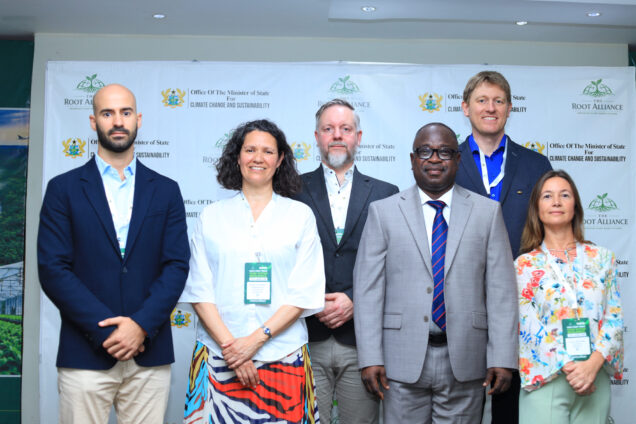
The workshop was organized by The Root Alliance in collaboration with the Office of the Minister of State in Charge of Climate Change and Sustainability, bringing together government officials, development partners, farmer-based organizations, researchers, civil society groups and private sector actors to discuss practical solutions for strengthening Ghana's food system resilience.
The Minister said climate resilience, food security and sustainable economic transformation remain central to the government's development agenda.
He noted that while agriculture contributes about 19 percent of Ghana's Gross Domestic Product and provides livelihoods for one in every three Ghanaians, the sector is increasingly vulnerable to climate change and other systemic challenges.
Among the major concerns highlighted was Ghana's growing dependence on food imports.
According to Mr. Issifu, the country spends more than US$400 million annually on poultry imports alone, a situation he said weakens food sovereignty, drains resources from rural economies and places pressure on foreign exchange reserves.
"Every tonne of food imported is not only a missed opportunity for local production and employment, but also a transfer of wealth away from our rural economies," he said.
The Minister also expressed concern about the impact of climate change on key food crops that form the foundation of Ghanaian diets.
He said changing weather patterns are making staples such as cassava, yam and plantain increasingly vulnerable, citing declining yields in districts such as Fanteakwa and projections of severe crop failures in Northern Ghana under current climate trends.
"These are not distant possibilities; they are emerging realities that demand immediate attention," he stressed.
Beyond food production, Mr. Issifu said Ghana faces an interconnected climate, environmental and public health challenge.
He noted that agriculture and land-use change account for approximately 44.6 percent of the country's greenhouse gas emissions, with livestock production contributing substantially to methane emissions.
At the same time, environmental degradation, including water contamination and forest loss, continues to place pressure on public health and ecosystems.
The Minister said the country is also grappling with the dual burden of undernutrition and rising non-communicable diseases.
While stunting remains a concern in some parts of the country, he said conditions such as hypertension and other chronic illnesses are increasing steadily, creating additional demands on the healthcare system.
"Taken together, these trends reveal the hidden costs embedded within our current food system that we can no longer afford to bear as citizens," he said.
Despite the challenges, Mr. Issifu described the food system as one of Ghana's greatest opportunities for transformation.
He said scientific evidence and lessons from Ghana's traditional dietary heritage point to pathways that can simultaneously improve nutrition, strengthen climate resilience, enhance rural livelihoods and reduce greenhouse gas emissions.
According to him, promoting diversified, climate-smart and nutrition-sensitive food production systems could enable the country to generate greater value, nutrition and resilience from its resources.
"This is not about restricting choice or prescribing a single model of production. Rather, it is about broadening opportunities, strengthening local value chains, and ensuring that our food system is fit for the challenges and opportunities of the twenty-first century," he said.
Mr. Issifu said Ghana has the potential to become a regional leader in food system transformation by reducing import dependence, strengthening food security, protecting public health and creating sustainable economic opportunities.
He urged participants to move beyond discussions and develop practical solutions capable of being implemented on a national scale.
"This is intended to be a working session, not a talking shop," he said.
The Minister called on stakeholders to examine climate, health, environmental and economic risks within the food system, identify practical policy and investment measures, and develop a roadmap that government, farmers, the private sector and development partners can jointly implement.
He stressed that food system resilience cannot be achieved by a single institution and requires coordinated action across agriculture, health, trade, water resources, environment, finance and local governance sectors.
"As we deliberate, I encourage us to be ambitious, but also pragmatic," he told participants.
He added that the outcomes of the workshop would contribute to Ghana's Climate Prosperity Plan as well as the country's commitments under the United Nations Framework Convention on Climate Change and African Union frameworks.
"More importantly, they will help determine the kind of future our children inherit – a food system that nourishes or one that leaves them more vulnerable," he said.
Mr. Issifu stated that, the technical workshop officially open and called for productive discussions and actionable recommendations.
Latest Stories
-
I have no issue with John Boadu; we’ll work together – Justin Kodua
1 hour -
Adom FM Y2K Jam delivers a night of music, fashion and nostalgia
2 hours -
Lawrence Kobena Nsarko Otoo, Esq
3 hours -
Bel-Aqua intensifies mental well-being campaign ahead of 15th anniversary
3 hours -
From banking to party finances: Alfred Kwadwo Thompson elected NPP Treasurer
3 hours -
George Christian Papa Mends
3 hours -
Ali Suraj elected NPP NASARA Coordinator
3 hours -
Mustapha Hamid misses out on NPP Vice Chairmanship by 31 votes despite early poll lead
3 hours -
Kojo Bamba, Henry Nana Boakye and Nana Akomea elected NPP Vice Chairmen
4 hours -
From Delta Force to NPP First Vice Chairman – Kojo Bamba’s political journey
4 hours -
Police restore calm at Larteh following Odwira festival disturbance
5 hours -
‘All the camps will dissolve’ – Bawumia demands one NPP for 2028
5 hours -
There is no time to waste – Bawumia orders NPP to begin 2028 work
5 hours -
Sarkodie visits MobileMoney Fintech LTD
5 hours -
John Boadu unveils new NPP strategy to win back youth and modernise party
5 hours