

Audio By Carbonatix
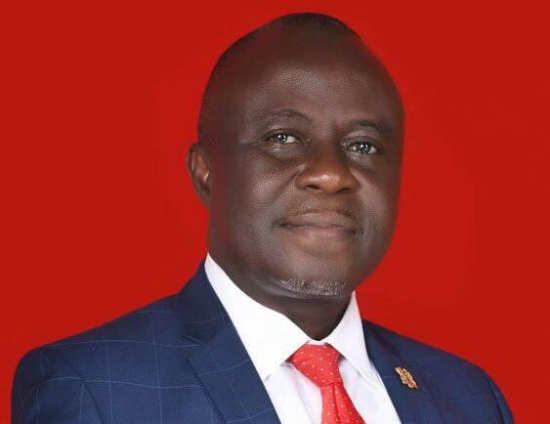
Ghana has the conviction that improved food systems will contribute to the attainment of the Sustainable Development Goals (SDGs), Yaw Frimpong Addo, the Deputy Minister of Food and Agriculture, said on Wednesday.
The Government was, therefore, determined to embrace global actions and ensure that the outcomes of the UN Pre-Summit on food systems, which ended in Rome on Wednesday, were integrated into development policies and plans, and effectively implemented, he said.
Making a contribution at the three-day Summit, Mr Addo, who joined virtually, said Ghana was very much mindful of the global and continental frameworks, which it had integrated into the Development Framework at the country level.
"Guaranteeing food security and improved nutrition and overall optimum health for Ghanaians is a step towards achieving the SDGs, Africa Union Commission Agenda 2063 and the Malabo declarations,” he said.
Commenting on the current food systems in the country, Mr Addo said even though Ghana was among the most food-secure countries in Sub-Saharan Africa, as indicated by the 2017 Global Food Security Index, the country was still plagued with the double burden of malnutrition with stunting levels at 19 per cent in children under five, and obesity at 29.3 per cent of the population.
He said other key food security challenges in the country included sub-optimal staple food production, characterised by changing agroecology and unpredictable rainfall patterns, as well as the reductions in rainfall and declining soil fertility.
Therefore, within the short to medium term, the country intended to focus on reduced levels of food loss, stunting, nutrient deficiencies, overweight and obesity, the Deputy Minister said.
There would also be the need to promote resilient production systems of diverse nutritious crops, livestock and fisheries through sustainable and land-sparing strategies and measures that ensure food safety, he said.
Building of strong and resilient food supply chains and improving implementation of policies and regulations and cooperation among actors, as well as promoting extensive use of digital technologies that enhance access to extension, financial and mechanisation services, as well as markets would be explored, Mr Addo said.
He said smallholder farmers, women and youth would have to be empowered to produce more efficiently with greater access to land and tenure security while targeted social safety nets would be provided to protect livelihoods in the face of risks related to climate variability, conflicts and other shocks such as the COVID-19 pandemic.
The country would work to improve the nutrition of school children through effective implementation of the school feeding programme, increase consumer awareness and education on healthy eating, and strengthen integrated policymaking and coherence, inter-sectoral collaboration, and private sector engagement for food systems transformation, Mr Addo said.
He said Ghana would have to ensure enforcement of regulations to increase consumer confidence and access to regional markets.
On the key milestones that the country would work on, Mr Addo said the production of climate-resilient varieties of diverse crops, especially vegetables and legumes, using sustainable agricultural practices, would have to be increased by 40 per cent by 2030.
"We would have to ensure the reduction of postharvest losses by 50 per cent through increased investment in affordable on-farm storage, handling technologies, transportation and logistics systems as well as increase investment in technologies for value addition,” he said.
"We will ensure food waste management that involves the conversion of organic waste into products such as fish feed, bio-based products, and bioenergy by 20 per cent by 2030.”
The country would also implement Food-based Dietary Guidelines to enhance and increase household dietary diversity scores by 30 per cent and enhance nutritional value of meals for school feeding programmes by 2030.
At least 40 per cent increase in access to affordable feed for the poultry and aquaculture industries by 2030, and a 20 per cent increase in women empowerment in agriculture index by 2030 would be ensured, Mr Addo said.
Ghana would also have to ensure an increase in the number of youth-managed enterprises engaged in nutrition-sensitive agriculture and food processing by 30 per cent by 2030, he added.
Latest Stories
-
Adom FM Y2K Jam delivers a night of music, fashion and nostalgia
34 minutes -
Lawrence Kobena Nsarko Otoo, Esq
2 hours -
Bel-Aqua intensifies mental well-being campaign ahead of 15th anniversary
2 hours -
From banking to party finances: Alfred Kwadwo Thompson elected NPP Treasurer
2 hours -
George Christian Papa Mends
2 hours -
Ali Suraj elected NPP NASARA Coordinator
2 hours -
Mustapha Hamid misses out on NPP Vice Chairmanship by 31 votes despite early poll lead
2 hours -
Kojo Bamba, Henry Nana Boakye and Nana Akomea elected NPP Vice Chairmen
3 hours -
From Delta Force to NPP First Vice Chairman – Kojo Bamba’s political journey
3 hours -
Police restore calm at Larteh following Odwira festival disturbance
4 hours -
‘All the camps will dissolve’ – Bawumia demands one NPP for 2028
4 hours -
There is no time to waste – Bawumia orders NPP to begin 2028 work
4 hours -
Sarkodie visits MobileMoney Fintech LTD
4 hours -
John Boadu unveils new NPP strategy to win back youth and modernise party
4 hours -
Hawa Koomson elected NPP National Women’s Organiser
4 hours