

Audio By Carbonatix
As Ghana prepares for critical discussions surrounding the 2026 Budget, the Minority has urged legislators to approach these deliberations with an open mind, emphasising the importance of learning, collaboration, and community service.
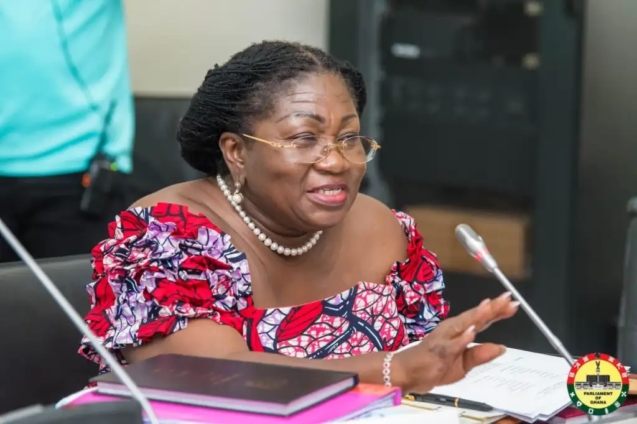
During a Post-Budget Workshop for parliamentarians held in Accra on Saturday, November 15, Deputy Minority Leader Patricia Appiagyei spoke on the need for MPs to rise above partisan divisions.
She urged her fellow lawmakers to gauge the potential impacts of the budget on the everyday lives of Ghanaians, stressing the importance of sustainability in national finances.
“Let us ask the hard questions, but let us also seek practical answers. Let us challenge each other’s assumptions, but do so with respect and a shared sense of purpose,” Ms Appiagyei asserted.
Her call to action serves as a reminder that the ultimate aim of these discussions should be constructive collaboration leading to a budget that reflects the people's needs.
At the heart of Ms Appiagyei's message is the idea that the budgetary process is not merely about numbers and projections but about people—how policies impact families and communities across the nation.
“At the end of this process, what will matter most are our collective inputs that help shape a budget that is more just, more balanced, and more responsive to the needs of Ghanaians,” she stated.
As the discussions move forward, the Minority is committed to engaging in productive dialogue, ensuring that the voices of citizens resonate throughout the budget-making process.
With crucial economic challenges ahead, including combating rising inflation rates currently pegged at 12.7%, the need for a thoughtful, inclusive budget has never been more pressing.
The 2026 Budget, introduced by Finance Minister Dr. Cassiel Ato Forson on behalf of President John Dramani Mahama, carries the ambitious theme “Resetting for Growth, Jobs, and Economic Transformation.”
Dr Forson characterized this budget as a significant pivot—from a focus on recovery to a broader agenda aimed at transformation—emphasizing essentials such as macroeconomic stability, robust job creation, and the enhancement of social sectors.
The 2026 Budget outlines three core strategic priorities intended to guide Ghana’s economic pathway:
- Fiscal Discipline and Debt Management:
The government aims to maintain responsible debt levels and fiscal discipline, setting a target to bring public debt under control to ensure national financial sustainability. Current figures indicate Ghana's debt stands at roughly $65 billion, necessitating efficient management practices to prevent future crises. - Investment in Infrastructure and Agriculture:
A robust investment drive in infrastructure, particularly in agricultural sectors, seeks to boost employment opportunities. Agriculture remains a cornerstone of the economy, employing about 40% of the workforce. Enhanced investments are designed to modernize practices and expand market access for farmers. - Enhancing Education, Healthcare, and Security:
Focused efforts will be made to uplift the education and healthcare systems while ensuring safety and security for all citizens. The budget allocates GHS 1.5 billion for educational reforms and GHS 800 million for healthcare improvement, paving the way for more inclusive growth.
Additionally, several statutory reports and legislative measures were presented alongside the budget, including the Value for Money Bill, the Value Added Tax (Amendment) Bill, and the repeal of the controversial COVID-19 Health Recovery Levy. These changes aim to streamline processes and ensure financial accountability.
Latest Stories
-
THE LAW 101: La Beach Demolitions – The State’s own documents, the courts’ orders – and the bulldozers
2 minutes -
DVLA contributes GH¢17.7m to Consolidated Fund in 2025
5 minutes -
Why disaster risk reduction must connect early warnings, preparedness and financial protection to household-level resilience
12 minutes -
The AI Gold Rush: Who strikes gold and who gets left behind?
36 minutes -
What Is Wrong With Us: We queue for the Colosseum while our own Castles crumble
1 hour -
Dangote IPO fever could deepen Africa’s capital markets, Citi Bank executive says
2 hours -
US hopes diesel deal can ‘soften’ Moscow on peace talks, sources say
2 hours -
Oil falls as Russia diesel supply prospects counter Gulf supply risks
2 hours -
Moroccan centrist party agrees to form coalition government with three other parties
2 hours -
IMF cites AI slowdown, spiking yields as looming global market risks
2 hours -
Nvidia’s China AI-chip share falls as Huawei closes gap, report finds
2 hours -
Trump says he does not believe China and Russia are helping Iran ‘at all’
2 hours -
One dead and several hurt after rollercoaster incident at Six Flags
4 hours -
Afrobeats singer Ayra Starr on making history at her NFL half-time show
4 hours -
South Africa’s deputy police chief resigns after being charged with sexual offences
4 hours