

Audio By Carbonatix
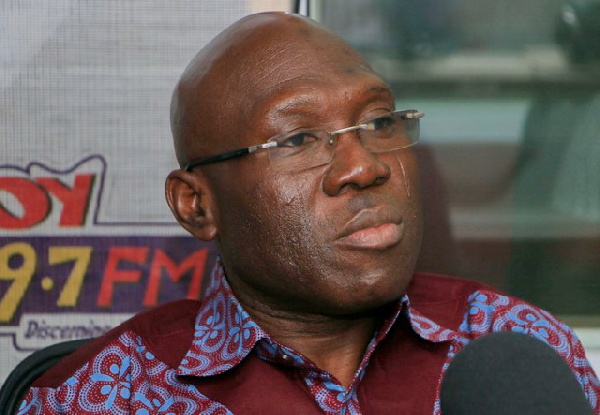
Former Member of Parliament for Tamale Central, Inusah Fuseini, has criticised the Minority in Parliament’s attempt to halt the vetting of Chief Justice nominee Justice Paul Baffoe-Bonnie, describing it as legally and constitutionally misplaced.
His comments follow a motion filed by the Minority on Wednesday, October 29, 2025, seeking to suspend all parliamentary processes leading to Justice Baffoe-Bonnie’s appointment as Chief Justice until all pending legal actions filed by the removed Chief Justice, Gertrude Torkornoo, are resolved.
The motion, signed by some Minority MPs, was defended by MP for Gushegu, Hassan Tampuli, who argued that Parliament must adopt the motion as a matter of principle, noting that the caucus’ position was not against the person of the nominee but rather in defence of due process.
However, speaking on JoyFM’s Top Story, Mr. Fuseini, who is also a private legal practitioner, said the Minority’s move is a misapplication of parliamentary procedure and contradicts constitutional provisions guiding the appointment of a Chief Justice.
“It appears to me that he [Tampuli] is arguing the legal case for Torkornoo, and Parliament is not a court. That is not the place to argue the legal case of Torkornoo,” he said.
He explained that Parliament’s role in the appointment process is clearly defined and cannot be suspended simply because a legal case is before the courts.
“There is a method of appointing a Chief Justice. The nomination must come from the President, and the approval must come from Parliament. When the two coincide, then the act is consolidated. The Chief Justice is approved and sworn into office,” he stated.
Mr. Fuseini added that unless the President’s nomination is itself stopped, Parliament cannot be prevented from performing its constitutional duty under Article 144(1) of the 1992 Constitution.
He further argued that the framers of the Constitution did not intend for decisions regarding the removal of a Chief Justice to be subject to appeal, noting that Article 146 provides finality to such proceedings.
“If the framers of the Constitution had intended an appeal, they would have provided for it,” he added.
Latest Stories
-
Ghana targets rice self-sufficiency by 2028 as government secures $18.8m AfDB grant
8 seconds -
Israelis mark three years since October 7 as Palestinians mourn Gaza’s destruction
3 minutes -
Support constitutional amendment to fix voting day on Tuesday – Asiedu Nketiah urges SDA Church
3 minutes -
‘It’s a systemic problem’ – All Black PRO dismisses Kurt’s resignation calls
8 minutes -
Vance says Iran must cut enrichment to end war
10 minutes -
Mahama orders sanctions for officials who fail to enforce building safety rules
11 minutes -
Court grants bail to banker accused of stealing GH¢1 million
15 minutes -
We have a winning team for 2028 – NPP Atwima Nwabiagya South Secretary
17 minutes -
Bono East Minister cracks whip on contractors over delayed 24-Hour Economy Market projects
20 minutes -
Zelensky condemns ‘vile’ large-scale Russian attacks that killed 15
23 minutes -
Trump to speak to Putin about plague lab worker’s death in Russia
23 minutes -
GHIPO makes case for local plant breeders to protect developed varieties for food sovereignty and reinvestment
26 minutes -
Ghana’s bamboo bikes entrepreneur gets a seat at World Economic Forum
26 minutes -
After years under trees, Akatsi children get a permanent school
27 minutes -
Kanton SHS appeals for more teachers, ICT facilities and infrastructure support
29 minutes