

Audio By Carbonatix
The Massachusetts Institute of Technology's incoming freshman class this year dropped to just 16% Black, Hispanic, Native American or Pacific Islander students compared to 31% in previous years after the U.S. Supreme Court banned colleges from using race as a factor in admissions in 2023, the elite engineering school said.
The proportion of Asian American students in the incoming class rose from 41% to 47%, while white students made up about the same share of the class as in recent years.
MIT administrators said the statistics are the result of the Supreme Court's decision last year to ban affirmative action, a practice that many selective U.S. colleges and universities used for decades to boost enrollment of underrepresented minority groups.
Harvard and the University of North Carolina, the defendants in the Supreme Court case, argued that they wanted to promote diversity to offer educational opportunities broadly and bring a range of perspectives to their campuses.
The conservative-leaning Court ruled that their race-conscious admissions practices violated the U.S. Constitution's promise of equal protection under the law.
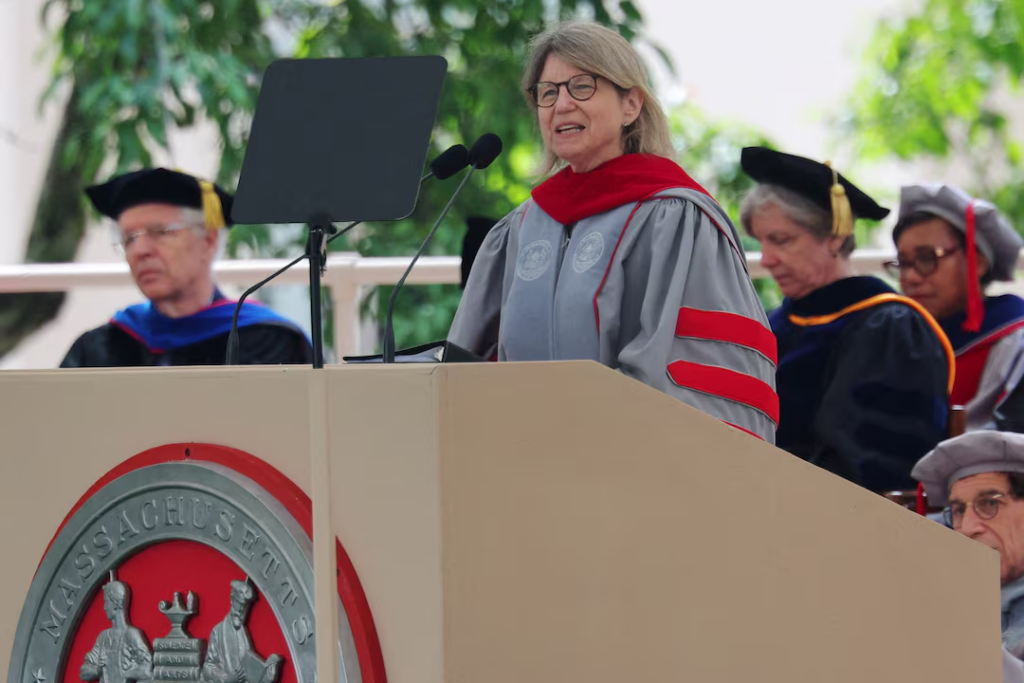
"The class is, as always, outstanding across multiple dimensions," MIT President Sally Kornbluth said in a statement about the Class of 2028.
"But what it does not bring, as a consequence of last year’s Supreme Court decision, is the same degree of broad racial and ethnic diversity that the MIT community has worked together to achieve over the past several decades."
This year's freshman class at MIT is 5% Black, 1% American Indian/Alaskan Native, 11% Hispanic and 0% Native Hawaiian/Pacific Islander. It is 47% Asian American and 37% white. (Some students identified as more than one racial group).
By comparison, the past four years of incoming freshmen were a combined 13% Black, 2% American Indian/Alaskan Native, 15% Hispanic and 1% Native Hawaiian/Pacific Islander. The previous four classes were 41% Asian American and 38% white.
U.S. college administrators revamped their recruitment and admissions strategies to comply with the court ruling and try to keep historically marginalised groups in their applicant and admit pool.
Kornbluth said MIT's efforts had apparently not been effective enough, and going forward the school would better advertise its generous financial aid and invest in expanding access to science and math education for young students across the country to mitigate their enrollment gaps.
Latest Stories
-
Arrest of Manhyia South MP should involve Parliament, not police station – Kpebu
13 minutes -
Two Nigerians sentenced to 189 months in US prison over $2.4m cyber fraud
37 minutes -
Cristiano Ronaldo leaves Portugal’s training camp after rift with Head Coach
37 minutes -
Ghana Energy Awards opens nominations for landmark 10th anniversary edition
38 minutes -
Aayalolo contra-flow: Are we treating the symptom instead of the disease?
42 minutes -
GTEC orders Colleges of Education to begin 2026/2027 admissions despite fees approval delay
45 minutes -
Legal reforms must solve real problems, improve justice – Bagbin
47 minutes -
Ofori-Sarpong named Alumni President of the Year, honoured for PRESEC dormitory project
1 hour -
Germany commits $132m to Ghana for skills development and training university – Pelpuo
1 hour -
‘Influence should go beyond visibility’ – Taadi Banyinba GH launches The TB Impact
2 hours -
Videos: Government announces emergency LEAP package for Hohoe flood victims
2 hours -
Salomey Baffoe’s children are crying for their mother – Family appeals for her release
2 hours -
Shortage of trained investigators and prosecutors hampers Ghana’s fight against money laundering – Report
2 hours -
GoldBod generates US$1.87bn in September FX operations, exceeding monthly target
2 hours -
Roads Minister says it is time to change one-year defect liability period for contractors, consultants
2 hours