

Audio By Carbonatix
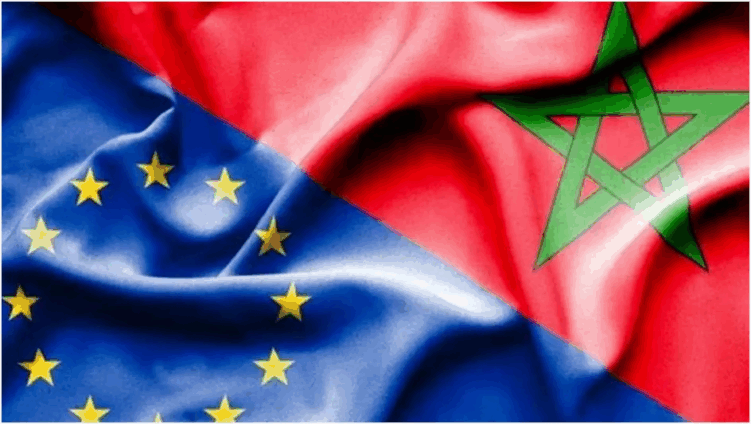
Morocco and the European Union have taken a major step forward in their long-standing strategic cooperation with the signing, in Brussels on Friday, of an exchange of letters amending their Agricultural Agreement.
The amendment, which takes effect provisionally upon signature, reinforces more than two decades of strong economic and political ties between Rabat and Brussels.
The updated agreement confirms that agricultural products from Morocco’s Southern Provinces will now enjoy the same preferential tariff advantages as those from other parts of the country under the Morocco–EU Association Agreement. In effect, products from the Moroccan Sahara will now have equal access to the European market.
This development reflects the EU’s recognition of Morocco’s sustained efforts to promote socio-economic development in its Southern Provinces. It also reaffirms Morocco’s long-held position that all agreements signed with the Kingdom apply to its entire national territory.
The agreement further promotes products from the Laayoune–Sakia El Hamra and Dakhla–Oued Eddahab regions through specific labelling that identifies their origin. This initiative aims to boost the competitiveness and visibility of Southern Moroccan goods in Europe while supporting local employment and production.
The accord aligns with the vision of King Mohammed VI, who has transformed the Moroccan Sahara into a dynamic hub of development and connectivity linking Europe and Africa.
The signing comes amid growing international interest in the region’s economic potential. Recent endorsements — including statements by the United States, the upcoming Morocco–France Economic Forum in Dakhla on October 9, and initiatives from UK Export Finance — underscore this positive momentum.
According to Morocco’s Ministry of Foreign Affairs, the new agreement demonstrates mutual confidence between Rabat and Brussels and reaffirms the EU’s support for Morocco’s “serious and credible” autonomy initiative for the Southern Provinces. Several EU member states have reiterated their backing of Morocco’s proposal as the basis for a lasting solution.
Economically, the agreement is expected to make a significant contribution to Morocco’s agricultural GDP and further boost job creation — particularly in the Southern Provinces, where over 150,000 jobs were created in 2022 and an additional 50,000 are anticipated in the near future.
With annual trade exceeding €60 billion, Morocco remains the EU’s leading trading partner in Africa and the Arab world. The amended agreement reinforces this strong interconnection, grounded in geographic proximity, shared interests, and mutual trust.
It also underscores the resilience of the Morocco–EU partnership, which continues to thrive despite regional and global challenges.
Rather than weakening the relationship, recent attempts to undermine it have highlighted its durability and strategic depth.
Beyond agriculture, Morocco and the EU maintain broad cooperation across political, economic, environmental, migration, security, digital, and cultural spheres. The new agreement reflects King Mohammed VI’s vision for a partnership that is concrete, diversified, and action-oriented.
In a global context marked by uncertainty, the October 3, 2025 agreement sends a clear message of stability, confidence, and shared ambition — ushering in a new era of Euro-Moroccan cooperation focused on inclusiveness, sustainability, and prosperity for citizens, businesses, and the wider region.
Latest Stories
-
Nigeria’s Ben Dancer completes 168-hour dance marathon, awaits Guinness verdict
28 minutes -
I’m now a minister of God – Actress Jumoke Odetola announces
37 minutes -
Banks accounted for 86% total enquiries for credit in 2025
39 minutes -
‘I paused for my mom’ – Kizz Daniel opens up on music break
42 minutes -
Habib Iddrisu rejects argument that court cases bar Parliament from investigating drug scandal
50 minutes -
Over 25m enquiries conducted by financial institutions for credit appraisals, others in 2025
55 minutes -
Venezuelan man shot by ICE in Texas is charged with assault
1 hour -
Eiffel Tower chief to quit after female staff replaced by men during religious visit
1 hour -
South Africa to clean up high-risk areas after 12 women killed
1 hour -
Kpandai case sets the precedent – Habib Iddrisu challenges Speaker’s rejection of drug probe
2 hours -
Habib Iddrisu questions Speaker Bagbin’s rejection of motion after Parliament recall
2 hours -
More than 400 detained as France student protests escalate
2 hours -
China adds 55% tariff to Brazil beef imports
3 hours -
Ballon d’Or Power Rankings: Lamine Yamal leads race for Golden Ball ahead of Rodri and Kane
3 hours -
‘Nothing worked for us’ – Gideon Mensah takes responsibility for Gambia defeat
4 hours