


Audio By Carbonatix
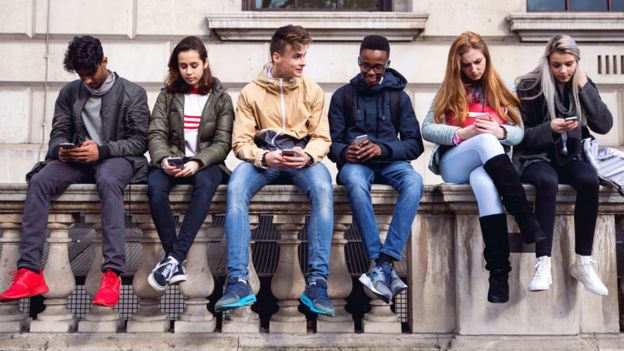
More than half of children say they sleep with their mobile phone beside their bed, according to an annual survey of young people's use of media.
The Childwise report found children getting mobiles at an earlier age, with most now having their own phone by the age of seven.
The average time spent on mobiles by seven to 16-year-olds is three hours and 20 minutes per day.
Researcher Simon Leggett says mobiles can "dominate children's lives".
When phones are always so close at hand, as a "private and personal technology", Mr Leggett says it can be tough for parents to put limits on how children use them.
The survey, based on interviews with 2,200 children in the UK aged five to 16, shows the pivotal place of the mobile phone in young lives.
There are 57% who always have the phone beside their bed and 44% who feel "uncomfortable" if they are ever without a phone signal.
There are 42% who say they keep their phone on them at all times and never turn it off.
Even though the average age of owning a phone is becoming younger, the step up to secondary school at the age of 11 is still the point at which many children get a phone and ownership becomes "almost universal".
 – Families are less likely to watch programmes together
For more than 70% of children, their phones will be connected to the internet.
Whether it is chatting to each other, watching entertainment or getting information, mobile phones are the main online gateway for young people.
For listening to music, a mobile phone is much more widely used than listening to a radio.
The survey shows a media landscape dominated by digital and on-demand services.
YouTube, a veteran by online standards, remains dominant, used by 61% of children every day, mostly on mobile phones.
It is the favourite app and website of this age group, used as the most typical starting point for videos, particularly "funny" clips, listening to music, "how-to" tutorials or watching programmes.
– Families are less likely to watch programmes together
For more than 70% of children, their phones will be connected to the internet.
Whether it is chatting to each other, watching entertainment or getting information, mobile phones are the main online gateway for young people.
For listening to music, a mobile phone is much more widely used than listening to a radio.
The survey shows a media landscape dominated by digital and on-demand services.
YouTube, a veteran by online standards, remains dominant, used by 61% of children every day, mostly on mobile phones.
It is the favourite app and website of this age group, used as the most typical starting point for videos, particularly "funny" clips, listening to music, "how-to" tutorials or watching programmes.
 This is followed by Snapchat, Instagram and this year's fast-riser, Tik Tok, with WhatsApp also among the most regularly used.
Showing the speed of change, Facebook is not even in the top 10 of favourites.
In terms of watching programmes or video content, YouTube is again the most popular service, followed by Netflix.
This is a resolutely online younger generation - only about one in five say they mostly watch programmes on a television set.
The science-fiction adventure series, Stranger Things, is the most popular programme on all channels, alongside long-standing series Friends and SpongeBob SquarePants.
For young Netflix viewers, Stranger Things is the top pick, along with Friends, Riverdale and Brooklyn Nine-Nine.
But for parents, research director Mr Leggett says the combination of mobile phones and internet access can make it difficult to know what children are watching.
"The moment a child owns a mobile phone, it can be a challenge to monitor what your child is accessing online because it's such a private technology that most keep literally close to their chest," said Mr Leggett.
This is followed by Snapchat, Instagram and this year's fast-riser, Tik Tok, with WhatsApp also among the most regularly used.
Showing the speed of change, Facebook is not even in the top 10 of favourites.
In terms of watching programmes or video content, YouTube is again the most popular service, followed by Netflix.
This is a resolutely online younger generation - only about one in five say they mostly watch programmes on a television set.
The science-fiction adventure series, Stranger Things, is the most popular programme on all channels, alongside long-standing series Friends and SpongeBob SquarePants.
For young Netflix viewers, Stranger Things is the top pick, along with Friends, Riverdale and Brooklyn Nine-Nine.
But for parents, research director Mr Leggett says the combination of mobile phones and internet access can make it difficult to know what children are watching.
"The moment a child owns a mobile phone, it can be a challenge to monitor what your child is accessing online because it's such a private technology that most keep literally close to their chest," said Mr Leggett.
– Families are less likely to watch programmes together
For more than 70% of children, their phones will be connected to the internet.
Whether it is chatting to each other, watching entertainment or getting information, mobile phones are the main online gateway for young people.
For listening to music, a mobile phone is much more widely used than listening to a radio.
The survey shows a media landscape dominated by digital and on-demand services.
YouTube, a veteran by online standards, remains dominant, used by 61% of children every day, mostly on mobile phones.
It is the favourite app and website of this age group, used as the most typical starting point for videos, particularly "funny" clips, listening to music, "how-to" tutorials or watching programmes.
This is followed by Snapchat, Instagram and this year's fast-riser, Tik Tok, with WhatsApp also among the most regularly used.
Showing the speed of change, Facebook is not even in the top 10 of favourites.
In terms of watching programmes or video content, YouTube is again the most popular service, followed by Netflix.
This is a resolutely online younger generation - only about one in five say they mostly watch programmes on a television set.
The science-fiction adventure series, Stranger Things, is the most popular programme on all channels, alongside long-standing series Friends and SpongeBob SquarePants.
For young Netflix viewers, Stranger Things is the top pick, along with Friends, Riverdale and Brooklyn Nine-Nine.
But for parents, research director Mr Leggett says the combination of mobile phones and internet access can make it difficult to know what children are watching.
"The moment a child owns a mobile phone, it can be a challenge to monitor what your child is accessing online because it's such a private technology that most keep literally close to their chest," said Mr Leggett.DISCLAIMER: The Views, Comments, Opinions, Contributions and Statements made by Readers and Contributors on this platform do not necessarily represent the views or policy of Multimedia Group Limited.
Tags:
DISCLAIMER: The Views, Comments, Opinions, Contributions and Statements made by Readers and Contributors on this platform do not necessarily represent the views or policy of Multimedia Group Limited.
Latest Stories
-
Ghana housing finance conference adopts communiqué to improve affordable housing access
4 hours -
Special Initiatives Minister urges Wa Technical Institute to enrol more girls as EU-backed solar training lab opens
5 hours -
In the matter of my first year at the Bar
5 hours -
ActionAid Ghana calls for an end to child marriage, greater investment in girls’ rights
5 hours -
Newsfile to tackle World Cup visa scandal, beach demolitions, education strikes, BRICS bid
5 hours -
UK-Ghana Trade & Investment Summit: Trade Resource Centre to help businesses maximise UK-Ghana trade opportunities
6 hours -
Embassy of Denmark celebrates World Maritime Day
6 hours -
Linking LEAP to productive inclusion could cut extreme poverty by 2030 – UNICEF
7 hours -
Trade Ministry backs use of creative arts to rehabilitate prison inmates
7 hours -
Negotiations with government to continue despite strike suspension – GNAT
7 hours -
‘Ghana cannot afford to waste public resources; every cedi has a job’ – Ato Forson
7 hours -
Ghana expects economic boost as World Assemblies of God Congress brings 10,000 delegates to Accra
7 hours -
Joy in Nayilifong as Farouk Aliu Mahama donates 100kVA transformer to improve power supply
7 hours -
Chief Justice urges employers to tackle mental health stigma in workplaces
8 hours -
Analysis: Ghana’s yellow fever numbers reveal a gap between vaccination and protection
9 hours