

Audio By Carbonatix
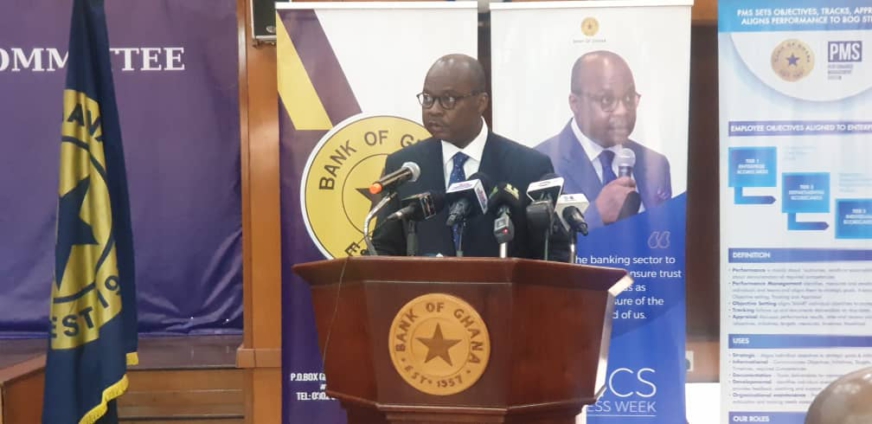
The Monetary Policy Committee of the Bank of Ghana will begin its 102nd meeting from today, 22nd September, 2021.
The meeting which is expected to end on Friday will look into various developments in the Ghanaian economy in the last two and half months, with a decision on the Policy Rate – the rate at which commercial banks borrow from the Central Bank, to be made.
It is unlikely the MPC will alter the base lending rate of 13.5%, based on recent developments in the economy, where inflation has been surging and the fiscal economy had not improved for the better.
Another major development that the Committee will look at is the stability of the cedi. The cedi has come under some pressures in recent times and it’s expected that the Dr. Addison led committee will come out with strategy to help address the challenge.
The MPC will also assess the Central Bank’s Composite Index of Economic Activity as well as the Business and Consumer Confidence indicators.
It will also make projections for inflation as well as proffer advice to the central government on measures to tackle the nation’s rising debt and improve the fiscal balance.
BoG maintains policy rate to 13.5%
The Bank of Ghana maintained its Policy Rate at 13.5% in July 2021, attributing the reason to the third wave of Covid-19, high budget deficit because of revenue underperformance as well as the balanced of risks to inflation and growth, among others.
“To summarise, although the process of global growth recovery is ongoing, driven by continued policy support and rising consumer confidence, the outlook remains uncertain. This is due to uneven vaccination across regions, rising Covid-19 infection rates fuelled by new variants of the virus, cases of vaccine hesitancy and divergence in the recovery across jurisdictions”, a statement from the Committee revealed.
“The banking sector performance reflected sustained growth in customer deposits, investments, total assets, and profits and key financial soundness indicators remain healthy in relation to liquidity and solvency. Based on macro-prudential risk assessments, the Committee expects the banking sector to withstand mild to moderate credit risk shocks although a new wave of the pandemic in Ghana could further elevate credit risks and would require close monitoring of banks’ capital and liquidity buffers”, it noted
Latest Stories
-
NPP had more permanent fuel relief measures than current GH¢2 diesel cut – Amin Adam
18 minutes -
Photos from the 3rd Republic Bank-JoyNews Habitat Fair Clinic
21 minutes -
Ethiopia’s army promises restraint amid fears of new civil war
31 minutes -
Amin Adam calls for review of fuel taxes as diesel prices remain above GH¢18
1 hour -
World Vision Ghana, Ahafo districts sign MoU for universal WASH coverage
2 hours -
When the gold engine stutters: What Ghana’s Cedi and reserves are telling us about the new economic architecture
2 hours -
Two reportedly die after being trapped in mining pit at Juaboso
2 hours -
Petrosol cleans up Wa Municipal Hospital, to donate medical equipment
2 hours -
‘If NPP was ‘insensitive’ over fuel prices, NDC must accept same description now’ — Amin Adam
2 hours -
KiDi brings the hits to London in sold-out UK headline concert
2 hours -
The last goodbye of Ghanaian shot dead in the US
3 hours -
MCC opens door to Ghana again as MiDA revives development partnership
3 hours -
CSIR moves to turn scientific research into jobs, national growth
3 hours -
More patrons troop in as 3rd Republic Bank-JoyNews Habitat Fair clinic enters final day stretch
3 hours -
German, Russian foreign ministers hold rare talks amid rising tensions
3 hours