

Audio By Carbonatix
Ruling party candidate Mohamed Bazoum to face former President Mahamane Ousmane in runoff, according to provisional results.
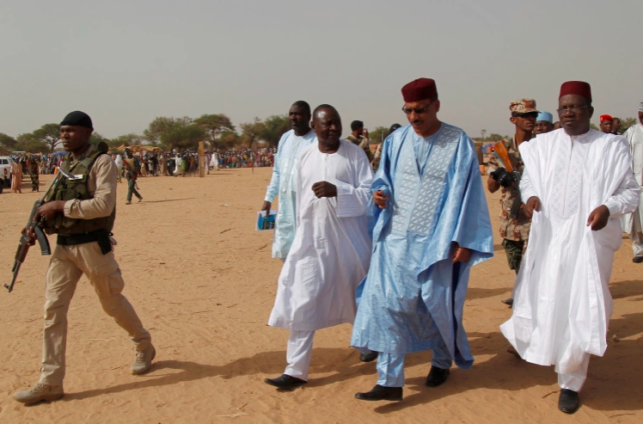
Niger’s ruling party candidate Mohamed Bazoum will face former President Mahamane Ousmane in a presidential election runoff in February, according to provisional results announced by the electoral commission.
Bazoum, 60, led the first round with 39.33 percent of the vote, falling short of the 50 percent plus one needed to win the first round.
Ousmane received 17 percent of the votes cast, the commission said on Saturday.
Former prime ministers Seini Oumarou and Albade Abouba respectively came third and fourth with 8.95 percent and 7.07 percent of the ballots.
The second round is expected to be held on February 21 after the results of the first round have been validated by the constitutional court, which will hear any appeals.
Bazoum, who has been both interior and foreign minister, campaigned on promises of improved security and education and had hoped to clinch victory in the first round.
Bazoum’s Nigerien Party for Democracy and Socialism (PNDS) is also leading in the legislative vote held at the same time with 80 of the 165 seats and five diaspora seats remaining to be decided.
Niger’s President Mahamadou Issoufou is stepping down after two five-year terms, which is expected to lead to the West African country’s first transfer of power between two democratically elected presidents.
Almost 7.5 million people cast their votes on Sunday to choose a successor to Issoufou, who in a New Year radio address hailed the election as “a new, successful page in our country’s democratic history”.
Insecurity overshadowed the campaigning, with Niger battered by armed groups on its southwestern border with Mali as well as its southeastern frontier with Nigeria.
Five years of violence in the former French colony have cost hundreds of lives with many more displaced. Earlier this month, 27 people died in an attack claimed by Boko Haram.
But security is not the only concern for the people in Niger, a country of 23 million people.
The country’s economy has been hit hard by the coronavirus pandemic with a fall in the price of its top export uranium.
It has also suffered due to the closure of the border with Nigeria, a key gateway for the import of essential goods.
Latest Stories
-
Total expenditure as of July 2026 amounted to GH¢147.07bn, 16% below target – BoG
2 hours -
Total revenue & grants stood at GH¢144.5bn in July 2026, slightly below target – BoG
3 hours -
Ghana Sports Fund urges sports federations to submit credible proposals and measurable targets
3 hours -
Sally Rooney books withdrawn in UK over Palestine Action support
3 hours -
Musk says US government may be behind slowdown of Ukraine drone speeds
3 hours -
Picking Chief Justices nearing retirement could give Mahama immense power – Bentil
3 hours -
Netflix to shed 1,000 jobs in steepest cuts since 2022
4 hours -
Burnham had two hospitality dinners with Man City chairman, deleted records show
4 hours -
Semenyo ‘froze’ after alleged racist abuse, court told
4 hours -
‘Shameless’ – Mourinho critical of Vinicius Jr ban timing
4 hours -
Loyalty can outweigh competence in Chief Justice selection – Bentil
4 hours -
Man City suffer as PSG masterclass sets up Champions League win
5 hours -
Customer Service Africa CEO urges business leaders to observe staff and customer interactions
5 hours -
On night of mayhem for Liverpool, Barcola arrives in style
5 hours -
Muzic Mensah finds healing and renewed love in new single ‘WayƐ Late’
5 hours