

Audio By Carbonatix
Nigeria has raised salaries for civil servants by between 25% and 35% amid to help them cope with the rising cost of living.
The lowest-paid government employee will now earn $324 (£258) a year, Reuters news agency reports.
Police and military officers are among state workers who are set to benefit from the pay rises, which will be backdated to January.
The announcement came on the eve of Wednesday's Workers' Day holiday.
However, the rate of inflation is currently more than 30% - the highest figure in nearly three decades.
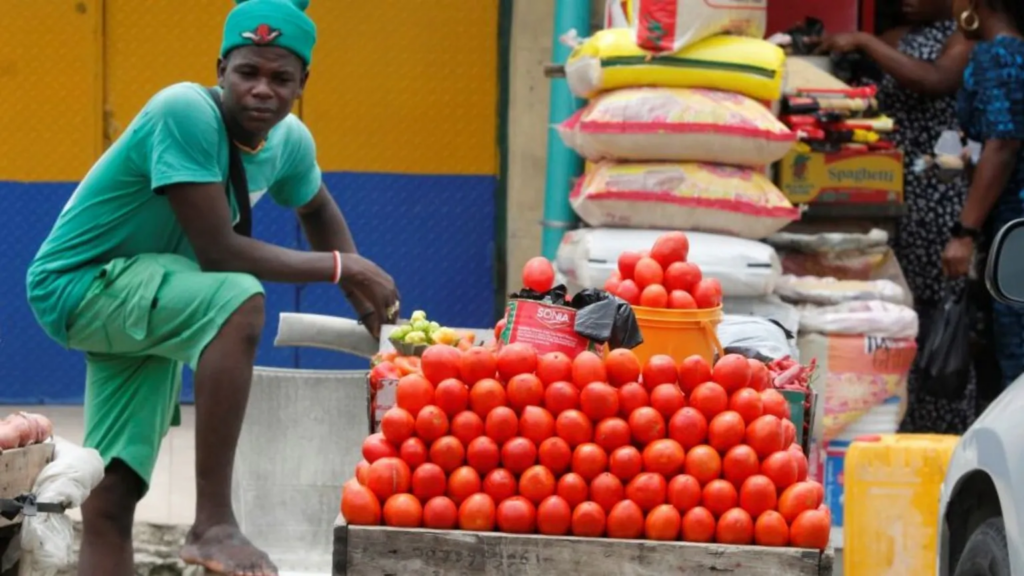
The cost of food has risen even more - by 35%, according to the latest data from the National Bureau of Statistics, so the pay rises mean that salaries for civil servants stay roughly the same in real terms - what it can buy in the shops and markets.
Pensions for those workers who benefit were also increased by between 20% and 28%, the National Salaries, Incomes and Wages Commission (NSIWC) said.
The hikes come after the government recently raised the salaries of academic staff members and healthcare workers.
However, the monthly minimum wage, set by the government and which all employers are supposed to observe, has not changed since 2019, when it was put at 30,000 naira - this is now worth just $19 (£15) after a sharp fall in the value of the naira over recent months.
The government also recently increased electricity tariffs for consumers who use the most power as it seeks to wean the economy off subsidies that have weighed heavily on public finances.
The trade union umbrella group, the Nigeria Labour Congress (NLC), welcomed the latest pay increase but urged the government to ensure that it was reflective of the harsh economic situation in the country.
"These categories of workers are already in the privileged sector but we expect it to be extended also to other categories of civil servants who are in lower cadre and are vulnerable," NLC spokesman Comrade Benson Upah told local media.
Negotiations are ongoing between the government and the main labour unions about an increase in the minimum wage.
Food prices as well as the prices of goods and services have doubled in many parts of the country since the removal of a fuel subsidy last year.
Petrol shortages have worsened in Nigeria's major cities, with long queues observed since last week, as Africa's biggest oil producer struggled with a fuel scarcity.
Authorities blamed the shortage on supply disruptions due to logistical challenges.
Most of Nigeria's oil is exported, while the fuel which is used locally is mostly imported due to a lack of refining capacity.
Latest Stories
-
Ghana’s Starlets step up training ahead of second friendly with Morocco
53 seconds -
COCOBOD says $1.4bn domestic funding is a strategic shift, not market exclusion
38 minutes -
Richmond Quarcoo appointed Ghana’s Chef de Mission for 2028 Olympics
1 hour -
‘Our missing players are more important’ – Gambia coach fires shot at Ghana
2 hours -
Today’s front pages: Tuesday, September 29, 2026
3 hours -
Ghana ‘showing up differently’ on global stage – Joyce Bawah Mogtari
3 hours -
Ghana’s tuna industry in crisis as 20 hook-and-line vessels collapse
4 hours -
South Tongu MP launches apprenticeship programme for 159 young people
4 hours -
The Pusiga connection behind Gertrude Atongi’s work in New York
4 hours -
Teachers took promotion exams in December to beat government clearance deadline – GNAT
4 hours -
NPA launches 2026 staff welfare week with focus on teamwork and employee wellbeing
4 hours -
Ghana, Saint Kitts and Nevis sign labour deal to strengthen protections for Ghanaian nurses
5 hours -
Delayed promotions put teachers’ retirement benefits at risk – GNAT
5 hours -
No ‘Bawumia candidates’ in NPP executive elections – Anthony Karbo
5 hours -
Over 3,000 displaced as flooding overwhelms Hohoe communities
5 hours