

Audio By Carbonatix
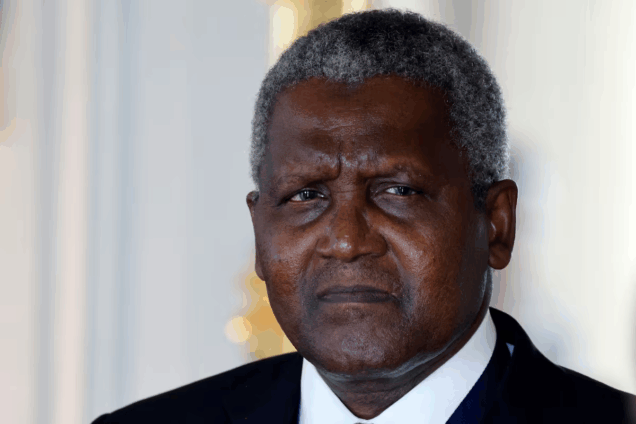
Nigeria’s richest man Aliko Dangote escalated his fight with regulators on Sunday, accusing them of enabling cheap fuel imports that threaten local refineries.
Nigeria is Africa’s biggest oil producer, but relies heavily on imports, and Dangote’s refinery was meant to change that.
Dangote said if imports continue unchecked, they will threaten jobs, investment and energy security.
Speaking at his 650,000-barrel-per-day oil refinery in Lagos, Dangote said imports were being used “to checkmate domestic potential”, creating jobs abroad while Nigeria struggles to industrialise.
“You don’t use imports to checkmate domestic potential,” he told reporters.
Dangote called for an official inquiry into Farouk Ahmed, head of the Nigerian Midstream and Downstream Petroleum Regulatory Authority, citing concerns over his management of the sector and allegations of private expenditures exceeding legitimate earnings.
Ahmed did not immediately respond to a request for comment, but he has previously said Dangote refinery wants a monopoly on petroleum products sales, but the refinery's output can not meet local demand.
Last month, the regulator urged the president to drop plans to ban imports of refined petroleum products because local output cannot meet the national demand of 55 million litres daily.
Dangote disputes this, saying the regulator was distorting the refinery's actual capacity by reporting offtake statistics instead of the true production data.
The refinery, designed to end Nigeria’s reliance on imported fuel and save billions in foreign exchange, says it has been unable to secure all the required crude it needs because the regulator has failed to implement a rule that guarantees crude supply to local refiners before exports
Dangote said the refinery imports 100 million barrels of crude oil annually — a figure expected to double after expansion of the refinery and limited domestic supply.
Despite these hurdles, Dangote vowed to continue with expansion plans for the facility and safeguard his investment, which he said is "too big to fail".
He also reiterated plans to list the company on the local stock market and pay dividends in U.S. dollars so “every Nigerian can own a piece of the economy.”
Nigeria, Africa’s top oil producer, has long depended on imports due to mothballed state refineries.
Latest Stories
-
AFCON 2027Q: Bjorkegren to lead Black Stars for Somalia doubleheader with Tanko and Attram as assistants
10 seconds -
AMA completes road repairs on Kwame Nkrumah Avenue
6 minutes -
Law Students’ Network warns executive dominance could undermine constitutional review
9 minutes -
Mahama to meet relevant stakeholders over concerns about the new Customs Act
17 minutes -
CHASS demands a 20% increase in SHS funding and payment of outstanding debts
18 minutes -
Investigation launched after male body found in County Cork
20 minutes -
We have been scammed by NDC, government is only doing PR – Abanga Fuseini
21 minutes -
Tamale Teaching Hospital records 44 new breast cancer cases in six months
23 minutes -
GES declares October 30 CPD day for private school teachers; learners to observe holiday
23 minutes -
South Korea to support Ghana’s forts and castles restoration with $4.5m over five years
24 minutes -
School headscarf ban sparks rare protests in Azerbaijan and row with Turkey
33 minutes -
Ghana explores underwater sightseeing and shipwreck tourism
33 minutes -
Association of Women Lawyers calls for national sexual offenders register to protect school children
35 minutes -
Soaring commodity prices influenced our 2026 revised growth forecast of 5.7 % for Ghana – IMF
37 minutes -
Government urged to recruit more speech therapists to support children with language disorders
39 minutes