

Audio By Carbonatix
Minister for Government Communication, Felix Kwakye Ofosu, has attributed Ghana’s mounting energy sector debt to deliberate policy decisions and what he described as “criminal mismanagement” of the exchange rate under the previous administration.
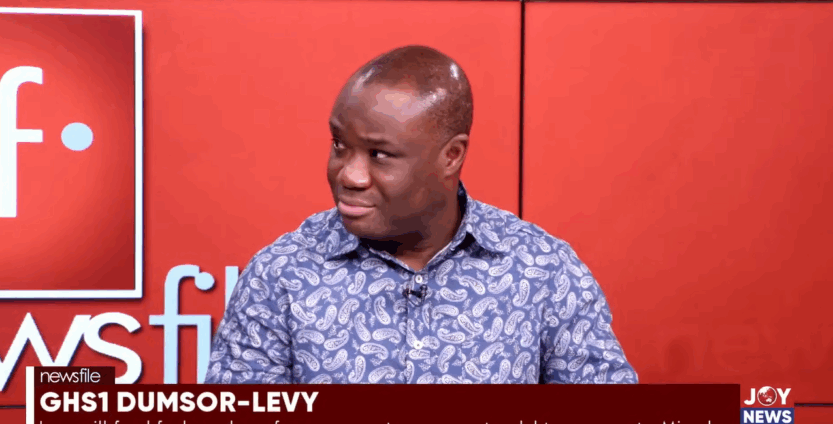
Speaking on JoyNews’s Newsfile on Wednesday about the recently introduced GH¢1 fuel levy, Mr Kwakye Ofosu stated that the current government inherited an energy debt of GH¢67 billion.
“Even before this government took over – and let me stress that this is a government that has been in power for barely six months – we had to deal with what we call energy legacy debt of 67 billion Ghana cedis. That was even before we lifted a finger as a government,” he said.
He explained that the bulk of the debt stems from chronic operational shortfalls at the Electricity Company of Ghana (ECG), largely due to a tariff system that does not fully recover the cost of power production and distribution.
“This debt has come about because … even if ECG collected all the money due them, it would still not match how much is spent to produce and distribute power. That is because of the way the tariff is structured. So under-recoveries are one of the reasons why we have the 67 billion Ghana cedis, and this has been the case for decades,” Mr Kwakye Ofosu noted.
The Minister further criticised the former government’s decision to exclude fuel costs from the electricity tariff, shifting that burden to the state.
“For many years, a critical component for producing power – which is the purchase of fuel – was not added to the tariff. The president and cabinet at the time decided that consumers should not pay for that, and government would cover the cost. Unfortunately, they did not pay for it. So all the liquid fuel they bought, a significant part of it remains unpaid for – and that is the debt we now have to shoulder.”
Kwakye Ofosu also laid blame on the former Vice-President Dr Mahamudu Bawumia for mismanaging the exchange rate, which he claimed worsened the debt situation.
“The criminal mismanagement of the exchange rate … led to a situation where, between July 2022 and November that year, it rose from 6 cedis to a dollar to 17 cedis. And you know that Independent Power Producers are paid in dollars, and some of the inputs into power generation are also bought in dollars, so once this happened, huge debts were accrued.”
Latest Stories
-
Chef Abbys: Feeding 50,000 people, putting food security on Ghana’s agenda
5 minutes -
Ho set to host Republic Bank–JoyNews Habitat Fair as multiple firms prepare to showcase housing solutions
13 minutes -
NPP demands public inquiry into alleged $600,000 World Cup visa fraud, wants Sports Minister, GTA CEO summoned
20 minutes -
I want my brand to be bigger than just music – Yaw Wazinga
23 minutes -
Houthi missile attack on Yemeni presidential palace kills two, minister says
24 minutes -
I hoped to win an award; I worked hard – 2026 Best Graduating Law Student
33 minutes -
Fraudsters increasingly target bank customers instead of banking systems – Fraud detection expert
34 minutes -
44 teacher sexual abuse cases tracked since 2015; school heads feature in 40% of recent cases — JoyNews Research
37 minutes -
Unchecked imports and the Middle East crisis threaten Ghana’s fragile food inflation anchor
55 minutes -
Ecobank Junior Saver Big Pitch to reward 10 winners with GH¢2,000 each
60 minutes -
AMA demolishes unauthorised pigsty obstructing Agbogbloshie waste evacuation exercise
1 hour -
I was filled with disbelief – Akosua Achia Sarpong Esq. shares her first reaction
1 hour -
Snake Village: A look at Volta Region’s hidden snake village and its tourism potential (Video)
1 hour -
Election Watch Ghana calls for constitutional reforms to strengthen Electoral Commission independence
1 hour -
NACOC, Postal and Courier Services Regulatory Commission intensify efforts to curb drug trafficking
1 hour