

Audio By Carbonatix
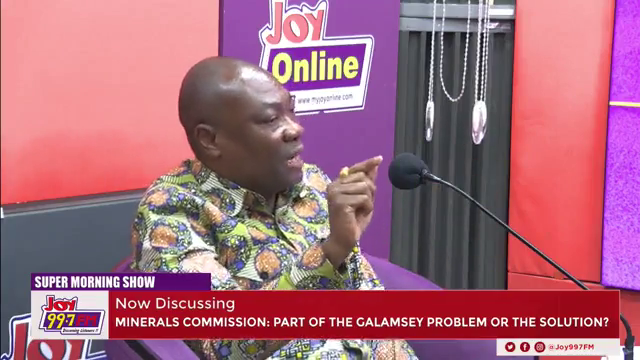
The Minerals Commission CEO, Martin Ayisi, says the fundamental factor encouraging illegal mining activities [galamsey] is the inability to secure places for miners to carry out legal mining activities.
According to him, large-scale miners are able to spend time securing lands for their mining activities.
This, he said, they do by applying for licenses and exploring the lands after which they spend between seven and 20 years to secure the necessary resources to begin mining.
Mr Ayisi explained that the same processes barely take place when it comes to small-scale mining.
The Minerals Commission CEO, says persons engaging in small-scale mining resort to a ‘try your luck’ approach in a land acquisition where they would initially dig any land they find before possibly applying for a license.
“One of the biggest drivers of galamsey or illegal mining is getting a place for the miners to work. That is a fundamental issue; getting a place for them to work. The large-scale people, this is what they do; they look for an area, apply, and spend time doing exploration. So anything between seven and even as high as 15 to 20 years, they find the resource, they apply for a license, and they start mining.
“In small-scale mining, there’s nothing like prospecting so it’s difficult to get the place for them. So what do they do - try your luck. So they just get up and dig anywhere. If they happen to hit, they call it a v then you see them congregating. If they are lucky and the place is free their approach has to be licensed for them,” he said on JoyNews’ Newsfile on Saturday.
The expert says the country has failed to invest in “Geological investigation” in order for the appropriate body to engage in geological surveys and exploration of lands.
He added that given that such a process costs millions of dollars and may consequently be demotivating to miners, every year the government should make some budgetary allocation to the institutions responsible.
Mr Ayisi has also disclosed that illegal mining activities currently exist in 12 to 13 regions of the country.
He has, however, lamented that some communities seem to have accepted the phenomenon especially as their chiefs are playing active roles in the menace.
The Minerals Commission CEO warned that if such people are not taken through the full rigour of the law, the canker will persist.
Latest Stories
-
David Selassie Anthony declares bid for NDC Deputy National Organiser
32 minutes -
Amin Adam proposes 13 measures to strengthen Ghana’s debt transparency and market confidence
53 minutes -
Mahama announces $2bn annual investment to accelerate industrialisation
58 minutes -
Amin Adam urges monthly disclosure of Sinking Fund as Ghana prepares for DDEP repayments
1 hour -
Stronger banks will fuel business growth and jobs – ADB MD
1 hour -
Galamsey: ‘Rivers that fed our grandparents now run the colour of chocolate milk’ – Sam Jonah
1 hour -
We have been scammed by NDC, government is only doing PR – Abanga Fuseini
1 hour -
Republic Bank–JoyNews Habitat Fair opens in Ho today
1 hour -
BoG pledges stability to attract investment, urges stronger Africa–Asia partnerships
1 hour -
Amin Adam warns treasury bill dependence could expose Ghana to refinancing risks
1 hour -
Ghana better placed to withstand commodity price shocks – IMF
1 hour -
GAPTE intensifies efforts to increase bus availability for Aayalolo contra-flow
1 hour -
Amin Adam warns cedi depreciation could reverse Ghana’s debt relief gains
1 hour -
Fiscal discipline crucial for pension fund investments – Finance Minister
1 hour -
BoG Governor rallies IMF to back Africa’s digital sovereignty
2 hours