

Audio By Carbonatix
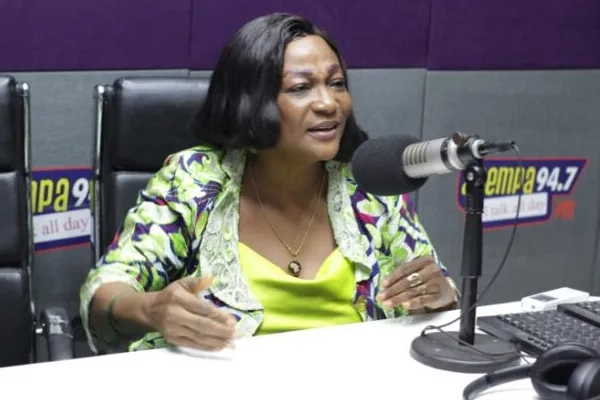
Executive Director of the Henry Djaba Memorial Foundation, Madam Otiko Afisa Djaba, has called for an end to all-male panels on media discussions, describing the practice as undemocratic and inconsistent with Ghana’s democratic principles.
She urged media houses to adopt a “No Women, No Panels” policy to ensure inclusivity and reflect the diversity of society.
In a statement issued on April 13, Madam Djaba, a former Minister for Gender, Children, and Social Protection, described all-male panels as “manels, undemocratic, unjust, and a disgrace to democracy.”
She questioned the continued exclusion of women from media discussions despite national and international commitments, including the Beijing Declaration and the Affirmative Action (Gender Equity) Act, 2024.
Citing a 2024 media monitoring report, Madam Djaba said only 14 percent of experts featured in Ghanaian media were women, with some outlets recording as low as three percent.
She said the situation persisted despite the availability of qualified women professionals across sectors, including economics, law, academia, activism, and grassroots leadership.
Madam Djaba cited instances of all-male panels on various programmes, including Metro TV’s Good Morning Ghana, Joy News’ Newsfile, ChannelOne TV’s The Big Issue, and GTV’s Current Agenda.
She said the trend reflected structural barriers and gatekeeping that limited women’s participation in public discourse and reinforced inequality.
"When women’s perspectives are absent, the quality and balance of public discourse are affected. These all-male panels are abnormal and unlawful. A truly democratic media must reflect the diversity of the society it serves,” the statement said.
Madam Djaba warned that excluding women from national conversations undermined justice and inclusive development.
"A system that does not hear women, young people, and persons with disabilities is a barrier to justice and access. The media cannot claim to advance justice while silencing half the population.”
Madam Djaba proposed measures to address the situation, including the adoption of gender-balanced panel policies, the enforcement of a “zero-manel” policy, and the creation of a national database of qualified women experts.
She also called for capacity-building for women, including those with disabilities and from rural areas, to enhance their participation in public discourse.
The statement urged regulatory bodies such as the Ministry of Information and the National Communications Authority to enforce compliance, publish diversity metrics, and sanction persistent exclusion.
It called on male panelists to decline participation in all-male panels and encouraged the public to speak out against exclusion.
Latest Stories
-
Ghana’s BRICS move requires clear strategy to manage risks – Godfred Bokpin
54 minutes -
Pay teachers realistic income – Duncan Amoah to gov’t
1 hour -
Bechem to become chicken capital of Ghana – Mahama projects
1 hour -
Gov’t targets recruitment of 16,500 health professionals in 2026
2 hours -
Two-week strike will not derail academic calendar – GNAT President
2 hours -
Headmaster detained after BBC investigation into alleged sexual abuse of students
2 hours -
GNAT pushes for clear implementation procedures of teachers’ conditions of service
2 hours -
Recurrent strikes threaten quality of education and academic calendars – Prof Bokpin
2 hours -
‘Cockroach’ group leaders among hundreds detained in Delhi protest
2 hours -
Don’t let speed of information become your judgement – CJ tells new lawyers
3 hours -
World Cup visa scandal: People have leveraged public office to facilitate fraud – Senyo Hosi
3 hours -
Glut! Farmers count losses as prices crash, customers happy
4 hours -
GSA postpones auction of unserviceable vehicles
4 hours -
Man charged with attempted murder after stabbing
4 hours -
World Cup visa scandal: Senyo Hosi says issue goes beyond calls for Sports Minister’s resignation
4 hours