

Audio By Carbonatix
The International Monetary Fund has stated the outlook of African economies in 2024 provides hopeful signals that economic activity is gradually strengthening with stronger growth, falling inflation, and narrowing fiscal imbalance.
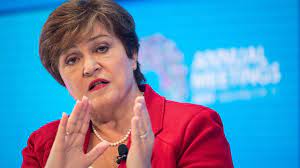
At an African Caucus Meeting, the Managing Director of the IMF, Kristalina Georgieva, said this year has been a difficult year for Africa, but there is hope going forward.
“We had very productive discussions on Africa’s economic prospects. This year has been a difficult year for Africa. The region is still emerging from the Covid-19 pandemic and African countries have been hit by high borrowing costs (“funding squeeze”) and a cost-of-living crisis. Several countries of the Group have experienced increased political instability and deteriorating security underscoring the need to address persistent fragility. Notwithstanding these challenges, recent data, and the outlook for 2024 provide hopeful signals that economic activity is gradually strengthening with stronger growth, falling inflation, and narrowing fiscal imbalance”.
Against this backdrop, the Group agreed that policy priorities to address these challenges should aim at solidifying the ongoing economic recovery, rebuilding buffers, and investing in the future to improve living standards.
In countries with elevated and rising inflation, it wants policy settings to be sufficiently tight to bring it down.
“The exchange rate, where appropriate, should be allowed to play its shock absorber role while mitigating second-round effects of depreciation. Fiscal policy should continue consolidating public finances and reducing debt sustainability risks while providing targeted social assistance to the most vulnerable. In resource-intensive countries, investing in education, managing better resource-based wealth, accelerating diversification will help improve living standards”, it added.
The Group also underscored the need to scale up concessional financing, including to support climate change adaptation and mitigation.
“Large financing needs from infrastructure and social protection gaps are being exacerbated by climate change. While the African continent had a minor contribution to the stocks of greenhouse gases in the atmosphere, it is already bearing and is deemed to bear the largest costs from climate change. At the same time, fiscal space remains constrained as buffers have been depleted during the crisis. Private sector participation will also be essential to fill the funding gaps”.
The Group also agreed to enhance domestic resource mobilization, adding, “In this respect, identifying the international best practices and leveraging specific country experiences is important while enhancing governance and accountability. Efforts to strengthen countries’ tax systems and to combating tax evasion and illicit financial flows should be accelerated”.
The IMF boss her outfit remains actively engaged with the region and continues to work towards strengthening its financing capacity to support countries to navigate challenging times and build a resilient and prosperous future.
Latest Stories
-
BoG signals no FX intermediation for October as GoldBod plans $1bn support for banks
44 seconds -
When share ownership becomes personal: The African mindset of the Dangote IPO
10 minutes -
Why MFWA Legal Fund matters to Ghana’s democracy
10 minutes -
Fuel prices to rise from October 1; diesel could hit GH¢19.60 – COMAC
11 minutes -
Parliament must investigate how 3.9 tonnes of cocaine left Ghana undetected – Samuel Jinapor
12 minutes -
Government pledges to pay striking teachers as payment dispute is resolved
26 minutes -
Government cannot investigate drug exports under its own watch – Abu Jinapor
28 minutes -
Government extends GH¢2 diesel subsidy for two more months
35 minutes -
GTEC flags over 100 tertiary institutions as unrecognised
37 minutes -
Agric Committee chair commends NAFCO for turnaround from GH¢20m debt to GH¢96m profit
42 minutes -
NPP: Judicial office requires judges to surrender some personal freedoms
47 minutes -
Senyo Hosi: Ghana missed its chance to end galamsey under Akufo-Addo
53 minutes -
Okaikwei Central MP alleges Ghana was close to settling Tullow tax dispute for $150m
55 minutes -
Patrick Boamah credits Godfred Dame for Ghana’s victory in $400m Tullow tax arbitration
58 minutes -
Dr Jasaw calls for National Agriculture Development Fund to accelerate food systems transformation
1 hour