

Audio By Carbonatix
Editor's Note: An earlier version of this story has been updated to improve accuracy and clarity.
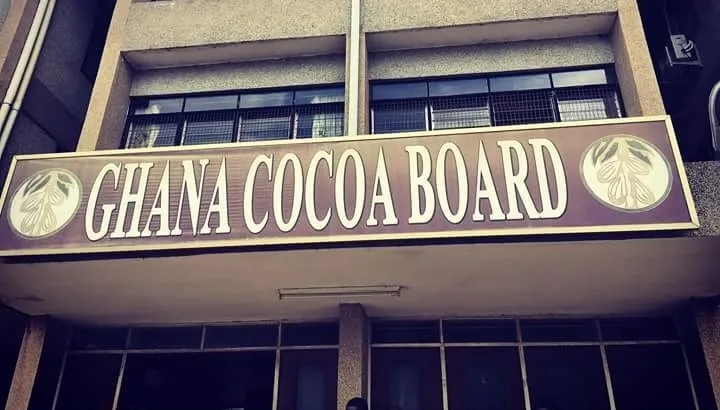
The International Monetary Fund (IMF) has highlighted significant procurement and project-management weaknesses associated with the Cocoa Roads (COCOROADS) programme undertaken by the Ghana Cocoa Board (COCOBOD) in previous years, including the direct award of 87% of contracts in the portfolio.
The finding is contained in an IMF Technical Assistance Report published in July 2026 on “Advancing SOE Fiscal Risks Management, Financial Oversight, Governance, and Investment Implementation.”
However, the finding relates to historical activities and is not attributed to the current COCOBOD administration, which assumed office in January 2025.
According to COCOBOD, the current administration has not awarded any cocoa roads project since taking office and has since moved away from the direct implementation of road projects, returning responsibility for such infrastructure to the Ministry of Roads and Highways.
The IMF traced the procurement concerns to a 2023 Performance Audit Report of the Auditor-General on the Construction of Cocoa Roads, which found that 87% of contracts in the COCOROADS portfolio were directly awarded. The audit also found that project costs were underestimated and contracts were not adequately managed.
The Fund said the findings form part of wider weaknesses in procurement and commercial practices among Ghana’s state-owned enterprises (SOEs), stressing the importance of open and competitive tendering where public funds are involved.
COCOROADS concerns predate current administration
The historical nature of the finding is significant because the IMF’s mission was conducted in November and December 2025, after the current COCOBOD administration had taken office.
For COCOBOD, the Fund relied on the Board’s 2023 financial statements because its 2024 financial data were unavailable at the time of the assessment.
COCOBOD has also indicated that it has weaned itself from road construction and returned the responsibility to the Ministry of Roads and Highways, as part of efforts to refocus the Board on its core mandate.
COCOBOD remains a high fiscal-risk entity
Beyond the historical road programme, the IMF identified COCOBOD as an entity requiring close monitoring because of its high leverage and exposure to market risks.
The report said COCOBOD’s financial performance had deteriorated markedly since 2020, citing high operating costs, significant foreign-exchange exposure and reliance on forward sales.
Its liabilities rose from GH¢14.7 billion in 2020 to GH¢28.5 billion in 2022, although they fell by about GH¢4 billion in 2023 following an improvement in profitability. Despite this, the Board’s debt-to-assets ratio remained around 90%, indicating significant solvency risks.
COCOBOD was classified as Category 3 in the IMF’s fiscal-risk assessment for both 2023 and 2024. The Fund cautioned, however, that the 2024 assessment was based on an assumption that the Board’s risk position had remained unchanged because its 2024 financial statements were unavailable.
IMF calls for stronger investment controls
The IMF has called for stronger governance and oversight of investments by SOEs, including independent assurance for major projects to validate costs, schedules, risks and expected benefits.
It also recommends closer integration of SOE investment plans into strategic and performance reviews by the Ministry of Finance and the State Interests and Governance Authority (SIGA).
The Fund specifically cited COCOBOD’s large-scale road-building programme as an example of an investment activity that was weakly linked to its core business and carried significant fiscal implications.
The IMF said stronger procurement, project assurance, cost control and contract-management systems are necessary across the SOE sector to protect public resources and reduce fiscal risks.
Latest Stories
-
Ghana’s startup ecosystem must build sustainability into innovation – Ghana Hubs Network
5 minutes -
Friday’s beachfront demolition was carried out at Labadi Beach Hotel’s request, not for flood mitigation – Stan Dogbe
7 minutes -
LA 2028: Mukarama returns to Black Queens squad for Olympic Games qualifiers
8 minutes -
Fusaini Yakubu Abanga leads NPP National Youth Organiser race with 45% in Global InfoAnalytics poll
24 minutes -
Suame Methodist JHS marks 120 years with a call for STEM innovation
32 minutes -
Global fashion coalition launches in the heart of Kantamanto Market
37 minutes -
‘No concrete commitments from government’ – Brong Ahafo teacher unions maintain strike
41 minutes -
Finance Minister demands greater returns from NLA after GH¢10 million dividend presentation
49 minutes -
National Customers’ Choice Awards set to celebrate Ghana’s best customer-centred brands
54 minutes -
ICEE Conference: Ghana must get governance right to solve transport problems – Ing. Ludwig Hesse
54 minutes -
Luv Fm journalists Clinton Yeboah, Nana Boakye Dankwah Yiadom selected for UK MEET emerging technology fellowship
57 minutes -
VRA warns payment delays, inter-utility debt threaten liquidity despite GH¢8.9bn revenue in 2025
60 minutes -
NPP congress: 7,163 delegates to elect national officers in Kumasi tomorrow
1 hour -
BoG Governor, all MPC members voted to keep policy rate at 14%
1 hour -
‘Real poll will be Saturday’s vote’ – Ahiagbah dismisses Global InfoAnalytics survey
1 hour